How to start saving money
Lorem ipsum dolor sit amet, consectetur adipiscing elit lobortis arcu enim urna adipiscing praesent velit viverra sit semper lorem eu cursus vel hendrerit elementum morbi curabitur etiam nibh justo, lorem aliquet donec sed sit mi dignissim at ante massa mattis.
- Neque sodales ut etiam sit amet nisl purus non tellus orci ac auctor
- Adipiscing elit ut aliquam purus sit amet viverra suspendisse potent
- Mauris commodo quis imperdiet massa tincidunt nunc pulvinar
- Excepteur sint occaecat cupidatat non proident sunt in culpa qui officia
Why it is important to start saving
Vitae congue eu consequat ac felis placerat vestibulum lectus mauris ultrices cursus sit amet dictum sit amet justo donec enim diam porttitor lacus luctus accumsan tortor posuere praesent tristique magna sit amet purus gravida quis blandit turpis.

How much money should I save?
At risus viverra adipiscing at in tellus integer feugiat nisl pretium fusce id velit ut tortor sagittis orci a scelerisque purus semper eget at lectus urna duis convallis. porta nibh venenatis cras sed felis eget neque laoreet suspendisse interdum consectetur libero id faucibus nisl donec pretium vulputate sapien nec sagittis aliquam nunc lobortis mattis aliquam faucibus purus in.
- Neque sodales ut etiam sit amet nisl purus non tellus orci ac auctor
- Adipiscing elit ut aliquam purus sit amet viverra suspendisse potenti
- Mauris commodo quis imperdiet massa tincidunt nunc pulvinar
- Adipiscing elit ut aliquam purus sit amet viverra suspendisse potenti
What percentege of my income should go to savings?
Nisi quis eleifend quam adipiscing vitae aliquet bibendum enim facilisis gravida neque. Velit euismod in pellentesque massa placerat volutpat lacus laoreet non curabitur gravida odio aenean sed adipiscing diam donec adipiscing tristique risus. amet est placerat in egestas erat imperdiet sed euismod nisi.
“Nisi quis eleifend quam adipiscing vitae aliquet bibendum enim facilisis gravida neque velit euismod in pellentesque”
Do you have any comments? Share them with us on social media
Eget lorem dolor sed viverra ipsum nunc aliquet bibendum felis donec et odio pellentesque diam volutpat commodo sed egestas aliquam sem fringilla ut morbi tincidunt augue interdum velit euismod eu tincidunt tortor aliquam nulla facilisi aenean sed adipiscing diam donec adipiscing ut lectus arcu bibendum at varius vel pharetra nibh venenatis cras sed felis eget.
Odometer GPS tracking is defined as the integration of GPS satellite data with vehicle odometer readings to produce accurate, verifiable distance measurements for vehicles and assets. This combination solves a problem that neither technology handles perfectly on its own: GPS alone can drift in signal-poor environments, while a traditional odometer only counts wheel rotations without any location context. Together, they give fleet managers and individual vehicle owners a complete picture of where a vehicle went and exactly how far it traveled. Understanding what is odometer GPS tracking is the first step toward making better decisions about vehicle monitoring, maintenance scheduling, and cost control.
What is odometer GPS tracking and how does it work?
GPS odometer tracking works by pairing two data streams: satellite positioning signals and wheel-based distance counting. GPS trackers measure distance by calculating routes traveled based on GPS coordinates and wheel rotations. That dual-source approach is what separates a true odometer GPS system from a basic location tracker.
The process follows a clear sequence:
- GPS signal acquisition. The tracker locks onto multiple satellites to establish the vehicle’s position. Modern 4G GPS devices update position every few seconds, creating a dense trail of coordinate points.
- Odometer sensor input. A traditional mechanical odometer counts wheel rotations through a cable connected to the transmission. Digital odometers read the same data electronically through the vehicle’s CAN bus. Either way, the sensor produces a raw distance count.
- Data fusion. The GPS device combines satellite coordinates with the odometer pulse count. This fusion corrects for GPS drift caused by tunnels, tall buildings, or tree cover.
- Onboard or server processing. The system calculates total distance either on the device itself or on a remote server after the data is transmitted.
- Reporting and alerts. The processed mileage feeds into dashboards, trip logs, and maintenance triggers that fleet managers or individual owners can access from a smartphone or web portal.
The distinction between device-based and server-based processing matters more than most buyers realize. Device-based odometers calculate distance on the GPS unit itself, which typically produces greater accuracy because no data is lost in transmission. Server-based virtual odometers accumulate GPS distance at the server and allow post-processing corrections, which is useful when raw GPS data needs adjustment after the fact.
Pro Tip: When evaluating a GPS tracking system, ask specifically whether the odometer calculation happens on the device or on the server. Device-side processing is generally more accurate for real-time mileage reporting.

What are the main benefits of GPS odometer tracking for vehicles?
The practical advantages of combining GPS technology with odometer data extend well beyond simple distance counting. Here is what vehicle owners and fleet managers gain from a properly deployed system:
- Accurate mileage records. GPS odometer data produces verifiable trip logs that hold up for IRS mileage reimbursement, insurance claims, and lease compliance audits. Manual logbooks introduce human error; automated tracking does not.
- Route monitoring and efficiency. Fleet managers use GPS odometer data to identify route inefficiencies, unauthorized vehicle use, and patterns that waste fuel. A driver taking a 15-mile detour on a 10-mile job shows up immediately in the data.
- Maintenance scheduling. Odometer-triggered alerts notify managers when a vehicle hits a service interval, such as every 5,000 miles for an oil change. This moves maintenance from a calendar guess to a data-driven schedule.
- Theft recovery support. GPS trackers send instant alerts on unauthorized movement and provide precise location data, which improves the chances of vehicle recovery. Law enforcement can act on a live location rather than a last-known address.
- Driver behavior monitoring. Real-time vehicle GPS trackers deliver speed logs, harsh braking alerts, and trip histories directly to a smartphone app or web dashboard. Parents monitoring new drivers and fleet managers monitoring contractors both rely on this data.
- Asset management for non-vehicle equipment. The same odometer GPS principles apply to trailers, generators, and heavy equipment. Distance and usage hours feed into depreciation calculations and rental billing.
The business case is straightforward. Accurate distance data reduces billing disputes, supports tax compliance, and gives managers the evidence they need to address driver behavior without relying on anecdote.
How accurate is GPS odometer tracking compared to traditional methods?

Accuracy is where the comparison between GPS-only tracking, traditional odometers, and combined systems gets interesting. Traditional mechanical odometers are calibrated to a specific tire size. When tires wear down or a driver switches to a different tire diameter, the odometer reading drifts. A 3% error on a 100,000-mile vehicle lifetime equals 3,000 miles of inaccuracy. That gap matters for warranty claims and resale value.
GPS-only distance calculation has a different weakness. Environmental factors can skew GPS readings, and odometer data provides corrections to account for inaccuracies over time. Urban canyons, parking garages, and dense forest cover all degrade satellite signal quality. A GPS tracker that loses signal for 30 seconds on a highway can miss a significant stretch of distance.
The combined approach addresses both problems. GPS data corrects for tire-size drift in the odometer. Odometer data fills in the gaps when GPS signal drops. The result is a distance record that is more reliable than either source alone.
| Method | Primary strength | Primary weakness |
|---|---|---|
| Traditional odometer | Continuous measurement, no signal needed | Calibration drift from tire wear |
| GPS-only tracking | Location context, route mapping | Signal loss in tunnels and urban canyons |
| Combined GPS odometer | Dual correction, verifiable records | Requires proper device configuration |
Pro Tip: Look for GPS tracking devices that allow you to set a customizable distance correction factor. This lets you calibrate the system to your specific vehicle’s tire size and compensate for any baseline odometer error.
What should you consider when choosing an odometer GPS tracking system?
Selecting the right system requires matching the device type, data model, and security features to your specific use case. The wrong choice costs money and creates data gaps.
Device type is the first decision. OBD-II GPS trackers plug directly into the diagnostic port found in most vehicles built after 1996. They provide plug-and-play installation and pull vehicle health data alongside odometer readings. Hardwired trackers connect directly to the vehicle’s power supply and are harder to remove or disable, making them better for fleet security. Standalone battery-powered trackers work for assets that lack a power source, such as trailers or equipment. You can learn more about hardwired installation options and how they support continuous odometer data collection.
Key considerations before purchasing:
- Subscription model. Many GPS tracking services charge monthly fees that accumulate quickly across a fleet. A subscription-free GPS model eliminates that recurring cost and makes budgeting predictable for small businesses and individuals alike.
- Data security. Experts recommend GPS devices with strong data encryption and user-controlled data purging options. Location history is sensitive information. A breach exposes not just vehicle locations but also business patterns and personal routines.
- Fleet software integration. The odometer data is only as useful as the reporting system behind it. Look for trackers that export data in standard formats compatible with fleet management platforms. Managers handling multiple vehicles benefit from fleet GPS data integration that consolidates odometer readings across the entire operation.
- Device placement. For OBD-II trackers, the port location is fixed. For hardwired or standalone devices, placement affects GPS signal quality. Mount the antenna with a clear view of the sky whenever possible.
- Privacy policy review. Read the provider’s data retention terms before signing up. Some platforms retain location history indefinitely and share it with third parties. User-controlled data purging is a non-negotiable feature for privacy-conscious operators.
For managers running smaller operations, a budget-conscious fleet tracking approach can deliver full odometer GPS functionality without enterprise-level costs.
Key Takeaways
Odometer GPS tracking delivers its greatest value when device-based processing, dual-source data correction, and strong security controls are combined into a single system.
| Point | Details |
|---|---|
| Dual-source accuracy | Combining GPS signals with odometer data corrects for both signal drift and tire-size calibration errors. |
| Device vs. server processing | Device-based odometer calculation is generally more accurate than server-side virtual odometer processing. |
| Fleet and personal applications | GPS odometer data supports maintenance scheduling, theft recovery, route efficiency, and driver behavior monitoring. |
| Security and privacy | Choose devices with data encryption and user-controlled data purging to protect sensitive location history. |
| Subscription costs matter | A subscription-free GPS tracking model reduces long-term costs and simplifies budgeting for businesses and individuals. |
Why odometer GPS tracking deserves more attention than it gets
Most conversations about GPS tracking focus on real-time location. That is understandable. Watching a vehicle move on a map feels immediate and satisfying. But the odometer data running quietly in the background is often where the real business value lives.
I have seen fleet managers cut maintenance costs significantly just by switching from calendar-based service intervals to odometer-triggered alerts. The vehicles that needed service got it on time. The ones that did not were left alone. That sounds obvious, but most small fleets still run on paper logs and gut instinct.
The privacy angle is also underappreciated. Location history is a detailed record of behavior. Where a vehicle goes, how often, and at what times reveals patterns that most people would not want exposed. Choosing a provider with genuine data controls is not paranoia. It is basic operational security. The trend toward user-controlled data purging and two-factor authentication in GPS platforms reflects growing awareness of this risk, and it is a trend worth paying attention to.
The future of odometer GPS tracking points toward tighter integration with vehicle diagnostics, predictive maintenance systems, and insurance telematics. Businesses that build clean odometer data habits now will be better positioned to use those integrations when they arrive. Start with accurate data, and the advanced applications follow naturally.
— Louis
Motowatchdog’s subscription-free GPS tracking for vehicles and fleets
Motowatchdog builds GPS tracking solutions specifically for businesses and individuals who want accurate vehicle monitoring without paying monthly fees. Over 1,000 businesses rely on Motowatchdog’s accuracy for real-time tracking, geofencing alerts, and detailed mileage reporting that simplifies tax and compliance work.
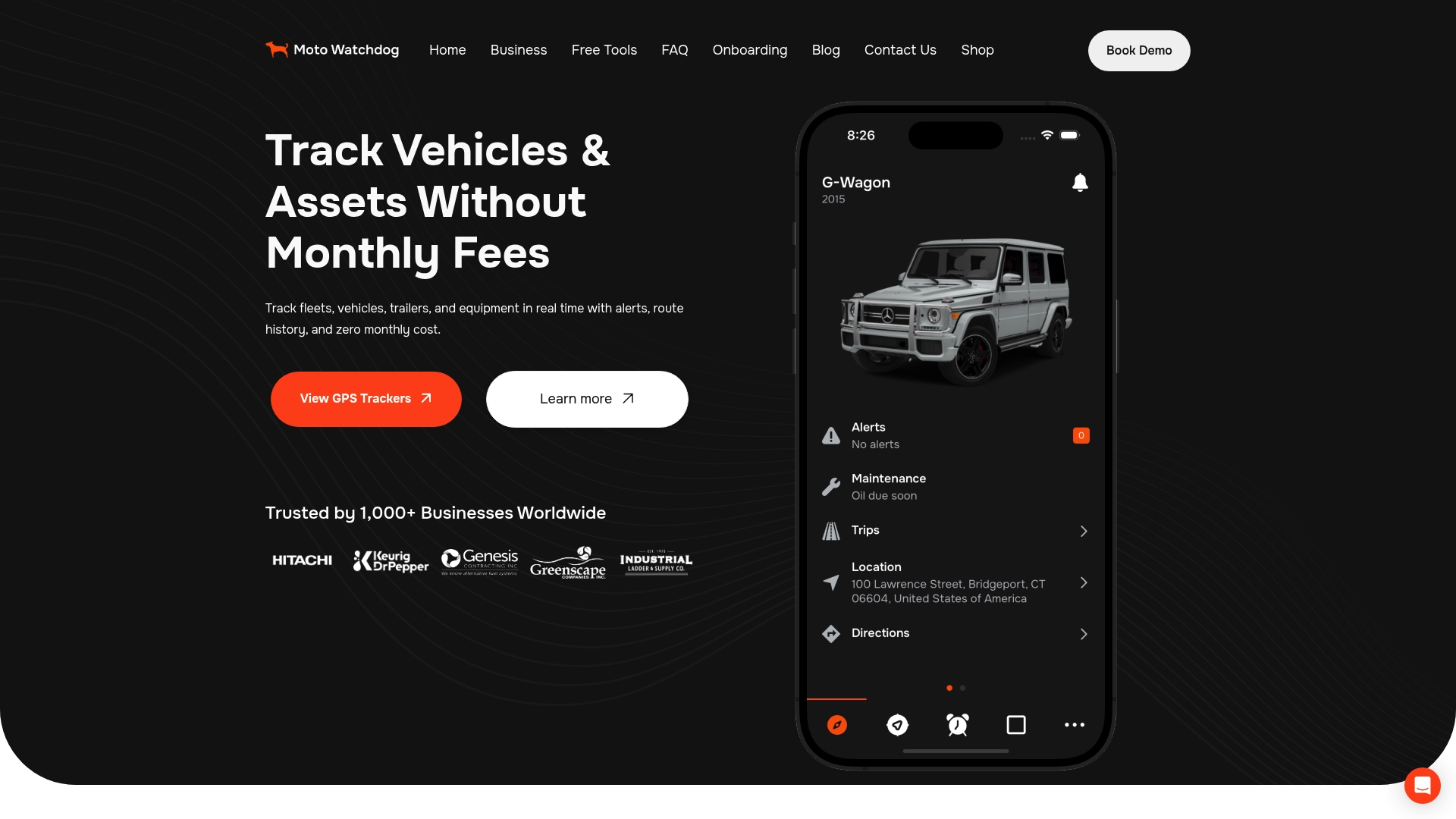
The platform runs on 4G connectivity and delivers the odometer data, trip histories, and location alerts that fleet managers and individual owners need. There are no recurring subscription charges, which makes the total cost of ownership predictable from day one. Explore subscription-free 4G GPS tracking from Motowatchdog and see how accurate odometer data can change how you manage your vehicles and assets.
FAQ
What is the difference between GPS and odometer distance tracking?
A traditional odometer counts wheel rotations to measure distance, while GPS calculates distance from satellite coordinate changes. Combined systems use both sources to correct each other’s weaknesses and produce more reliable mileage records.
How does a GPS odometer work in a vehicle tracker?
A GPS tracker records position coordinates at regular intervals and calculates the distance between each point. Device-based odometer systems process this calculation onboard the tracker, then sync the result to a server or app dashboard.
What type of GPS tracker is best for odometer data?
OBD-II trackers offer the easiest installation and pull odometer data directly from the vehicle’s diagnostic port. Hardwired trackers are better for fleets where tamper resistance matters. You can compare both options in detail with this OBD GPS tracker guide.
Can GPS tracking improve odometer reading accuracy?
Yes. GPS data corrects for odometer drift caused by tire wear or size changes, while odometer data fills in distance gaps when GPS signal is lost. The combination produces a more accurate distance record than either method alone.
Is GPS location data from odometer trackers private?
Privacy depends on the provider. Experts recommend choosing GPS devices with data encryption and user-controlled data purging to protect sensitive location history from unauthorized access or third-party sharing.