

How to start saving money
Lorem ipsum dolor sit amet, consectetur adipiscing elit lobortis arcu enim urna adipiscing praesent velit viverra sit semper lorem eu cursus vel hendrerit elementum morbi curabitur etiam nibh justo, lorem aliquet donec sed sit mi dignissim at ante massa mattis.
- Neque sodales ut etiam sit amet nisl purus non tellus orci ac auctor
- Adipiscing elit ut aliquam purus sit amet viverra suspendisse potent
- Mauris commodo quis imperdiet massa tincidunt nunc pulvinar
- Excepteur sint occaecat cupidatat non proident sunt in culpa qui officia
Why it is important to start saving
Vitae congue eu consequat ac felis placerat vestibulum lectus mauris ultrices cursus sit amet dictum sit amet justo donec enim diam porttitor lacus luctus accumsan tortor posuere praesent tristique magna sit amet purus gravida quis blandit turpis.

How much money should I save?
At risus viverra adipiscing at in tellus integer feugiat nisl pretium fusce id velit ut tortor sagittis orci a scelerisque purus semper eget at lectus urna duis convallis. porta nibh venenatis cras sed felis eget neque laoreet suspendisse interdum consectetur libero id faucibus nisl donec pretium vulputate sapien nec sagittis aliquam nunc lobortis mattis aliquam faucibus purus in.
- Neque sodales ut etiam sit amet nisl purus non tellus orci ac auctor
- Adipiscing elit ut aliquam purus sit amet viverra suspendisse potenti
- Mauris commodo quis imperdiet massa tincidunt nunc pulvinar
- Adipiscing elit ut aliquam purus sit amet viverra suspendisse potenti
What percentege of my income should go to savings?
Nisi quis eleifend quam adipiscing vitae aliquet bibendum enim facilisis gravida neque. Velit euismod in pellentesque massa placerat volutpat lacus laoreet non curabitur gravida odio aenean sed adipiscing diam donec adipiscing tristique risus. amet est placerat in egestas erat imperdiet sed euismod nisi.
“Nisi quis eleifend quam adipiscing vitae aliquet bibendum enim facilisis gravida neque velit euismod in pellentesque”
Do you have any comments? Share them with us on social media
Eget lorem dolor sed viverra ipsum nunc aliquet bibendum felis donec et odio pellentesque diam volutpat commodo sed egestas aliquam sem fringilla ut morbi tincidunt augue interdum velit euismod eu tincidunt tortor aliquam nulla facilisi aenean sed adipiscing diam donec adipiscing ut lectus arcu bibendum at varius vel pharetra nibh venenatis cras sed felis eget.
The IRS requires a per-trip record with four elements: the date, the destination, the business purpose, and the miles driven, along with an odometer reading at the start and end of each tax year. Records must be logged at or near the time of travel, not reconstructed months later. If your current log skips any of those four fields, start weekly logging now and build exportable reports before you file.
TL;DR:
- Accurate logs must include the trip date, destination, specific business purpose, miles driven, and annual odometer readings to withstand IRS scrutiny.
- Recordkeeping must be contemporaneous, ideally weekly, to meet IRS standards and avoid rejection of deductions during audits.
- GPS tracking devices offer automatic trip data collection, capturing date, route, and mileage without ongoing subscription costs, simplifying audit defense.
- When reconstructing mileage after a missed log, corroborate with calendar entries, receipts, and GPS data, but avoid relying solely on memory-based summaries.
- During audits, having a complete, well-organized record folder including trip logs, odometer readings, and supporting documents greatly improves the chance of retaining deduction benefits.
Table of Contents
- What Counts as IRS Mileage Tracking: The Four Required Fields
- Why “Timely” Recordkeeping Is the Real Audit Battleground
- Paper Logs, Spreadsheets, or Apps: What Format Actually Passes
- How to Separate Business Miles From Personal Driving
- IRS Standard Mileage Rates for 2026 and the Midyear Change
- Mileage Log Retention: How Long to Keep Records and What Auditors Request
- How GPS Trip Data Maps Directly to IRS Recordkeeping Rules
- The Column Checklist That Makes a Mileage Log Defensible
- What to Do If You Never Logged Your Mileage Contemporaneously
- Why the Standard Mileage Advice Misses the Real Risk
- A Mileage Tracker That Pays for Itself Once, Not Every Month
- Sources
What Counts as IRS Mileage Tracking: The Four Required Fields
Every business mile you deduct has to survive a simple test: could you hand your log to an examiner and have it stand on its own? Publication 463 lays out exactly what that log needs, and it’s shorter than most people expect.
For each trip, the IRS wants:
- Date of the trip, not just the month
- Destination or area traveled to (a city or general location is fine; you don’t need a street address for every stop)
- Business purpose stated in specific terms (“client meeting with Acme Corp,” not “business”)
- Miles driven for that trip alone, separate from any personal driving that day
On top of the per-trip data, you need an odometer reading at the beginning of the year and another at the end. That annual pair is what lets you calculate total miles driven and back into a business-use percentage that matches your trip log. Per-trip odometer readings aren’t legally required, but they’re useful corroboration if a log ever gets challenged.
Why does the IRS insist on this level of detail? Because the standard mileage deduction is one of the easiest expense categories to inflate, and examiners know it. A log with vague entries like “sales calls, various” or missing dates reads as an estimate, not a record. The IRS recordkeeping guidance on audits makes clear that the burden of proof sits with the taxpayer. If you can’t produce the four elements plus your annual odometer readings, the deduction is vulnerable regardless of how legitimate the driving actually was.
Why “Timely” Recordkeeping Is the Real Audit Battleground
The word that trips up more taxpayers than any dollar figure is “contemporaneous.” It doesn’t mean you have to log a trip the second you park the car. It means the record has to be made at or near the time the expense occurred, not typed up from memory during tax season the following March.
Practically, that gives you room to work with. Logging once a week, sitting down every Sunday to fill in the week’s trips while your memory is fresh, satisfies the IRS standard just as well as logging daily. What doesn’t satisfy it is a spreadsheet built in April from a mental reconstruction of the prior year.
Weekly logging is the sweet spot most tax professionals recommend — frequent enough to stay accurate, infrequent enough to actually stick with. CPA Practice Advisor’s analysis of a Tax Court case documents exactly what happens when that discipline slips: a taxpayer lost the entire vehicle deduction because the log had been assembled after the fact, with no contemporaneous support behind it.
A few habits keep you on the right side of that line:
- Log trips the same day or within the same week, every week, without exception
- Note the business purpose immediately, while the reason for the trip is still obvious
- Cross-check your weekly totals against a calendar or GPS export at month’s end
- Never wait until tax season to “fill in” a year of driving
The pattern in these cases isn’t complicated. Examiners distrust anything built retroactively, and they’re right to.
Paper Logs, Spreadsheets, or Apps: What Format Actually Passes
The IRS doesn’t mandate a specific format for your mileage log. A spiral notebook in your glove box satisfies the same legal standard as a phone app, as long as it contains the required fields. The format matters far less than what’s recorded inside it.
That said, some formats make audit defense dramatically easier:
- Paper logbooks work, but they’re slow to total, easy to lose, and impossible to back up. Fine for occasional drivers, painful for anyone logging dozens of trips a month.
- Spreadsheets (Excel, Google Sheets) add automatic totals and are searchable, but they still depend entirely on you remembering to enter every trip manually.
- GPS mileage apps and devices capture the date, distance, and route automatically, which removes the biggest failure point in manual logs: forgetting to log a trip at all. You still need to add the business purpose, since GPS data alone doesn’t know why you drove somewhere.
Whichever format you choose, your export needs to hold up on its own. An auditor reviewing your records generally wants to see:
- Individual trip rows with date, destination, purpose, and mileage
- A yearly odometer summary (start-of-year and end-of-year readings)
- Totals broken out by category: business, commuting, and other personal use
Apps and GPS devices win on completeness, since they log every mile driven whether you remember to write it down or not. The tradeoff is data control: a subscription-based app often ties your trip history to a recurring fee and a third-party server. A device that stores and exports data without a monthly subscription avoids that ongoing cost while still producing the CSV or PDF an auditor or tax preparer needs.
How to Separate Business Miles From Personal Driving
Mixed-use vehicles create the most confusion in mileage tracking, because the IRS doesn’t deduct a vehicle. It deducts a percentage of a vehicle’s use.
The math itself is simple: divide business miles by total miles driven for the year to get your business-use percentage. If you drove 18,000 total miles and 12,600 were for business, that’s a 70% business-use vehicle, and 70% of your vehicle-related costs (or, if you use the standard rate, 70% of miles times the rate) becomes deductible.
The part that trips people up is classification, especially commuting. Your regular drive from home to a fixed workplace is personal mileage, not business mileage, even if you’re self-employed. Business mileage starts once you’re driving between work locations, to client sites, or to a temporary job site, not on the daily commute.
To keep the split defensible:
- Annotate each trip with a purpose specific enough to prove it wasn’t personal
- Keep your daily commute separate from midday business trips, even on the same day
- Save employer or client confirmations (meeting invites, service tickets) that corroborate a trip’s purpose
- Reconcile your logged business miles against your annual odometer totals at year end
A business-use percentage that’s inconsistent with your logged trips is one of the first things an examiner will flag.
IRS Standard Mileage Rates for 2026 and the Midyear Change
The IRS sets a new standard mileage rate almost every year, and 2026 comes with a rate change mid-year, not just at January 1. According to the official IRS standard mileage rate page, the rates are:
| Period | Business rate (cents/mile) |
|---|---|
| January 1 – June 2026 | 72.5 |
| July 1 – December 2026 | 76 |
The mid-year jump was formalized through Internal Revenue Bulletin 2026-29, which modified the earlier rate notice and raised the business rate for the second half of the year. If you drove business miles in both halves of 2026, you’ll need to calculate your deduction using both rates separately rather than applying one flat number to the full year. That means your log needs to support splitting mileage totals by date range, not just by an annual sum.
Here’s the detail that catches people off guard: the rate change affects your math, not your recordkeeping. Whether the rate is 72.5 cents or 76 cents, the IRS still requires the same four trip elements and the same annual odometer readings. A higher rate doesn’t buy you a lower documentation standard.
Mileage Log Retention: How Long to Keep Records and What Auditors Request
The general retention rule for mileage records mirrors the standard tax rule: keep them for the typical statute of limitations period for opening an audit, generally several years, starting from the date you filed the return claiming the deduction.
Longer retention makes sense in specific situations. If you significantly underreported income (generally by more than 25%), the IRS can look back six years. If you’re depreciating a vehicle using the actual expense method, keep records for as long as you own the vehicle plus three years after you dispose of it, since depreciation schedules span multiple tax years.
When an audit notice does arrive, the IRS’s guidance on audits and records requests makes clear you’ll need to produce documentation on demand, often within a fairly short window. Build your audit folder before you ever need it:
- Your full mileage log, organized by month, with all four trip elements per row
- Annual odometer readings for start and end of each tax year
- Receipts for fuel, maintenance, and parking if you’re using actual expenses
- Calendar entries or client confirmations that back up your stated business purposes
- A single exported CSV or PDF summary you can hand over immediately rather than assembling on the spot
The taxpayers who breeze through mileage audits are almost always the ones who could produce that folder in minutes, not days.
How GPS Trip Data Maps Directly to IRS Recordkeeping Rules
A GPS device does something a memory or a paper log can’t: it captures every mile automatically and timestamps it the moment the trip happens, which is the definition of contemporaneous.
Line up the data fields and the overlap with IRS requirements is almost exact. A GPS trip export logs the date and time automatically, satisfying the date requirement without you having to remember anything. It records start and end coordinates, which maps directly onto destination. It measures trip distance precisely, replacing odometer guesswork with GPS-calculated mileage. The one field GPS can’t capture on its own is business purpose, since a device doesn’t know why you made a trip.
Moto Watchdog’s subscription-free trackers are built around exactly this gap. The devices generate trip and mileage reports automatically, and because there’s no monthly fee attached, you’re not paying an ongoing cost just to keep your own tax records accessible. Long battery life means the device keeps logging trips without you having to remember to charge or re-pair it weekly, and geofence tagging lets you flag recurring business locations (job sites, client offices) so trips to those addresses are easier to label at tax time.

Pro Tip: Export your GPS trip history monthly and add a one-line business purpose to each row while the trip is still fresh in your mind. A GPS log with an unexplained destination is still just a location, not a deduction.
To turn a raw export into an audit-ready log:
- Download the trip report as CSV or PDF at least monthly, not once a year
- Annotate business purpose directly on the export rather than in a separate document
- Combine the GPS mileage total with your manually recorded annual odometer readings
- Store both files together in the same folder you’d hand an auditor
The Column Checklist That Makes a Mileage Log Defensible
A usable mileage log doesn’t need to be complicated. It needs to have the right columns, filled in consistently, every single trip.
At minimum, your log (whether it’s a notebook, a spreadsheet, or a GPS export) should include these columns:
- Date of trip
- Starting location and destination
- Business purpose (specific, not generic)
- Miles driven (that trip only)
- Odometer reading (optional per trip, mandatory at year start and year end)
- Running total of year-to-date business miles
A sample row might read: “3/14/2026 | Home office to Riverside Supply Co. | Delivery pickup for Client B order #4471 | 22 miles.” That single line contains every element an examiner needs to accept the trip as substantiated.
At year end, total your business miles and multiply by the applicable IRS standard mileage rate for each date range. That total feeds directly into Schedule C if you’re self-employed, into Form 4562 if you’re claiming vehicle depreciation, or into an expense reimbursement form if you’re an employee seeking repayment from your employer under a company mileage policy. Whichever form it lands on, the underlying log looks the same. For fleet operators managing multiple drivers, exporting individual trip data into one consolidated fleet mileage report each month keeps every vehicle’s records in the same defensible format.

What to Do If You Never Logged Your Mileage Contemporaneously
If you’re staring at a year of undocumented driving, don’t panic, but don’t assume you can simply write it all down now and call it done. Retroactive reconstructions are the weakest form of evidence the IRS sees, and Tax Court decisions show self-created summaries with no corroborating evidence are routinely disallowed. A reconstruction built entirely from memory, with nothing else backing it up, is close to worthless in an audit.
That said, a reconstruction built from real corroborating evidence has a fighting chance. Work through these steps in order:
- Pull calendar entries showing client meetings, job sites, or appointments
- Gather receipts (gas, parking, tolls, hotel) that place you in a specific location on a specific date
- Check your phone’s location history or any GPS device data still stored
- Request confirmation emails or invoices from clients or employers verifying visit dates
- Map likely routes between confirmed points to estimate mileage
The moment you finish a reconstruction, stop reconstructing and start logging going forward. One bad year is a fixable problem. A pattern of annual reconstructions is what turns a routine audit into a lost deduction.
Why the Standard Mileage Advice Misses the Real Risk
Most guidance on this topic treats mileage tracking as a math problem: pick a rate, multiply by miles, done. That framing misses where deductions actually get lost. It’s rarely the calculation that fails in an audit. It’s the absence of contemporaneous proof behind the number on the return.
The conventional advice to “keep a mileage log” undersells how strict the IRS reading of “log” really is. A log assembled from memory in March, no matter how honest, carries the same weakness the Tax Court has punished repeatedly: no independent corroboration. That’s the gap automated tracking closes, not by making the deduction bigger, but by making the record impossible to dispute.
If you take one thing from this guide, prioritize timing over precision. A slightly rough weekly log beats a meticulous annual reconstruction every time, because timing is what the IRS actually tests. Get the habit right first. The math, and the rate table, take care of themselves.
— Louis
A Mileage Tracker That Pays for Itself Once, Not Every Month
Most mileage apps ask you to trade a subscription fee for automation, month after month, for as long as you drive. Motowatchdog skips that trade entirely: you buy the GPS device once, and it keeps generating trip and mileage reports without a recurring bill eating into the deduction you’re trying to protect.
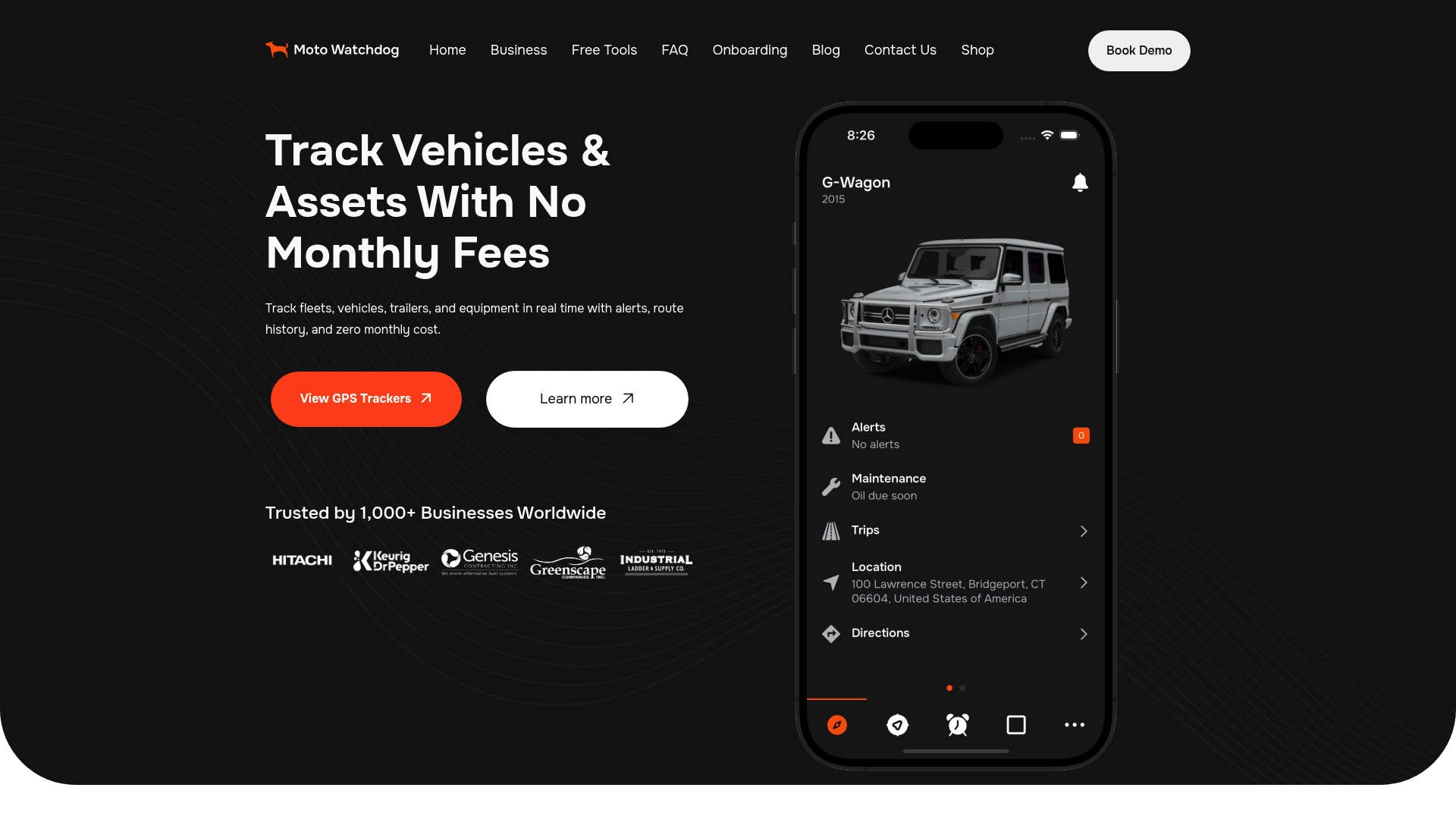
That matters more than it sounds. A driver logging 15,000 business miles a year at the 2026 rate is working to protect a real deduction, and a monthly app fee quietly chips away at the value of that work over twelve months. A one-time device purchase doesn’t. Moto Watchdog’s trackers run on long battery life, support geofence alerts for recurring job sites or client stops, and export trip data as reports you can hand straight to a tax preparer or produce in an audit.
If your current logging habit depends on remembering to open an app before every drive, a device that captures the trip automatically removes the one failure point that costs people their deduction. Check device options and start building an export-ready mileage record before the next filing season catches you short.
This article is general information, not a substitute for advice from a qualified financial advisor. Consult a qualified financial professional about your own circumstances before acting on anything here.
Sources
- Publication 463 (Travel, Gift, and Car Expenses)
- CPA loses business car deductions in tax court case | CPA Practice Advisor

