How to start saving money
Lorem ipsum dolor sit amet, consectetur adipiscing elit lobortis arcu enim urna adipiscing praesent velit viverra sit semper lorem eu cursus vel hendrerit elementum morbi curabitur etiam nibh justo, lorem aliquet donec sed sit mi dignissim at ante massa mattis.
- Neque sodales ut etiam sit amet nisl purus non tellus orci ac auctor
- Adipiscing elit ut aliquam purus sit amet viverra suspendisse potent
- Mauris commodo quis imperdiet massa tincidunt nunc pulvinar
- Excepteur sint occaecat cupidatat non proident sunt in culpa qui officia
Why it is important to start saving
Vitae congue eu consequat ac felis placerat vestibulum lectus mauris ultrices cursus sit amet dictum sit amet justo donec enim diam porttitor lacus luctus accumsan tortor posuere praesent tristique magna sit amet purus gravida quis blandit turpis.

How much money should I save?
At risus viverra adipiscing at in tellus integer feugiat nisl pretium fusce id velit ut tortor sagittis orci a scelerisque purus semper eget at lectus urna duis convallis. porta nibh venenatis cras sed felis eget neque laoreet suspendisse interdum consectetur libero id faucibus nisl donec pretium vulputate sapien nec sagittis aliquam nunc lobortis mattis aliquam faucibus purus in.
- Neque sodales ut etiam sit amet nisl purus non tellus orci ac auctor
- Adipiscing elit ut aliquam purus sit amet viverra suspendisse potenti
- Mauris commodo quis imperdiet massa tincidunt nunc pulvinar
- Adipiscing elit ut aliquam purus sit amet viverra suspendisse potenti
What percentege of my income should go to savings?
Nisi quis eleifend quam adipiscing vitae aliquet bibendum enim facilisis gravida neque. Velit euismod in pellentesque massa placerat volutpat lacus laoreet non curabitur gravida odio aenean sed adipiscing diam donec adipiscing tristique risus. amet est placerat in egestas erat imperdiet sed euismod nisi.
“Nisi quis eleifend quam adipiscing vitae aliquet bibendum enim facilisis gravida neque velit euismod in pellentesque”
Do you have any comments? Share them with us on social media
Eget lorem dolor sed viverra ipsum nunc aliquet bibendum felis donec et odio pellentesque diam volutpat commodo sed egestas aliquam sem fringilla ut morbi tincidunt augue interdum velit euismod eu tincidunt tortor aliquam nulla facilisi aenean sed adipiscing diam donec adipiscing ut lectus arcu bibendum at varius vel pharetra nibh venenatis cras sed felis eget.
Ignition detection lets a GPS tracker know whether a truck, trailer-mounted engine or piece of heavy equipment is running or shut off. The tracker infers that state from a wired ignition signal, from battery voltage, or from vibration and motion. It then uses the state to log trips, measure idle time, set reporting rates and send alerts. Below you will find how each method works, what it gives a fleet, how to diagnose a tracker that reads “ignition on” when the engine is off, and why detection is not the same as remotely disabling an engine.
TL;DR
- Ignition detection means the tracker records engine on and off events. That is the basis for accurate trip logs, idle time and engine-hours style reporting.
- Trackers read ignition three ways: a dedicated ignition wire, a voltage reading, or a vibration and motion sensor. The wired signal is the most direct.
- A tracker that shows ignition on while the engine is off usually has the signal wire on the wrong circuit, a loose connection, or voltage that stays high after shutdown.
- Detection only reports status. Remote engine cutoff is a separate feature with its own wiring and safety rules.
- If you manage many assets, choose a tracker with no monthly fees so ignition-based reporting does not add a recurring cost to every unit.
Table of Contents
- What ignition detection means on a GPS tracker
- How a GPS tracker detects ignition on and off
- What fleet data ignition detection gives you
- Installing and configuring ignition detection in fleet vehicles and equipment
- Why a tracker shows ignition on when the engine is off
- Ignition detection vs. remote engine shutoff
- Our perspective
- Match the tracker to the job
- Get a tracker with no monthly fees
- FAQ
- Sources
What ignition detection means on a GPS tracker
In plain terms, ignition detection is a status flag. The tracker asks one question over and over: is the engine switched on right now? Every change in the answer becomes a timestamped event with a location attached.
That single flag is more useful than it sounds. Without it, a tracker only knows where a vehicle is and whether it is moving. With it, the tracker also knows:
- When a trip starts and ends, even if the vehicle never leaves the yard.
- How long an engine ran while stationary, which is idle time.
- Whether a machine was started outside working hours.
- When to report often (engine running) and when to report rarely (engine off), which protects the tracker’s battery or the vehicle’s battery.
For a contractor with a dozen pickups, a skid steer and a few trailers with generators, this is the difference between a dot on a map and a record you can use for payroll, job costing and billing.
How a GPS tracker detects ignition on and off
There is no single universal method. Trackers use one of three approaches, and some combine them.
Ignition sense wire (hardwired)
A hardwired tracker has a signal input that connects to a circuit that is live only when the key is in the ON or RUN position (often labeled “ACC” or “ignition”). When the circuit has voltage, the tracker logs ignition on. When it drops, ignition off.
This is the most direct method because it reads the state the vehicle itself sets. It is the usual choice for road vehicles and for equipment with a key switch.
Voltage sensing
Some devices power themselves from a constant source and infer the engine state from battery voltage. A resting battery sits lower than a battery being charged by a running alternator, so a rise in voltage suggests the engine is on. A patent describing this approach notes that simply sensing battery voltage can be used to tell when the alternator is charging, and that it can be paired with other signals to improve reliability. Voltage thresholds differ between 12V and 24V systems and between gasoline and diesel machines, so settings matter.
Vibration and motion sensing
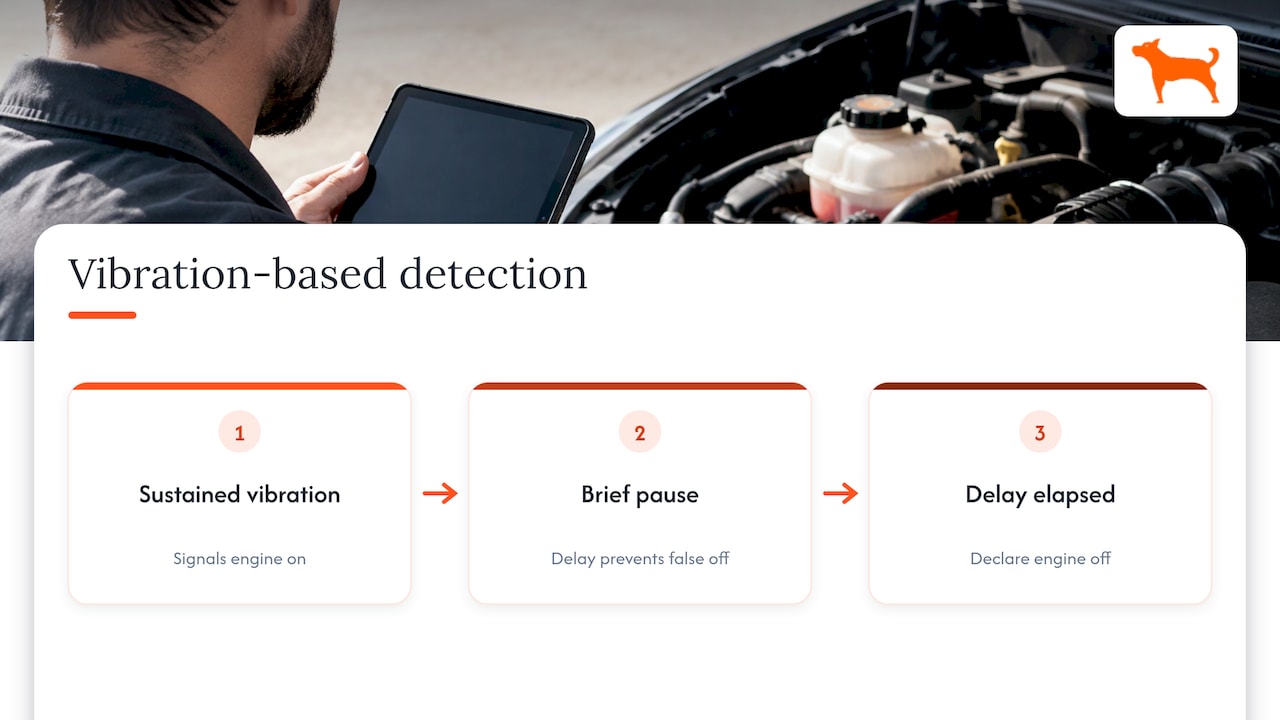
A running engine vibrates. A motion sensor can treat sustained vibration as engine on and use a delay before declaring engine off. One published design explains that the vibration must continue for a set delay time, and that the delay stops brief pauses in vibration from creating false off signals. This method is handy on equipment with no accessible ignition circuit, but it infers the state rather than reading it, so a rough road or a nearby running machine can confuse it.
Which method fits which asset
| Asset | Typical ignition signal | Watch for |
|---|---|---|
| Pickup or service truck | Ignition wire or voltage | Circuits that stay live after the key is off |
| Excavator, loader, skid steer | Voltage or vibration | Shared vibration from nearby machines |
| Trailer with generator | Vibration or generator output | Generator running without a key event |
| Rental equipment returned to a yard | Vibration or voltage | Machines run briefly for loading |
| Personal vehicle | Voltage or ignition wire | Accessory mode counted as ignition on |
What fleet data ignition detection gives you
Once the tracker has a reliable ignition state, several reports become trustworthy.
- Trip and mileage reports. A trip starts at ignition on and ends at ignition off. Without that, trips are guessed from movement and short stops get merged.
- Idle time. Ignition on plus no movement equals idling. Idle hours burn fuel and add engine wear, so a clean number lets you coach drivers or reschedule jobs.
- After-hours use alerts. A push notification when an engine starts on a Sunday night is one of the clearest theft and misuse signals a small fleet can get.
- Maintenance reminders. Service intervals based on engine run time or mileage only work if run time is counted correctly.
- Rental accountability. For heavy equipment rental, ignition events help document when a machine was running during a rental period, which supports billing conversations and damage disputes.
Combine ignition events with geofences and you get sharper alerts: not just “a trailer left the yard” but “an engine started inside the yard at 2 a.m.”
Installing and configuring ignition detection in fleet vehicles and equipment
Getting the signal right is mostly an installation question. A few habits prevent most problems.
Choose the right circuit
The ignition input should connect to a circuit that is on with the key in the RUN position and off when the key is removed. Avoid circuits that also feed accessories or stay live for a delay after shutdown. On heavy equipment, confirm with the machine’s wiring diagram rather than guessing by wire color.
Keep power and signal separate
A constant power feed keeps the tracker reporting when the engine is off. The ignition signal is a separate input. Mixing them up produces a tracker that is always on or always off.
Be careful on the vehicle data link
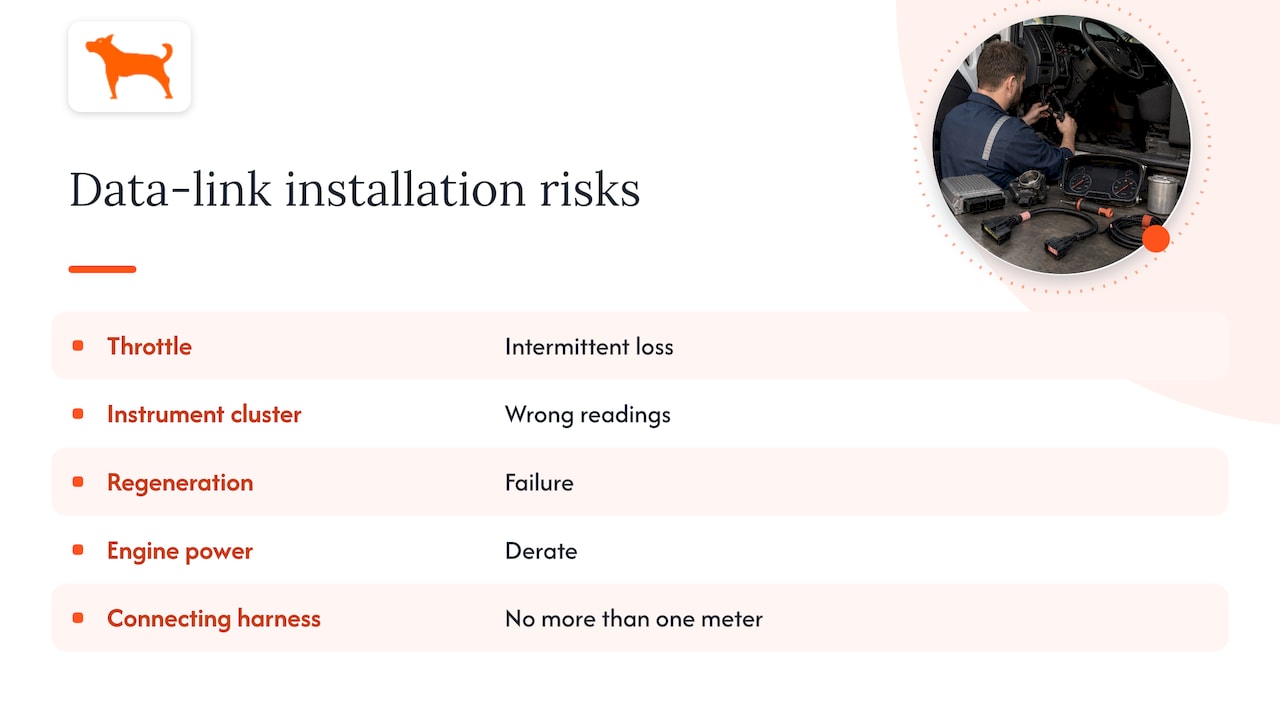
When a device taps the vehicle’s data link instead, installation quality matters for the machine itself. Federal safety documentation on heavy trucks warns that an improperly installed aftermarket device on the data link can cause intermittent throttle loss, wrong instrument cluster readings, regeneration failure and derate. The same document states that third-party connecting harnesses should be no more than one meter long. If you install anything on a diesel truck’s data link, follow the manufacturer’s guidance and use a qualified technician when unsure.
Set sensible reporting intervals
Most fleets report more frequently with the engine on and far less with the engine off. Check that your app settings match how you use the asset. A trailer that sits for weeks does not need a fix every few seconds.
Check the first trip
After installing, turn the key on, off, then on again. Confirm the app shows each change within a short time. Do this for every unit before it goes on a job, because a wiring mistake found at install takes minutes to fix and one found three months later corrupts three months of reports.
Why a tracker shows ignition on when the engine is off
This is the most common complaint, and it is almost always a wiring or settings problem rather than a defective unit. Work through these causes in order.
- Wrong circuit. The signal wire was tied to a constant 12V source or to an accessory circuit that stays live. Move it to a switched ignition circuit.
- Loose or poor connection. An intermittent contact can toggle the state. Reseat and secure the splice or connector.
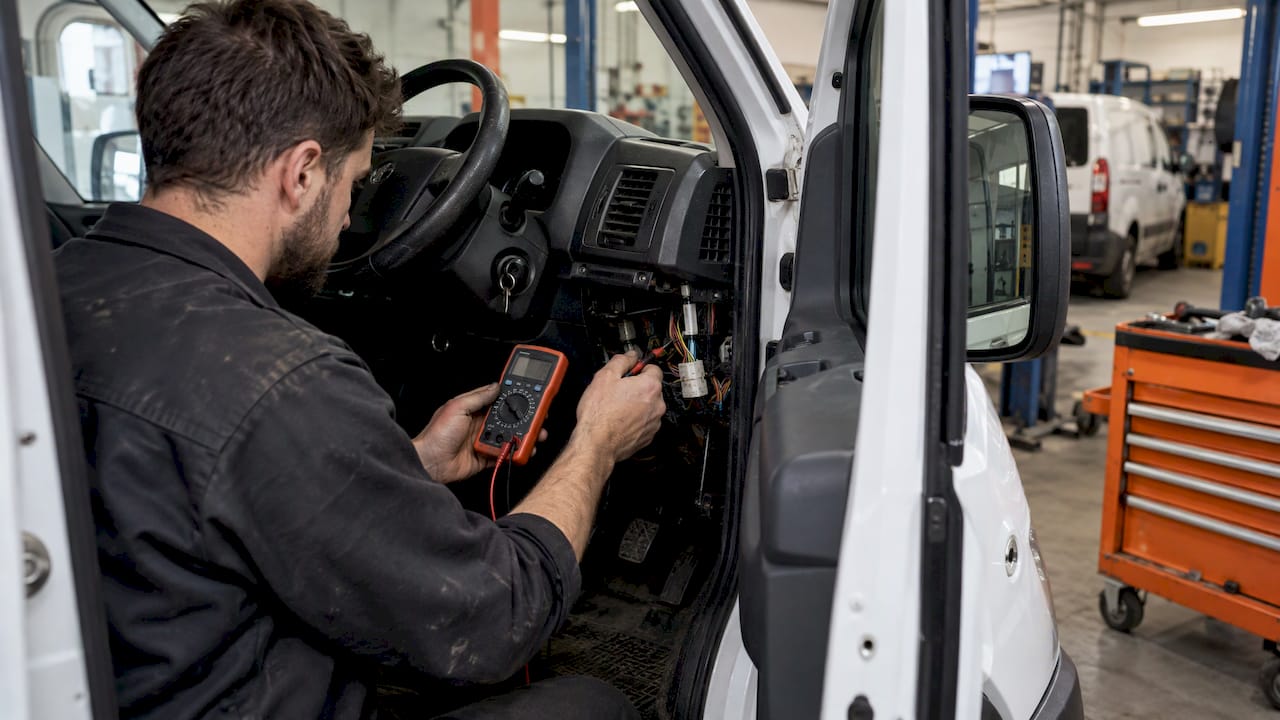
- Residual or induced voltage. Some circuits keep a small voltage after shutdown, or pick it up from neighboring wires. Check the reading with a multimeter at the wire with the key off. It should fall to near zero.
- Voltage-based detection thresholds. If the tracker infers ignition from battery voltage, a freshly charged battery or a battery maintainer can keep the reading high. Adjust the threshold in the device settings if the app allows it.
- Vibration-based detection. Nearby running equipment, a loading ramp or wind on a trailer can look like engine vibration. Lengthen the off-delay or mount the unit away from the source.
- Accessory mode. If the key sits in ACC to run a radio or work lights, the circuit may read as on. Decide whether you want that counted and wire accordingly.
Diagnose safely
- Turn the vehicle off and remove the key before touching any wiring.
- Disconnect the battery before cutting, splicing or re-routing power wires, or use non-invasive tap connectors designed for the job.
- Never probe airbag, brake or engine control wiring. If you cannot identify the correct ignition wire with a wiring diagram, ask an automotive or equipment electrician.
- On vehicles with sensitive electronics, a test light can overload a circuit, so use a multimeter.
If the reading is wrong only some of the time, log the times it happens. A pattern, such as always after charging or always when a nearby machine runs, points directly to the cause.
Ignition detection vs. remote engine shutoff
The two get confused because some trackers offer both, and forum questions about “ignition wires” often mix them up.
| Ignition detection | Remote engine disable | |
|---|---|---|
| What it does | Reads whether the engine is on | Interrupts a circuit to stop the engine from starting |
| Wiring | Input only: it listens | Output: it controls a relay in the vehicle |
| Risk if mis-wired | Wrong reports | Stalled or unstartable vehicle, possible safety hazard |
| Best use | Reporting, alerts, trip logs | Recovery and theft prevention on suitable vehicles |
Detection is passive. It cannot stall a machine, which makes it the safer feature to rely on for daily operations. If you ever add a cutoff relay, it should be installed by a qualified technician and used only when the vehicle is stopped. Cutting an engine while a vehicle is moving creates a real hazard.
Our perspective
Fleet managers tell us the same thing: they want reliable data without a bill that grows with every truck, trailer or machine they add. Ignition-based reporting is exactly the kind of data that pays for itself, because trip logs, idle time and after-hours alerts feed straight into fuel, labor and theft decisions.
That is why we build trackers with no monthly or recurring fees, lifetime 4G data included, and no activation fees. Our system supports unlimited vehicles and users on one dashboard, so a contractor or heavy equipment rental company can grow from five units to fifty without renegotiating a plan.
We also think the most useful features are the ones you can act on the same day: geofence alerts, push notifications, trip and mileage reporting, idle time tracking and maintenance reminders, all managed from a mobile app. The goal is to move from reactive problem-solving to data-driven decisions about the equipment you already own.
Louis
Match the tracker to the job
Before buying, list your assets and decide what you want to know about each one.
- On-road vehicles: you want trip logs, mileage reports for reimbursement or taxes, and idle alerts.
- Heavy equipment: you want start alerts, idle time and maintenance reminders tied to usage.
- Trailers and unpowered assets: location, geofence and movement alerts matter more than engine status.
- Rental fleets: you want after-hours alerts, geofenced yard boundaries and a shared view for the people who dispatch and return machines.
Then compare the total cost of ownership. A tracker with a low upfront price and a monthly plan can cost more over three years than a one-time purchase. For a 20-unit fleet, even a modest monthly plan per device adds up to thousands of dollars over the life of the equipment.
Get a tracker with no monthly fees
Our trackers start at $124.99 as a one-time purchase, with no monthly or recurring fees. They are built for vehicles, fleets, trailers, equipment and personal assets, with real-time location, customizable geofencing and alerts, long battery life, trip and mileage reporting, idle time tracking, maintenance reminders and multi-device management from a free mobile app. Our team replies to sales and support questions the same day.
See the full range on our GPS trackers page and choose the units that fit your fleet or rental yard.
FAQ
What is ignition detection on a GPS tracker?
It is a feature that lets the tracker record when a vehicle’s or machine’s engine turns on and off. The tracker uses those events to log trips, calculate idle time and send start alerts. It reads status only and does not control the engine.
Can a GPS tracker detect ignition without wiring?
Yes, in some cases. Devices can infer engine state from battery voltage or from vibration, which avoids splicing into the ignition circuit. These methods estimate the state rather than read it, so thresholds and mounting position affect accuracy.
Why does my tracker say ignition on when the engine is off?
The usual causes are a signal wire on a constant or accessory circuit, a loose connection, leftover voltage after shutdown, or vibration from nearby equipment. Check the wire with a multimeter with the key off, and have an electrician help if you cannot identify the circuit.
Is ignition detection the same as remote engine shutoff?
No. Detection listens to the ignition state and reports it. Engine shutoff is an output that controls a relay and can stop a vehicle from starting. They are separate features with different wiring and different safety considerations.