
How to start saving money
Lorem ipsum dolor sit amet, consectetur adipiscing elit lobortis arcu enim urna adipiscing praesent velit viverra sit semper lorem eu cursus vel hendrerit elementum morbi curabitur etiam nibh justo, lorem aliquet donec sed sit mi dignissim at ante massa mattis.
- Neque sodales ut etiam sit amet nisl purus non tellus orci ac auctor
- Adipiscing elit ut aliquam purus sit amet viverra suspendisse potent
- Mauris commodo quis imperdiet massa tincidunt nunc pulvinar
- Excepteur sint occaecat cupidatat non proident sunt in culpa qui officia
Why it is important to start saving
Vitae congue eu consequat ac felis placerat vestibulum lectus mauris ultrices cursus sit amet dictum sit amet justo donec enim diam porttitor lacus luctus accumsan tortor posuere praesent tristique magna sit amet purus gravida quis blandit turpis.

How much money should I save?
At risus viverra adipiscing at in tellus integer feugiat nisl pretium fusce id velit ut tortor sagittis orci a scelerisque purus semper eget at lectus urna duis convallis. porta nibh venenatis cras sed felis eget neque laoreet suspendisse interdum consectetur libero id faucibus nisl donec pretium vulputate sapien nec sagittis aliquam nunc lobortis mattis aliquam faucibus purus in.
- Neque sodales ut etiam sit amet nisl purus non tellus orci ac auctor
- Adipiscing elit ut aliquam purus sit amet viverra suspendisse potenti
- Mauris commodo quis imperdiet massa tincidunt nunc pulvinar
- Adipiscing elit ut aliquam purus sit amet viverra suspendisse potenti
What percentege of my income should go to savings?
Nisi quis eleifend quam adipiscing vitae aliquet bibendum enim facilisis gravida neque. Velit euismod in pellentesque massa placerat volutpat lacus laoreet non curabitur gravida odio aenean sed adipiscing diam donec adipiscing tristique risus. amet est placerat in egestas erat imperdiet sed euismod nisi.
“Nisi quis eleifend quam adipiscing vitae aliquet bibendum enim facilisis gravida neque velit euismod in pellentesque”
Do you have any comments? Share them with us on social media
Eget lorem dolor sed viverra ipsum nunc aliquet bibendum felis donec et odio pellentesque diam volutpat commodo sed egestas aliquam sem fringilla ut morbi tincidunt augue interdum velit euismod eu tincidunt tortor aliquam nulla facilisi aenean sed adipiscing diam donec adipiscing ut lectus arcu bibendum at varius vel pharetra nibh venenatis cras sed felis eget.
A hardwired GPS tracker connects directly to a vehicle’s electrical system, drawing continuous power from the battery or ignition line to deliver uninterrupted, real-time location data. Unlike plug-and-play or magnetic units that depend on internal batteries, hardwired tracking systems never go dark when a battery dies or a device gets bumped loose. That permanence is exactly what commercial fleets, service contractors, and high-value asset operators need.
Here is how the core operation breaks down:
- Power source: The device taps the vehicle’s 12V constant supply and a ground wire, with an optional ignition sense wire that signals when the engine is running.
- Trip detection: Most units use two methods simultaneously. Wired ignition detection reads a voltage signal directly from the ignition line. Emulated ignition uses the onboard accelerometer and GPS to detect movement, starting a trip when the vehicle travels beyond a certain movement and speed threshold, even without a physical ignition connection.
- Data transmission: Once a trip begins, the device activates its GPS module and cellular modem, uploading location records to a fleet management platform via a cellular network.
- Update frequency: With the ignition sense wire connected, location updates frequently when the ignition sense wire is connected. Without it, the device falls back to updates every 2 hours, which makes the ignition wire connection critical for live fleet monitoring.
- Advanced telematics: Continuous power supports features like driver behavior monitoring, AI camera integration, and remote starter interruption that battery-powered devices simply cannot sustain.
When should you choose a hardwired GPS tracker?
The answer depends on how long you need to track a vehicle and how much data you actually want. For a fleet owner running delivery trucks five days a week, a battery-powered tracker creates a maintenance burden. A hardwired unit removes that entirely.
Hardwired trackers are the right choice when:
- Vehicles operate on fixed, recurring routes where continuous monitoring matters.
- You need advanced telematics features like ignition status, driver behavior scoring, or AI camera feeds.
- Asset security is a priority and a discreet, tamper-resistant installation is required.
- Your fleet includes commercial trucks, service vans, or heavy equipment that stays in service for years.
Battery-powered or plug-and-play trackers make more sense for short-term deployments, rental equipment, or assets that move between owners frequently. They install in minutes and transfer easily, but they trade update frequency and feature depth for that convenience.
Pro Tip: For mixed fleets, deploy hardwired trackers on your primary powered vehicles and use magnetic or battery-powered units on trailers and unpowered equipment. Both device types can feed into the same fleet management platform, giving you unified visibility without forcing a single hardware solution across every asset type.
What features and benefits do hardwired GPS trackers offer?
Continuous power is the foundation, but what gets built on top of it is what separates hardwired devices from every other tracker category.
Core features fleet owners rely on:
- No battery maintenance: The vehicle’s electrical system handles power indefinitely. There are no charging cycles, no dead units, and no gaps in coverage.
- Ignition status detection: The device knows exactly when the engine starts and stops, enabling accurate trip logging, idle time reporting, and unauthorized use alerts.
- Driver behavior monitoring: With stable power, the tracker can support accelerometer-based scoring for harsh braking, rapid acceleration, and sharp cornering, data that directly informs driver coaching programs.
- AI camera integration: Many hardwired systems support ADAS (Advanced Driver Assistance Systems) and DMS (Driver Monitoring Systems) cameras, adding a visual layer to telematics data.
- Configurable logging parameters: Trip data records based on distance traveled, direction changes of 20° or 60° depending on distance, and speed variations, so the route plotted follows the actual road rather than cutting corners.
- Tamper alerts: If the wiring is cut, the device can immediately send a power disconnection alarm to the fleet platform, a feature that matters for high-value cargo and long-haul transportation.
- Discreet installation: Installed behind the dashboard within the main wiring harness, a properly fitted hardwired tracker is extremely difficult to detect or remove without specialized knowledge.
How to install a hardwired GPS tracker step by step
A clean installation takes roughly 30–60 minutes for someone comfortable with basic automotive wiring. Rushing any step creates problems that are frustrating to diagnose later.
What you need before you start:
- Wire stripper and crimping tool
- Electrical tape and heat-shrink connectors
- Multimeter for voltage testing
- Zip ties for cable management
- The device’s wiring diagram
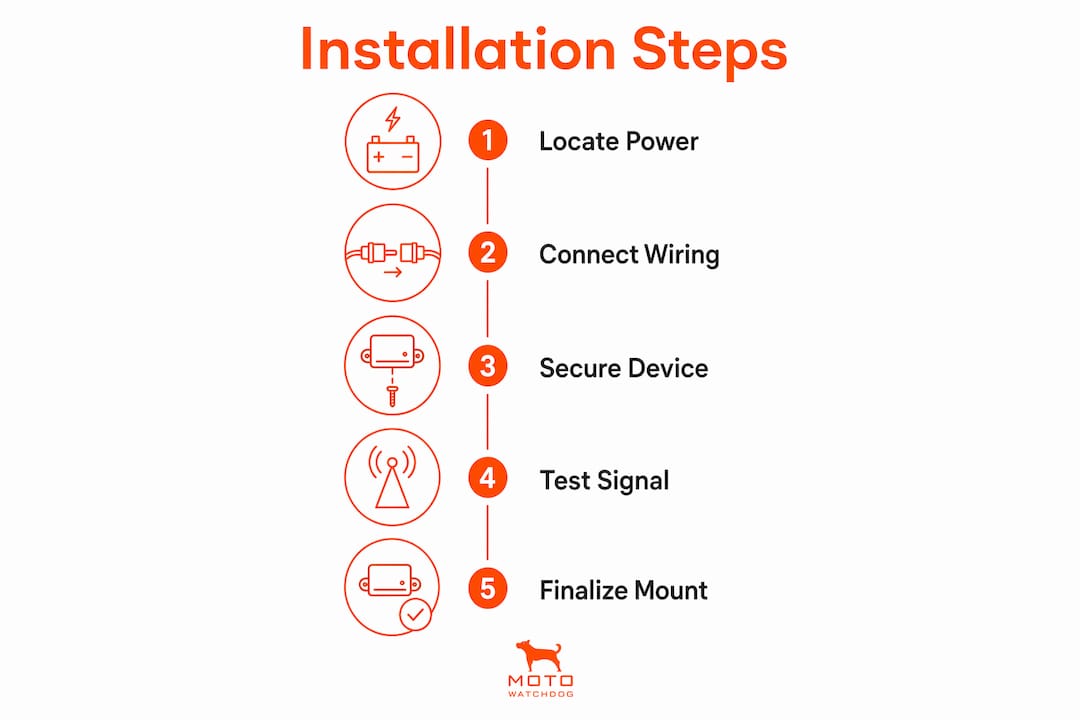
Installation steps:
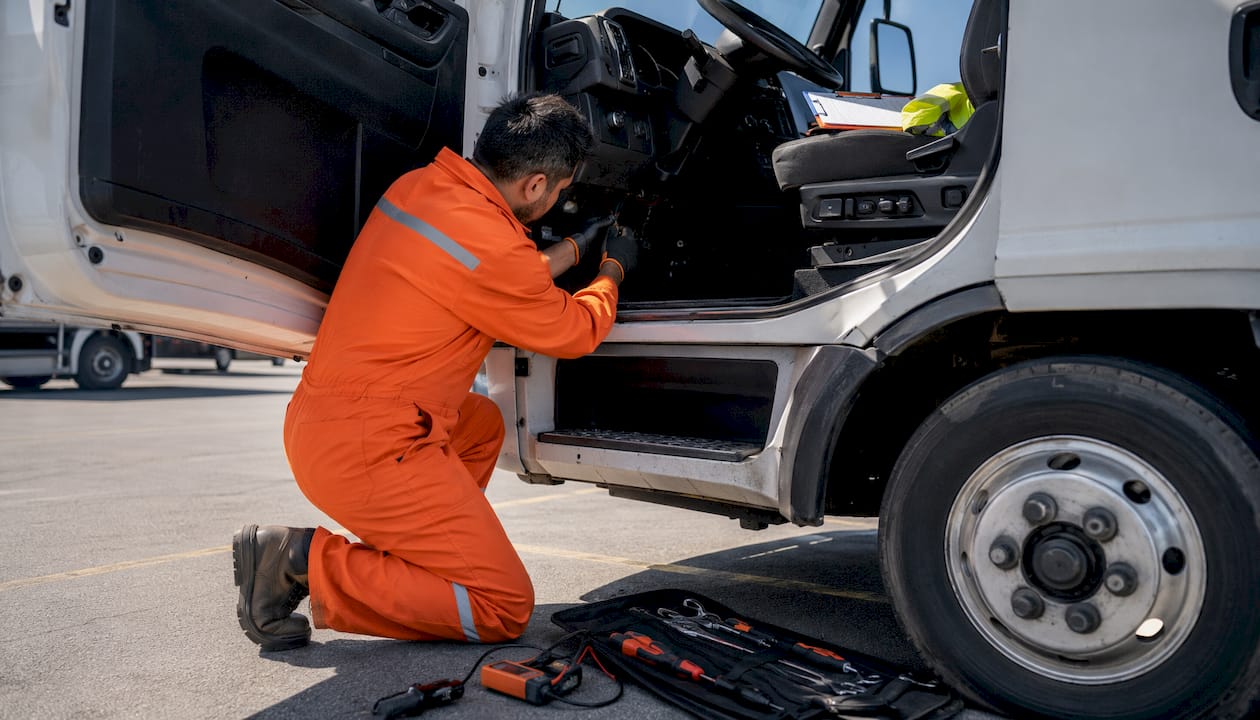
- Disconnect the vehicle battery before touching any wiring. This prevents shorts and protects both the vehicle’s electronics and the tracker.
- Identify your three primary wires. For most devices: red wire to a 12V constant DC source, black wire to chassis ground, and white wire to the ignition sense circuit. Use a multimeter to confirm the ignition wire shows voltage only when the key is in the “on” position.
- Connect power and ground first. Use proper crimp connectors rather than tape-only splices. A loose ground connection is one of the most common causes of intermittent tracking failures.
- Connect the ignition sense wire. This step is frequently skipped, but skipping it drops your update frequency from every 2 minutes to every 2 hours. Find the ignition wire at the fuse box or behind the ignition switch using a multimeter.
- Mount the device in a concealed location. Behind the dashboard, under a seat, or inside a door panel all work well. Orient the device per the manufacturer’s label direction to maintain GPS signal quality. Do not install under the hood, where heat and vibration degrade performance.
- Secure all cables with zip ties. Loose wiring causes intermittent connections and can create noise in the vehicle’s electrical system.
- Reconnect the battery and power on the device. Watch the LED indicators: a yellow LED blinking every 3 seconds confirms cellular connection, and a green LED blinking every 3 seconds confirms GPS satellite lock. Rapid 1-second blinking on either LED means the device is still searching.
- Verify operation on the platform. Log into your fleet management account and confirm the device is transmitting. If updates arrive every 2 hours while the engine is running, recheck the white ignition sense wire connection.
Pro Tip: Before finalizing the mount location, power the device temporarily and walk it around the vehicle interior. Check signal strength in your platform or app. Some dashboard areas, particularly those with metallic tinting on the windshield, block GPS signals more than others. Find the spot with the cleanest lock before you commit to permanent mounting.
For a deeper look at fleet hardwiring best practices, Motowatchdog’s dedicated manager guide covers multi-vehicle deployment strategies in detail.
Common installation mistakes and how to avoid them
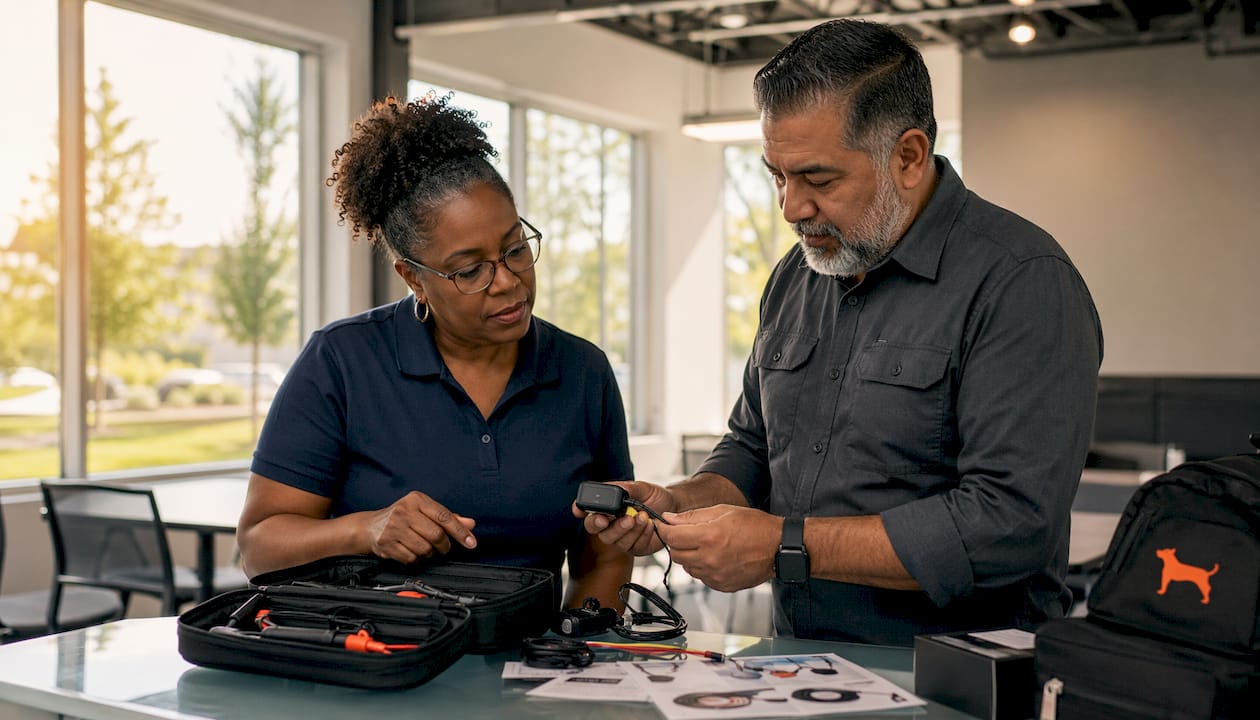
Most hardwired tracker failures trace back to one of a handful of installation errors. Knowing them in advance saves hours of troubleshooting.
- Reversing ground and power wires: Connecting the power wire to ground and vice versa can damage the device immediately. Always verify polarity with a multimeter before making the final connection.
- Skipping the ignition sense wire: Without this connection, the tracker cannot distinguish between engine-on and engine-off states. Update frequency drops sharply, and idle time reporting becomes unavailable.
- Poor mounting location: Placing the device in a metal-enclosed space or under the hood blocks GPS signals and exposes the unit to heat damage. The dashboard area, oriented correctly per the label, is the standard recommendation.
- Ignoring device orientation: Many trackers have a labeled side that must face a specific direction for the internal antenna to work properly. Installing it upside-down or sideways degrades signal quality.
- Loose or taped-only connections: Electrical tape alone is not a reliable long-term fix for wire splices in a vehicle environment. Vibration and temperature changes loosen tape connections over time. Use crimp connectors with heat-shrink tubing.
- Skipping post-install verification: Mounting the device and assuming it works is a common shortcut. Always confirm both LED states and check the platform for live data before closing up the dashboard.
Pro Tip: If the device shows GPS lock but the platform shows no movement during a test drive, check whether the ignition sense wire is reading correctly. A quick way to test: start the engine, watch the platform, and confirm updates arrive within 2 minutes. If they do not, the ignition wire connection needs attention. Consulting the security system installation process guide from YDA Security Systems NYC offers additional wiring verification techniques applicable to vehicle tracker installs.
Strategic insights for managing fleets with hardwired GPS trackers
Getting the most out of hardwired GPS tracking goes beyond the physical installation. How you configure the devices and integrate their data into your operations determines the actual return.
- Use hybrid deployment for mixed fleets: Hardwired trackers belong on every powered vehicle in your fleet. For trailers, containers, and unpowered equipment, battery-powered or magnetic trackers fill the gap. Both device types can feed into a unified platform, creating logical tractor-trailer pairing in the backend without requiring identical hardware across every asset.
- Calibrate logging parameters for your use case: Default settings log a record every 60 seconds, every 500 meters traveled, or when direction changes by 60° over short distances. For urban delivery routes with frequent turns, tightening the direction-change threshold improves route accuracy. For highway fleets, the distance-based trigger may be more relevant than the time-based one.
- Enable Run Detect only as a fallback: Voltage-based trip detection works by monitoring changes in battery voltage when the alternator activates, but modern vehicles with smart charging systems or auto-stop engines can produce false readings. Use Run Detect only when neither a physical ignition wire nor GPS movement detection is practical.
- Integrate telematics data into safety programs: Driver behavior data from hardwired trackers, including harsh braking events, rapid acceleration, and idle time, feeds directly into driver scoring and coaching workflows. For more on how this data connects to fleet safety outcomes, Motowatchdog’s guide on GPS and fleet safety covers the integration in practical terms.
- Plan for long-term maintenance: Hardwired trackers require minimal routine attention, but a periodic check of wire connections, especially after vehicle body work or major repairs, prevents the gradual loosening that causes intermittent data gaps.
- Prioritize discreet installation for high-value assets: A tracker that a thief cannot find is one they cannot disable. Routing cables through the existing wiring harness and avoiding visible mounting points behind the dashboard significantly reduces tampering risk.
Data security and privacy considerations with hardwired GPS tracking
Hardwired GPS trackers collect continuous location data, which creates both security obligations and privacy responsibilities that fleet operators need to address directly.
On the data security side, the primary risk is unauthorized access to the fleet management platform rather than the physical device itself. Strong password policies, two-factor authentication, and role-based access controls limit who can view live vehicle locations and historical trip data. For fleets handling sensitive cargo or government contracts, encrypted data transmission between the device and the platform is a baseline requirement, not an optional upgrade.

Privacy considerations vary by state and by whether the tracked vehicles carry employees or contractors. Most U.S. states permit employers to track company-owned vehicles, but several require written notice to drivers. California, for example, has specific employee monitoring disclosure requirements under state labor law. Tracking personal vehicles, even with employee consent, raises additional legal questions that warrant a review with legal counsel before deployment.
Driver data, including behavior scores, trip histories, and idle time logs, should be stored with defined retention limits. Keeping years of granular location data creates unnecessary exposure in the event of a data breach or legal discovery request. Establish a data retention policy before you deploy, not after.
Finally, physical security of the device itself matters. A properly concealed hardwired installation reduces the risk of someone physically accessing the unit to tamper with firmware or extract stored data. The power disconnection alarm feature, which alerts the platform if wiring is cut, adds a layer of protection against both theft and deliberate disabling.
Key Takeaways
Hardwired GPS trackers deliver reliable, continuous vehicle monitoring by drawing power directly from the vehicle’s electrical system, with the ignition sense wire connection being the single most critical factor for real-time update frequency.
| Point | Details |
|---|---|
| Ignition wire drives update speed | Connected ignition sense wire enables updates every 1–2 minutes; without it, updates drop to every 2 hours. |
| Trip detection uses two methods | Wired ignition and emulated ignition via GPS movement work simultaneously. |
| Discreet installation improves security | Devices hidden within the dashboard wiring harness are difficult to detect and trigger alerts if wiring is cut. |
| Hybrid fleets need mixed hardware | Hardwired trackers suit powered vehicles; battery or magnetic units cover trailers and unpowered assets. |
| Data privacy requires proactive policy | U.S. fleet operators should establish driver notification practices and data retention limits before deployment. |
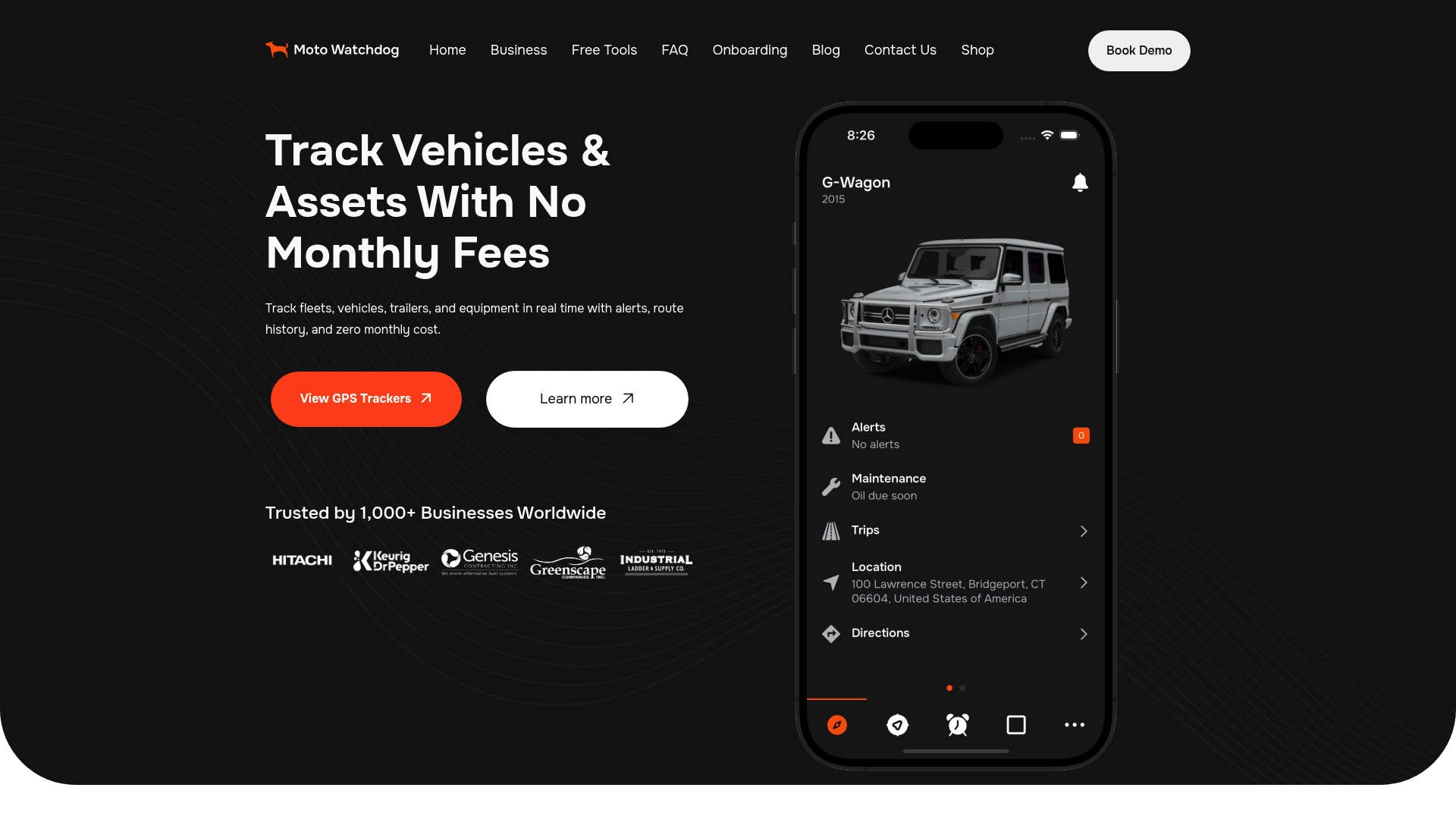
Motowatchdog provides subscription-free GPS tracking built for fleet managers and individuals who want reliable real-time monitoring without recurring monthly fees. With geofencing alerts, detailed mileage reporting, and support for hardwired deployments across mixed fleets, Motowatchdog gives you the data you need without the overhead you do not.

