

How to start saving money
Lorem ipsum dolor sit amet, consectetur adipiscing elit lobortis arcu enim urna adipiscing praesent velit viverra sit semper lorem eu cursus vel hendrerit elementum morbi curabitur etiam nibh justo, lorem aliquet donec sed sit mi dignissim at ante massa mattis.
- Neque sodales ut etiam sit amet nisl purus non tellus orci ac auctor
- Adipiscing elit ut aliquam purus sit amet viverra suspendisse potent
- Mauris commodo quis imperdiet massa tincidunt nunc pulvinar
- Excepteur sint occaecat cupidatat non proident sunt in culpa qui officia
Why it is important to start saving
Vitae congue eu consequat ac felis placerat vestibulum lectus mauris ultrices cursus sit amet dictum sit amet justo donec enim diam porttitor lacus luctus accumsan tortor posuere praesent tristique magna sit amet purus gravida quis blandit turpis.

How much money should I save?
At risus viverra adipiscing at in tellus integer feugiat nisl pretium fusce id velit ut tortor sagittis orci a scelerisque purus semper eget at lectus urna duis convallis. porta nibh venenatis cras sed felis eget neque laoreet suspendisse interdum consectetur libero id faucibus nisl donec pretium vulputate sapien nec sagittis aliquam nunc lobortis mattis aliquam faucibus purus in.
- Neque sodales ut etiam sit amet nisl purus non tellus orci ac auctor
- Adipiscing elit ut aliquam purus sit amet viverra suspendisse potenti
- Mauris commodo quis imperdiet massa tincidunt nunc pulvinar
- Adipiscing elit ut aliquam purus sit amet viverra suspendisse potenti
What percentege of my income should go to savings?
Nisi quis eleifend quam adipiscing vitae aliquet bibendum enim facilisis gravida neque. Velit euismod in pellentesque massa placerat volutpat lacus laoreet non curabitur gravida odio aenean sed adipiscing diam donec adipiscing tristique risus. amet est placerat in egestas erat imperdiet sed euismod nisi.
“Nisi quis eleifend quam adipiscing vitae aliquet bibendum enim facilisis gravida neque velit euismod in pellentesque”
Do you have any comments? Share them with us on social media
Eget lorem dolor sed viverra ipsum nunc aliquet bibendum felis donec et odio pellentesque diam volutpat commodo sed egestas aliquam sem fringilla ut morbi tincidunt augue interdum velit euismod eu tincidunt tortor aliquam nulla facilisi aenean sed adipiscing diam donec adipiscing ut lectus arcu bibendum at varius vel pharetra nibh venenatis cras sed felis eget.
Most consumer magnetic and OBD-II trackers turn up during a methodical sweep of the usual hiding spots. Passive data loggers and professionally hardwired units are harder, sometimes impossible, to find without a technician. If you suspect stalking, domestic abuse, or any threat to your safety, call the National Domestic Violence Hotline before you touch your vehicle or remove anything.
TL;DR:
- Most GPS trackers are magnetically attached to the undercarriage, wheel wells, or inside bumpers, making these the primary spots to check first.
- Passive data loggers are almost impossible to detect electronically and require a thorough visual inspection for removal.
- Electronic tools, such as low-cost spectrum analyzers, can identify 4G cellular trackers within about three feet but cannot replace physical sweeps.
- Legally, placing a tracker on your own vehicle is generally permitted, but tracking someone else’s vehicle without consent is often illegal and carries serious privacy risks.
- Using jamming devices is illegal, and the most effective method of countering trackers involves careful physical removal after proper documentation.
Table of Contents
- How Do GPS Trackers Actually Work?
- Where Do People Hide GPS Trackers in a Car?
- How Do You Sweep Your Own Vehicle for a Tracker?
- What Electronic Detection Tools Actually Find (and Miss)
- Why Some Trackers Are Nearly Impossible to Find Yourself
- What Should You Do If You Actually Find a Tracker?
- What Do Researchers Say About Detecting Hidden Trackers?
- Is It Legal to Hide or Find a GPS Tracker?
- Can You Block or Spoof GPS Signals to Stop Tracking?
- Why Methodical Beats Panicked Every Time
- Motowatchdog: A Legal Way to Monitor What You Own
- Sources
How Do GPS Trackers Actually Work?
A GPS tracker falls into one of two categories, and knowing which type you’re dealing with changes your entire search strategy. Active trackers transmit location data in near real time over cellular or Bluetooth networks, similar to how some 4G devices report a vehicle’s position to an app. Passive trackers, sometimes called data loggers, store GPS coordinates internally and reveal nothing until someone physically retrieves the device and downloads the log.
Power source tells you almost as much as transmission type. Magnetic trackers run on internal battery packs, usually good for a few days to a few weeks depending on how often they ping. OBD-II trackers plug directly into your vehicle’s diagnostic port and pull power from the car itself, which means unlimited battery life but a location that’s easy to check once you know where to look. Hardwired units, spliced into the vehicle’s electrical system by someone with technical skill, share that same unlimited runtime and are the hardest to spot or remove.
- Active/cellular: transmits location continuously or on a set interval, drains battery faster, easiest to catch electronically.
- Active/Bluetooth: short range, often disguised as a AirTag or Tile, detectable by phone.
- Passive logger: no signal at all, invisible to any scanner, only found by physical search.
- OBD-II plug-in: draws vehicle power, no battery limit, sits in plain sight once you know the port location.
Transmit intervals matter more than most people realize. A budget tracker might report position every 60 seconds when the vehicle is moving but go silent for hours when it’s parked, which is exactly why a five-minute RF scan in your driveway can turn up nothing even when a live device is bolted to your frame rail.
Where Do People Hide GPS Trackers in a Car?
Installers gravitate toward the same handful of spots for a simple reason: easy access, a flat metal surface for the magnet, and a clear line of sight to GPS satellites overhead. Professional sweep technicians report that most of the trackers they find are on the undercarriage or in the wheel wells, and that the majority of all field discoveries are magnetic units, AirTag or Tile style Bluetooth tags, or OBD-II plug-ins. That statistic alone should reorder your search priorities.
Work through these zones in order, since checking the highest-probability spots first saves time and catches most installs before you ever need a flashlight under the dash:
- Wheel wells, front and rear, where the plastic liner meets the metal frame.
- Undercarriage frame rails, especially near the center of the vehicle where a magnet grips flat steel.
- Bumpers, front and rear, inside the plastic shell where a small device slides in unnoticed.
- License plate area, behind the plate itself or tucked into the mounting bracket.
- OBD-II port, typically under the dash near the steering column.
- Under seats and seat tracks, where a device can wedge against the metal frame.
- Trunk and spare tire well, particularly under the trunk liner or inside the wheel itself.
Pro Tip: Run your bare hand, not a flashlight, along the frame rails first. A magnetic tracker often reveals itself by feel before you spot it visually, since the housing sits flush against dark, greasy metal that’s easy to miss with your eyes alone.
That undercarriage bias exists because gravity and magnets do the installer’s work for them. A device slapped onto a frame rail from underneath takes thirty seconds and needs no tools, which is why it’s the default move for anyone without technical training.
How Do You Sweep Your Own Vehicle for a Tracker?
A full sweep takes about 30 to 90 minutes and mirrors what professional bug sweep technicians actually do, just without the specialized equipment. Set aside a private, well-lit space, a garage or driveway after dark works fine, and gather these before you start:
- A bright flashlight or headlamp
- A telescoping inspection mirror (fold-out mechanic’s mirror)
- An old blanket or creeper board to lie on
- Your phone camera, for photographing anything you find
- Disposable gloves, since undercarriage grime is real
Exterior and undercarriage first. This is where the odds favor you, given how often installers default to magnetic mounts underneath the car.
- Walk the full perimeter and check both wheel wells by feel, running your hand along the inner fender liner and the metal behind it.
- Get down and use the mirror to scan the undercarriage without crawling fully underneath, sweeping from the front frame rails back to the rear axle.
- Check inside both front and rear bumpers, reaching in from underneath where the plastic shell has gaps.
- Pull the license plate slightly forward to check behind it and inside the bracket.
- If you have a lift or ramps, do a second, closer undercarriage pass, since some installers tuck devices near the exhaust or fuel line for cover.
Interior second. Move inside once the exterior is clear.
- Slide both front seats all the way forward, then all the way back, checking the tracks and the metal frame underneath each seat.
- Empty the glove box and check behind the panel, since some trims come loose with light pressure.
- Open the trunk, lift the trunk liner, and check the spare tire well, including inside the tire itself if it’s ever been removed.
- Locate the OBD-II port, almost always under the dash within a foot of the steering column, and confirm nothing is plugged in beyond the port cover.
- If you’re comfortable with basic panel removal, pop off the lower dash trim and door sill panels to check for anything zip-tied to the wiring harness.
Stop and call a mechanic if you find wiring that’s been spliced, taped, or rerouted in a way that looks intentional rather than factory. That’s a sign of a hardwired install, and pulling on the wrong wire can disable something you actually need. Finish by running the sweep twice, once with the engine off and again a few minutes after starting it, since some trackers only power up or transmit once the vehicle is moving.
What Electronic Detection Tools Actually Find (and Miss)
Cheap RF detectors sold for “bug sweeping” have a real reputation problem, and it’s earned. Consumer RF detectors frequently miss trackers because so many devices transmit intermittently, sit behind metal shielding, or stay fully passive until the vehicle starts moving. A detector that shows nothing during a five-minute driveway scan tells you almost nothing about whether a device is present.
More capable tools close some of that gap, but not all of it. A handheld spectrum analyzer scanning cellular uplink frequencies can pick up transmissions from 4G IoT trackers, and controlled tests using a low-cost tinySA analyzer detected these signals reliably within about three feet of the device. That’s a real capability, but a three-foot range means you’re still walking the car section by section, not standing in one spot and getting a clean answer.
Phone-based detection works differently and covers a narrower problem. Both iOS and Android now surface unknown Bluetooth trackers traveling with you, which catches AirTag or Tile style devices but does nothing for cellular trackers or passive loggers that never broadcast over Bluetooth.
- Run the physical sweep first; electronics are a second pass, not a substitute.
- Scan with the engine off, then again with it running, since movement-triggered trackers often stay silent at rest.
- Treat a single, brief RF spike as inconclusive; a repeated, consistent signal in the same location is worth a focused physical check of that exact spot.
- Use your phone’s built-in unknown-tracker alert as a quick Bluetooth-only check, not a full sweep.
Why Some Trackers Are Nearly Impossible to Find Yourself
Passive data loggers never transmit, so no scanner, app, or spectrum analyzer will ever flag one. The only way to find a passive device is a physical search, which is exactly why the visual sweep matters more than any piece of electronic gear. Hardwired installs present a similar wall: a technician who splices a tracker into your wiring harness and tucks it behind a panel has effectively built the device into your car, and finding it may require pulling trim pieces a typical owner wouldn’t touch.
There’s also a research-backed reason academic detection methods haven’t trickled down into affordable consumer tools yet. Electromagnetic side-channel detection, the approach behind lab research like GPSBuster, can identify tracker emissions with real precision, but only at very short range and with specialized equipment most people will never own.
Escalate to a professional technical surveillance countermeasures (TSCM) sweep when any of these apply:
- You’ve found evidence of stalking or repeated, unexplained appearances by the same person or vehicle.
- Your DIY sweep turned up spliced or rerouted wiring you can’t identify.
- You suspect corporate espionage or a workplace-related tracking concern, which raises separate legal questions around employee GPS tracking.
- You’ve confirmed a device is present but can’t safely remove it without professional tools.
If the situation involves a partner, ex-partner, or anyone with access to your vehicle in a domestic context, contact the National Domestic Violence Hotline or a local tech-abuse advocate before doing anything else, including removing a device you’ve already found. Preserve any device or wiring as potential evidence, and involve local police once your safety plan is in place, particularly if the tracker was placed without your consent on a vehicle you own outright.
What Should You Do If You Actually Find a Tracker?
Your first move depends entirely on why you were searching in the first place. If there’s any chance this connects to domestic abuse, stalking, or a partner or ex-partner you fear, call the National Domestic Violence Hotline or a local advocate before you photograph, touch, or remove anything, since a sudden change in the device’s status can escalate risk faster than leaving it in place for a day.
If you’re confident there’s no immediate danger, here’s the safer path:
- Photograph the device exactly where you found it, including the mounting point and any visible model markings.
- Note the date, time, and location of discovery in writing, not just in your head.
- Avoid cutting wires or forcing anything loose if the device appears wired in rather than magnetic.
- Consider placing the device in a Faraday pouch temporarily if you want to stop its transmissions without alerting whoever placed it that it’s been found.
Pro Tip: A Faraday pouch is cheap insurance if you’re not ready to confront the situation yet. It blocks the signal without tipping off the person monitoring you that the device has gone quiet from being removed.
Removal is reasonable once you’ve documented everything and confirmed there’s no active threat. If the install looks professional, hardwired, or you’re planning to involve police, a mechanic or TSCM professional can remove it in a way that preserves it as evidence rather than damaging it in the process.
What Do Researchers Say About Detecting Hidden Trackers?
Academic detection research backs up what field professionals already knew: no single method catches everything, and the tools that sound most impressive on paper often have the tightest real-world limits. The GPSBuster research team built an electromagnetic side-channel detector that identified a majority of popular consumer trackers, but their own prototype topped out at roughly 0.61 meters of detection range, meaning you’d need to sweep within about two feet of every hiding spot for it to work. That’s a laboratory result, not a driveway tool.
USENIX’s VehicleSec research took a more field-practical angle, testing whether a $50 handheld spectrum analyzer could catch 4G cellular trackers by scanning uplink frequencies.
Detection worked reliably within about three feet of the device in controlled vehicle tests, confirming that low-cost spectrum tools have real value, but only when paired with a targeted physical search rather than used as a standalone scanner.
The practical takeaway for anyone without a lab: consumer tools help you narrow a search, but they don’t replace it. Professional sweep technicians extend that coverage with training and better equipment, which is why persistent or high-stakes cases still warrant a call to a specialist rather than a second trip around the car with a flashlight. For readers who own a vehicle and want to monitor it themselves, lawfully and transparently, subscription-free 4G devices offer geofencing alerts and long battery life without the recurring costs that make ongoing monitoring expensive elsewhere.
Is It Legal to Hide or Find a GPS Tracker?
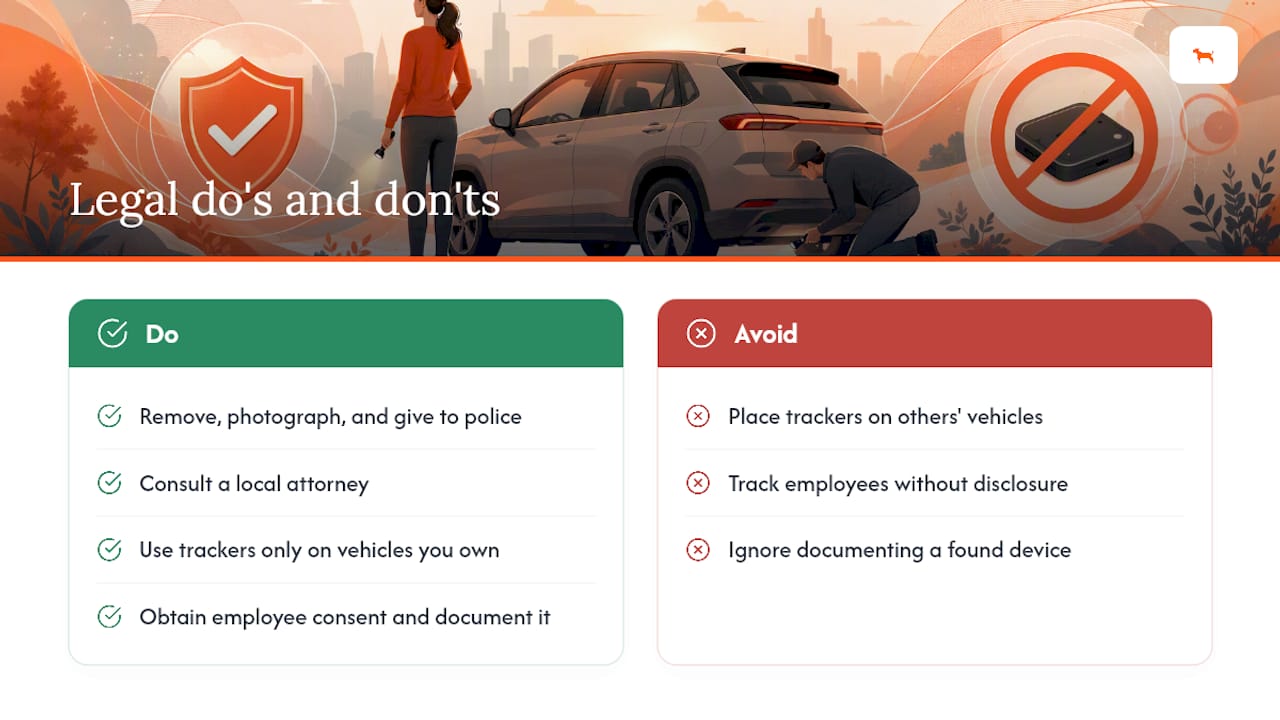
Ownership decides most of this. Placing a tracker on a vehicle you own outright is generally legal in the United States, which is why fleet managers and parents commonly use devices like these to monitor company trucks or a teenager’s first car. Placing one on a vehicle you don’t own, or one owned jointly where the other party hasn’t consented, moves into much murkier legal territory and can cross into stalking or harassment statutes depending on your state and the circumstances.
Employers face their own layer of rules, since tracking a vehicle used by employees carries specific disclosure and consent requirements that vary by state and by whether the vehicle is company owned. Finding a tracker on your own car is unambiguous. You’re free to remove it, photograph it, and hand it to police if you believe it was placed without consent.
Privacy concerns cut in both directions here. A device that helps a fleet owner recover a stolen truck or helps a parent confirm a teenager arrived somewhere safely serves a legitimate purpose. The same hardware, placed by an abusive partner or a stalker, becomes a tool of control and surveillance. That’s precisely why documentation matters so much if you find a device you didn’t authorize: it’s evidence of a possible crime, not just a piece of electronics to toss aside.
If you’re ever unsure whether tracking a vehicle, yours or someone else’s, is legal in your specific situation, a quick consultation with a local attorney beats guessing. State laws on consent and disclosure vary enough that a blanket answer would do you a disservice.
Can You Block or Spoof GPS Signals to Stop Tracking?
Signal jamming and GPS spoofing both come up in tracker-avoidance discussions, and both carry serious legal risk that most people researching this topic don’t expect. Under federal law, jamming any radio frequency, including GPS and cellular bands, is illegal in the United States regardless of intent, because a jammer doesn’t just block a tracker, it interferes with everything nearby on that frequency, including emergency communications.
GPS spoofing, which feeds a device false location data instead of blocking its signal outright, sits in similarly restricted territory and requires specialized equipment well beyond what a typical consumer would use. It’s also far more associated with large-scale fraud or military applications than with someone trying to stop a single tracker.
A Faraday pouch or bag is the one legitimate signal-blocking option available to consumers, and it works by physically shielding a device from transmitting or receiving any signal at all. It’s the same principle used to stop key fob relay theft, and it’s legal because it blocks the signal at the device level rather than broadcasting interference into the surrounding airwaves.
The more reliable path, if you’ve confirmed a tracker is on your vehicle without consent, is physical removal after documentation, not electronic countermeasures. Jamming might feel like a faster fix, but it risks turning a privacy problem into a federal violation, and it does nothing to address whoever placed the device in the first place.
Why Methodical Beats Panicked Every Time
Most people who suspect a tracker want an answer in the next five minutes, and that urgency is understandable. But rushing the search is exactly what leads to missed devices, since a panicked pass through the wheel wells skips the frame rails, and a quick RF scan in a driveway catches nothing from a tracker that only transmits while the car is moving. A slower, documented sweep finds more and holds up better if you ever need to show police or an attorney what you found and when.
The stakes, though, change what “the right action” actually means. If your search is about a suspicious ex-employer or a competitor, documentation and a professional sweep make sense. If it’s about a partner or ex-partner and you feel unsafe, the calculus shifts entirely: leaving a device in place temporarily and calling an advocate first can matter more than finding it today. Most devices are findable. Not every situation calls for finding one immediately.
— Louis
Motowatchdog: A Legal Way to Monitor What You Own
Everything above is about finding a device someone else hid. Such solutions exist for the opposite, fully lawful side of that equation: tracking a vehicle, trailer, or piece of equipment you own, without a monthly bill eating into the value of doing it. Fleet owners use it to cut fuel waste and confirm routes; families use it to know a teen driver made it to practice; contractors use it to keep tabs on trailers and equipment that tend to wander off jobsites.
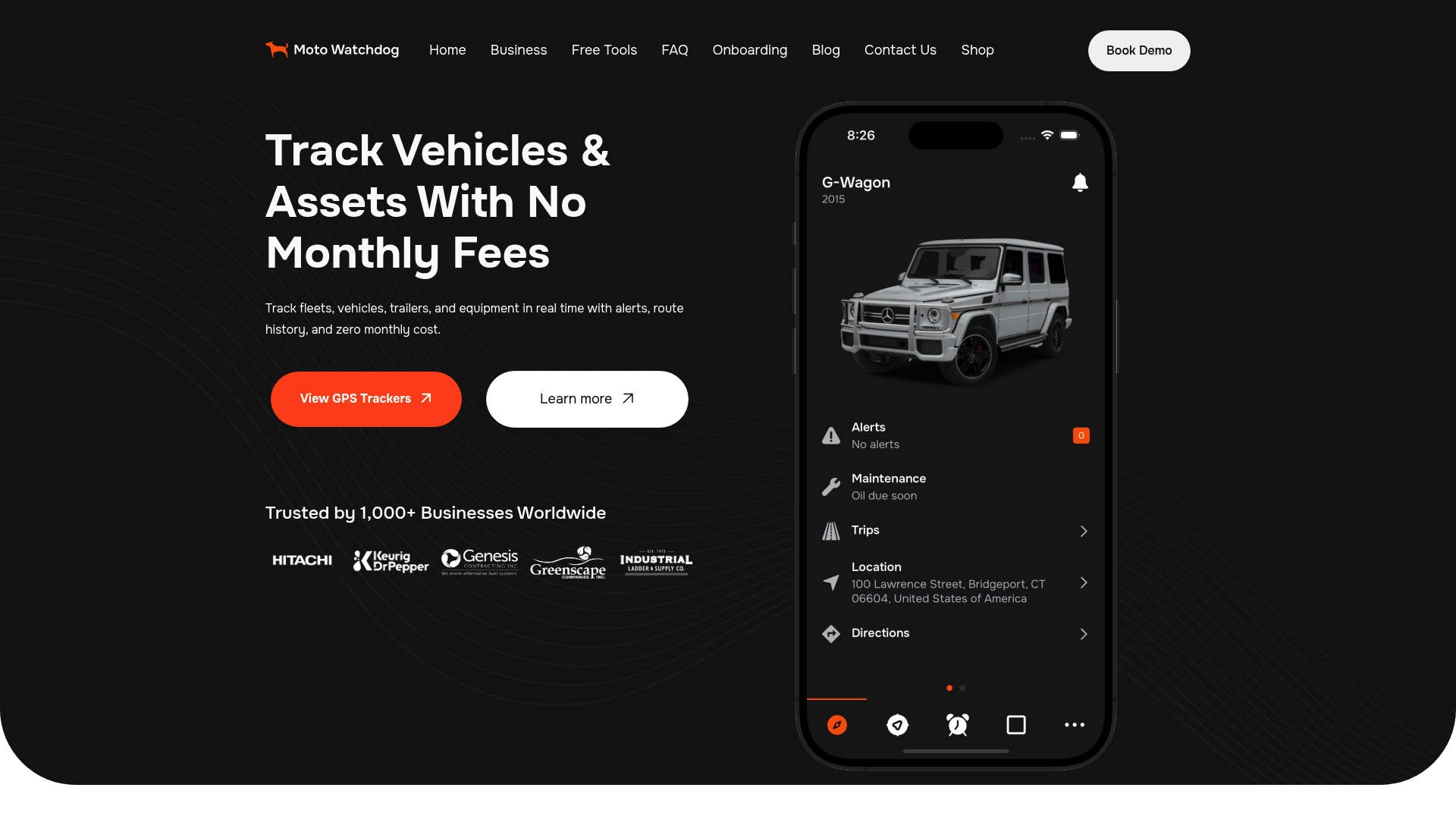
These devices run on 4G, report in real time, and hold a battery charge far longer than the trackers most sweep guides describe, since they are designed to sit in a vehicle for the long haul rather than get hidden and forgotten. Geofencing alerts flag when a vehicle leaves an approved area, and built-in mileage reporting simplifies tax season for anyone using a vehicle for business. Managing several vehicles at once is straightforward through the same app that a contractor running two trucks or a family with a couple of teen drivers would use to track multiple vehicles from one dashboard.
If you own the vehicle and want visibility instead of a hidden search, visit Motowatchdog to see which device fits your setup and get a straightforward answer on cost, since there’s no subscription waiting on the other end of the purchase.

