
How to start saving money
Lorem ipsum dolor sit amet, consectetur adipiscing elit lobortis arcu enim urna adipiscing praesent velit viverra sit semper lorem eu cursus vel hendrerit elementum morbi curabitur etiam nibh justo, lorem aliquet donec sed sit mi dignissim at ante massa mattis.
- Neque sodales ut etiam sit amet nisl purus non tellus orci ac auctor
- Adipiscing elit ut aliquam purus sit amet viverra suspendisse potent
- Mauris commodo quis imperdiet massa tincidunt nunc pulvinar
- Excepteur sint occaecat cupidatat non proident sunt in culpa qui officia
Why it is important to start saving
Vitae congue eu consequat ac felis placerat vestibulum lectus mauris ultrices cursus sit amet dictum sit amet justo donec enim diam porttitor lacus luctus accumsan tortor posuere praesent tristique magna sit amet purus gravida quis blandit turpis.

How much money should I save?
At risus viverra adipiscing at in tellus integer feugiat nisl pretium fusce id velit ut tortor sagittis orci a scelerisque purus semper eget at lectus urna duis convallis. porta nibh venenatis cras sed felis eget neque laoreet suspendisse interdum consectetur libero id faucibus nisl donec pretium vulputate sapien nec sagittis aliquam nunc lobortis mattis aliquam faucibus purus in.
- Neque sodales ut etiam sit amet nisl purus non tellus orci ac auctor
- Adipiscing elit ut aliquam purus sit amet viverra suspendisse potenti
- Mauris commodo quis imperdiet massa tincidunt nunc pulvinar
- Adipiscing elit ut aliquam purus sit amet viverra suspendisse potenti
What percentege of my income should go to savings?
Nisi quis eleifend quam adipiscing vitae aliquet bibendum enim facilisis gravida neque. Velit euismod in pellentesque massa placerat volutpat lacus laoreet non curabitur gravida odio aenean sed adipiscing diam donec adipiscing tristique risus. amet est placerat in egestas erat imperdiet sed euismod nisi.
“Nisi quis eleifend quam adipiscing vitae aliquet bibendum enim facilisis gravida neque velit euismod in pellentesque”
Do you have any comments? Share them with us on social media
Eget lorem dolor sed viverra ipsum nunc aliquet bibendum felis donec et odio pellentesque diam volutpat commodo sed egestas aliquam sem fringilla ut morbi tincidunt augue interdum velit euismod eu tincidunt tortor aliquam nulla facilisi aenean sed adipiscing diam donec adipiscing ut lectus arcu bibendum at varius vel pharetra nibh venenatis cras sed felis eget.
Yes, you can track company-owned vehicles — but you must give employees written notice first. Tracking a personal vehicle requires separate, explicit written consent and strict temporal limits. That single distinction drives nearly every compliance decision in a GPS tracking consent policy, and getting it wrong exposes your business to criminal liability in more than 30 states.
The practical next step is straightforward: issue written notice to all drivers of company vehicles today, collect signed consent forms for any personal-vehicle monitoring, and schedule a vendor contract review alongside a data-protection assessment.
- Company-owned vehicles: Written notice is the minimum; explicit consent is best practice.
- Personal vehicles: Separate, signed consent plus defined monitoring hours are required.
- State law: More than 30 states criminalize non-consensual tracking; check your specific states.
- Vendor contracts: Require encryption, breach notification, and audit rights in writing.
Pro Tip: Issue your notice and consent forms as a standalone document, not buried in a general employee handbook. Courts give far more weight to a signed, specific acknowledgment than to a handbook clause an employee may never have read.
Key Takeaways
A GPS tracking consent policy is defensible only when it is specific, documented, and scoped to a legitimate business purpose — with separate treatment for company-owned and personal vehicles.
| Point | Details |
|---|---|
| Company vs. personal vehicles | Use separate consent documents; personal-vehicle tracking requires explicit written consent and temporal limits. |
| State law exposure | More than 30 states criminalize non-consensual tracking; check every state where your drivers operate. |
| Policy minimum elements | Name the device, assets, hours, data uses, retention period, and authorized access roles in every consent form. |
| Data-protection assessments | Run an assessment annually and whenever you add a new tracking use case or asset category. |
| Motowatchdog for compliance | Subscription-free devices with exportable logs and role-based access support the documentation and access-control requirements in a defensible policy. |
Table of Contents
- What does U.S. law actually require for GPS tracking consent?
- How company-owned vehicles and personal vehicles differ legally
- What your GPS tracking policy must include — checklist and sample language
- How to protect geolocation data: technical and organizational controls
- How to roll out GPS tracking in your fleet — step by step
- What to do when something goes wrong: disputes, subpoenas, and breaches
- Motowatchdog makes compliance-friendly fleet tracking straightforward
- The part most fleet managers get wrong
- Sources
What does U.S. law actually require for GPS tracking consent?
There is no single federal statute that governs employer GPS tracking. The closest federal touchstone is United States v. Jones (2012), where the Supreme Court held that attaching a GPS device to a vehicle constitutes a Fourth Amendment search — a ruling that shapes how courts analyze employer tracking even in civil contexts. Below that federal ceiling, state law controls, and the variation is significant.
More than 30 states criminalize non-consensual GPS tracking through device statutes, stalking-law prongs, or both. New Jersey requires written notice to employees before tracking, including when the employee drives a personal vehicle for work. Florida and Ohio have their own device statutes with criminal penalties for unauthorized placement. Penalties across states range from misdemeanor fines to felony charges, and civil exposure includes privacy torts and invasion-of-privacy claims.
Unlawfully collected GPS data also carries evidentiary risk: courts have excluded location records obtained without proper consent, which can undermine wage-and-hour defenses and mileage reimbursement disputes.
| Jurisdiction | Key requirement | Penalty exposure |
|---|---|---|
| Federal (Jones) | Consent/notice for employer tracking | Civil liability, evidentiary exclusion |
| New Jersey | Written notice required, including personal vehicles | Civil and criminal |
| Florida | Device statute prohibits non-consensual tracking | Criminal misdemeanor/felony |
| Ohio | Stalking statute covers GPS devices | Criminal charges |
| 30+ other states | Vary: notice, consent, or both | Criminal and civil |
Stat to know: More than 30 states have enacted statutes that criminalize placing a GPS tracker on a vehicle without the owner’s or driver’s consent — even when the tracker is on a vehicle you own.
Littler’s analysis of New Jersey’s statute notes that the trend toward written notice requirements is accelerating, and practitioners recommend issuing written notice even in states where it is not yet statutorily required.
How company-owned vehicles and personal vehicles differ legally
Courts treat tracking of company-owned vehicles as an employer right when employees are notified, but tracking an employee’s personal vehicle triggers a fundamentally different legal analysis. The distinction is not just procedural — it determines whether you face a trespass claim, a privacy tort, or a criminal referral.
Take-home vehicles sit in a gray zone. When a company vehicle goes home with an employee overnight, 24/7 monitoring of that vehicle can generate off-duty location data that courts scrutinize closely. The practical fix is a temporal limit: configure the device to record only during defined work hours, or restrict post-shift data use to theft-recovery purposes only.
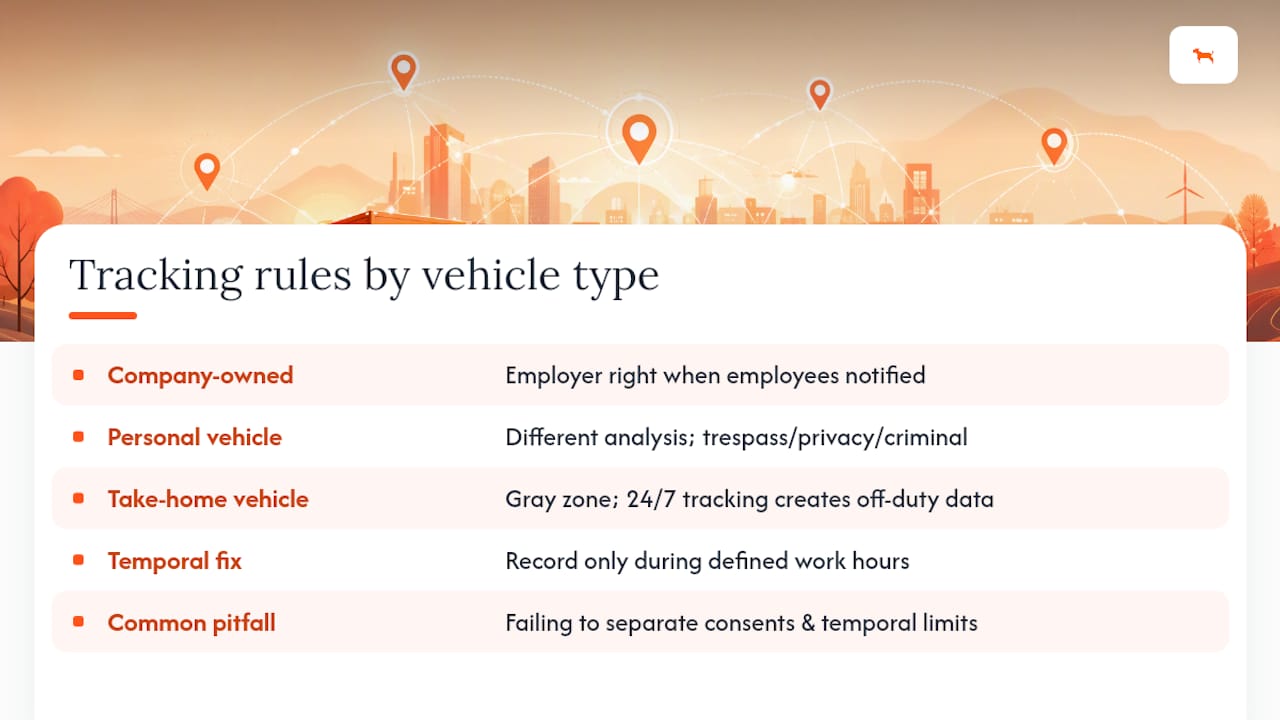
The most common compliance pitfall practitioners identify is failing to separate company-vehicle and personal-vehicle consent into distinct documents with distinct temporal limits. One generic policy covering both vehicle types rarely satisfies the standard courts apply.
What your GPS tracking policy must include — checklist and sample language
A defensible GPS tracking consent policy starts with specificity. Vague handbook language does not constitute meaningful consent; courts prefer a standalone document with a signed acknowledgment that names the technology, the assets, and the limits.
Minimum policy elements:
- Scope of assets: List every vehicle type and asset category covered (fleet trucks, vans, trailers, equipment).
- Tracking technology: Name the device or platform (e.g., Motowatchdog GPS tracker) so employees know exactly what is installed.
- Monitoring hours: State the specific hours during which location data is collected.
- Purpose of data use: Limit stated uses to safety, dispatch, mileage reporting, and theft recovery.
- Retention period: Define how long location records are stored and who can request deletion.
- Access controls: Name the roles authorized to view location data (fleet manager, HR, legal only).
- Vendor disclosure: Identify the data processor and its contractual obligations.
- Personal-vehicle addendum: A separate, signed form for any employee whose personal vehicle is monitored.
- Language accessibility: Provide the policy in any language spoken by a significant portion of your workforce.
- Signed acknowledgment: Collect a wet or electronic signature confirming the employee received and understood the policy.
Sample consent acknowledgment snippet:
A defensible consent form names the tracking technology, the assets covered, monitoring hours, data uses, retention, and who has access. Store signed acknowledgments in the employee’s personnel file and in a separate compliance folder accessible to legal counsel.
Pro Tip: Date-stamp every signed acknowledgment and re-collect signatures whenever the policy changes materially — a new device, extended monitoring hours, or a new data-sharing arrangement each triggers a fresh consent cycle.
How to protect geolocation data: technical and organizational controls
Under CCPA/CPRA practice, precise geolocation collected by telematics is classified as Sensitive Personal Information (SPI) and requires additional safeguards beyond standard personal data. That classification has real operational consequences for how you store, access, and share location records.
Role-based access is the first control to implement. Only staff whose job duties require location data — fleet managers, dispatchers, and HR when investigating an incident — should have access. Restrict executive or IT access unless operationally justified and document the justification.
Retention windows should tie to a defined business purpose. IRS and DOL guidance on mileage and wage records generally points to a three-year minimum for records that support tax filings or wage claims; location data used solely for dispatch can often be purged sooner. Define the window in your policy and automate deletion where your platform allows.
Littler recommends pairing written notice with periodic data-protection assessments and limiting precise geolocation access to staff who need it for operational roles. Vendor contracts should require encryption in transit and at rest, a breach-notification timeline of no more than 72 hours, and audit rights so you can verify compliance annually.
Pro Tip: Schedule a data-protection assessment every 12 months or whenever you add a new tracking use case — for example, when you extend monitoring to contractors or add a new asset category. Document the assessment and its findings; that record is your first line of defense in a regulatory inquiry.
How to roll out GPS tracking in your fleet — step by step
The rollout sequence is: plan, notify, collect consent, install, train, then audit. Skipping any step, especially the consent collection before installation, is the single most common source of post-deployment legal disputes.
- Get legal and HR sign-off on the final policy and consent forms before any device is installed.
- Distribute written notice to all affected employees at least two weeks before the go-live date.
- Collect signed acknowledgments and file them. For personal-vehicle monitoring, collect the separate addendum.
- Inventory and label devices. Each device should carry a unique ID that maps to the vehicle in your policy documentation. Review the fleet hardwiring guide for installation specifics.
- Configure monitoring hours and off-hours restrictions in the platform before activation.
- Train fleet managers and dispatchers on what data they can access, how long to retain it, and how to respond to an employee inquiry.
- Review vendor contracts for encryption, breach-notification, and audit clauses.
- Handle contractors and unionized employees separately. Contractors need a clause in their service agreement; union employees may require bargaining before implementation.
- Schedule the first audit within 90 days of go-live to verify that access controls, retention settings, and consent records are all in order.
For smaller operations, the small fleet tracking guide covers budget-conscious rollout options without cutting compliance corners.
What to do when something goes wrong: disputes, subpoenas, and breaches
When an incident occurs, the first move is to freeze access to the relevant location logs and preserve them in their raw, unaltered form. Do not delete, export, or modify records until legal counsel has reviewed the situation.
Key principle: GPS location records that support a wage claim or mileage reimbursement dispute are subject to the same IRS and DOL retention rules as payroll records — generally three years. Deleting them prematurely can constitute spoliation and expose the company to adverse inference instructions in litigation.
For a subpoena or third-party data request, notify counsel immediately, confirm the scope of the request, and produce only what is legally required. Use your platform’s data export tools to generate a clean, timestamped log that matches the requested period.
For an employee complaint about off-duty tracking, pull the access logs to verify whether data was collected outside authorized hours, suspend the relevant access pending review, and document your findings in writing.
For a data breach involving location records, your vendor contract’s breach-notification clause governs the timeline. Best practice aligns with the 72-hour notification window common in state breach-notification statutes. Notify affected employees, document the incident, and assess whether the breach triggers CCPA/CPRA notification obligations.
Motowatchdog makes compliance-friendly fleet tracking straightforward
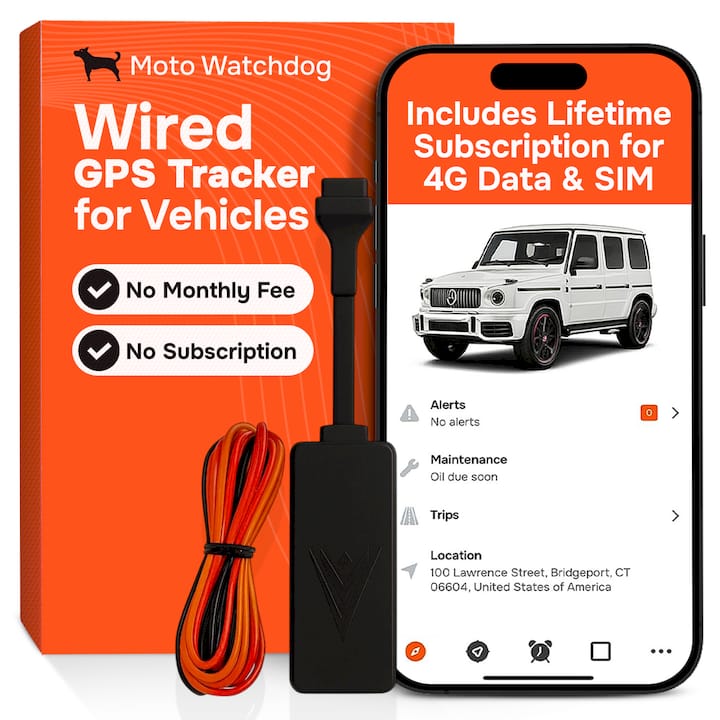
Motowatchdog’s subscription-free GPS devices give fleet managers real-time location data, exportable trip logs, and geofencing alerts — without locking you into a monthly contract that complicates vendor-termination clauses in your privacy policy.
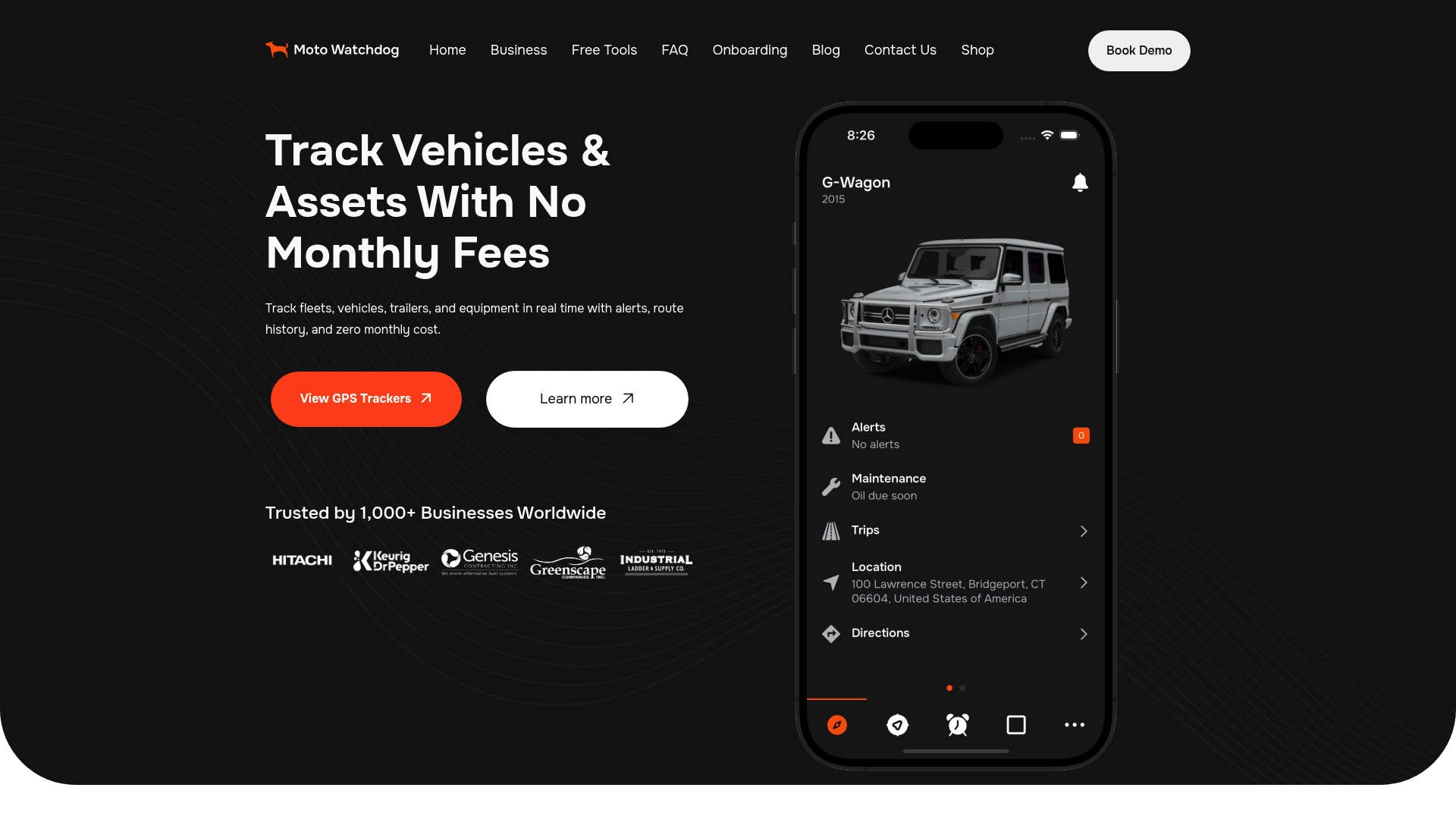
Each device can be named in your policy documentation by its unique identifier, satisfying the “name the tracking technology” requirement that courts look for in a defensible consent form. Trip and mileage logs export cleanly for audits, subpoenas, and IRS mileage documentation. Role-based access through the companion app means you can restrict location data to the staff members your policy authorizes, and the long battery life prevents the data gaps that create questions during a compliance review. The subscription-free model also removes the vendor-dependency risk that arises when a SaaS contract expires and historical records become inaccessible.
Fleet managers evaluating a pilot can review device options and place an order directly at Motowatchdog’s product page.
The part most fleet managers get wrong
The compliance failures that end up in litigation rarely involve managers who ignored GPS tracking rules entirely. They involve managers who tracked company vehicles without a written notice, or who used one generic consent form for both company trucks and employees’ personal cars. The legal exposure in those cases is not theoretical — it is a criminal statute in more than 30 states and a civil tort in nearly all of them.
The practical priority is scope limitation and documentation. A policy that covers only what you actually need to track, for only the hours that serve a legitimate business purpose, with signed acknowledgments on file, is defensible. A policy that tries to cover everything with vague language is not.
One more thing practitioners consistently underestimate: language accessibility. If a significant portion of your workforce speaks a language other than English, a consent form they cannot fully read does not constitute informed consent. Translate it. The cost is minimal; the protection is real.
Sources
The sources below are the primary references used in this guide. Each covers a distinct layer of the U.S. GPS tracking compliance picture.
- Employee GPS Tracking Policy: Rules and Legal Limits - LegalClarity
- GPS Tracking Laws by State: Is It Legal to Put a Tracker on a Car? (2026) | Recording Law
- New Jersey Joins the Trend of Increasing Privacy Protections for an Employee’s Location | Littler
For state-specific device statutes, the American Bar Association’s state privacy law tracker and your state attorney general’s website are the most current primary sources. When your fleet operates across multiple states with conflicting requirements, outside employment counsel familiar with privacy law in each operating state is the most reliable guide.
This article is general information, not a substitute for advice from a qualified lawyer. Consult a qualified legal professional about your own circumstances before acting on anything here.