

How to start saving money
Lorem ipsum dolor sit amet, consectetur adipiscing elit lobortis arcu enim urna adipiscing praesent velit viverra sit semper lorem eu cursus vel hendrerit elementum morbi curabitur etiam nibh justo, lorem aliquet donec sed sit mi dignissim at ante massa mattis.
- Neque sodales ut etiam sit amet nisl purus non tellus orci ac auctor
- Adipiscing elit ut aliquam purus sit amet viverra suspendisse potent
- Mauris commodo quis imperdiet massa tincidunt nunc pulvinar
- Excepteur sint occaecat cupidatat non proident sunt in culpa qui officia
Why it is important to start saving
Vitae congue eu consequat ac felis placerat vestibulum lectus mauris ultrices cursus sit amet dictum sit amet justo donec enim diam porttitor lacus luctus accumsan tortor posuere praesent tristique magna sit amet purus gravida quis blandit turpis.

How much money should I save?
At risus viverra adipiscing at in tellus integer feugiat nisl pretium fusce id velit ut tortor sagittis orci a scelerisque purus semper eget at lectus urna duis convallis. porta nibh venenatis cras sed felis eget neque laoreet suspendisse interdum consectetur libero id faucibus nisl donec pretium vulputate sapien nec sagittis aliquam nunc lobortis mattis aliquam faucibus purus in.
- Neque sodales ut etiam sit amet nisl purus non tellus orci ac auctor
- Adipiscing elit ut aliquam purus sit amet viverra suspendisse potenti
- Mauris commodo quis imperdiet massa tincidunt nunc pulvinar
- Adipiscing elit ut aliquam purus sit amet viverra suspendisse potenti
What percentege of my income should go to savings?
Nisi quis eleifend quam adipiscing vitae aliquet bibendum enim facilisis gravida neque. Velit euismod in pellentesque massa placerat volutpat lacus laoreet non curabitur gravida odio aenean sed adipiscing diam donec adipiscing tristique risus. amet est placerat in egestas erat imperdiet sed euismod nisi.
“Nisi quis eleifend quam adipiscing vitae aliquet bibendum enim facilisis gravida neque velit euismod in pellentesque”
Do you have any comments? Share them with us on social media
Eget lorem dolor sed viverra ipsum nunc aliquet bibendum felis donec et odio pellentesque diam volutpat commodo sed egestas aliquam sem fringilla ut morbi tincidunt augue interdum velit euismod eu tincidunt tortor aliquam nulla facilisi aenean sed adipiscing diam donec adipiscing ut lectus arcu bibendum at varius vel pharetra nibh venenatis cras sed felis eget.
GPS tags for construction assets are satellite-enabled tracking devices that attach directly to heavy equipment, trailers, tools, and other job site resources to provide real-time location data across wide geographic areas. Fleet managers and contractors use them to prevent theft, monitor utilization, and coordinate equipment across multiple remote sites. The Global Positioning System uses a network of over 30 satellites orbiting Earth, with receivers calculating position by measuring signal travel time from at least four satellites simultaneously.
Here is why construction professionals deploy GPS tags on their assets:
- Theft prevention and recovery: Real-time alerts notify managers the moment equipment moves outside authorized zones.
- Location monitoring: Know exactly where every excavator, generator, and trailer sits at any given time.
- Utilization tracking: Identify idle equipment and redeploy it before it costs you a rental fee elsewhere.
- Maintenance scheduling: Track operating hours to trigger service intervals before breakdowns occur.
- Compliance documentation: Generate automated reports for regulatory and insurance requirements.
- Multi-site coordination: Monitor assets spread across dozens of job sites from a single dashboard.
What are the real benefits of GPS tracking for construction assets?
Construction equipment theft costs the U.S. industry hundreds of millions of dollars annually, and GPS tracking directly addresses that exposure. Companies that deploy GPS asset tracking report measurable decreases in asset loss and faster recovery rates, because real-time alerts and precise location data let managers and law enforcement respond before stolen equipment disappears into a secondary market.
Beyond security, the operational gains are equally compelling. Fleet managers gain visibility into which machines are running, which are sitting idle, and which are overdue for service. That data shifts decision-making from reactive guesswork to planned deployment, reducing the expensive downtime that comes from surprise breakdowns or misplaced equipment.
The financial picture is straightforward. Fewer stolen assets means lower replacement costs and reduced insurance claims. Better utilization means fewer unnecessary rentals. Automated maintenance alerts extend equipment life. Taken together, GPS tracking technology pays for itself across a fleet of any meaningful size.
Pro Tip: Set geofence alerts for every piece of equipment at the end of each workday. Any movement after hours triggers an immediate notification, giving you the fastest possible response window if theft occurs.
Key benefits construction firms experience in practice:
- Reduced equipment theft and faster recovery when incidents do occur
- Lower idle time through data-driven redeployment decisions
- Extended equipment life through proactive, hours-based maintenance
- Simplified compliance reporting for insurance and regulatory audits
- Improved job site coordination across dispersed or remote locations
- Reduced fuel costs tied to unauthorized use or inefficient routing
Stat to know: GPS tracking reduces equipment theft significantly because real-time alerts and location monitoring enable quick recovery and deter theft attempts, with companies reporting measurable decreases in asset loss after deployment.
How GPS tracking systems work for construction assets
A GPS receiver on the asset picks up signals from multiple satellites orbiting Earth and calculates its position through triangulation, pinpointing longitude, latitude, and altitude. That position data then travels via cellular, NB-IoT, or satellite networks to a cloud-based platform where fleet managers can view it, set alerts, and pull reports. The communication pathway from device to dashboard typically operates in near real-time, with update intervals ranging from every few seconds on powered equipment to twice daily on battery-powered tags conserving power.
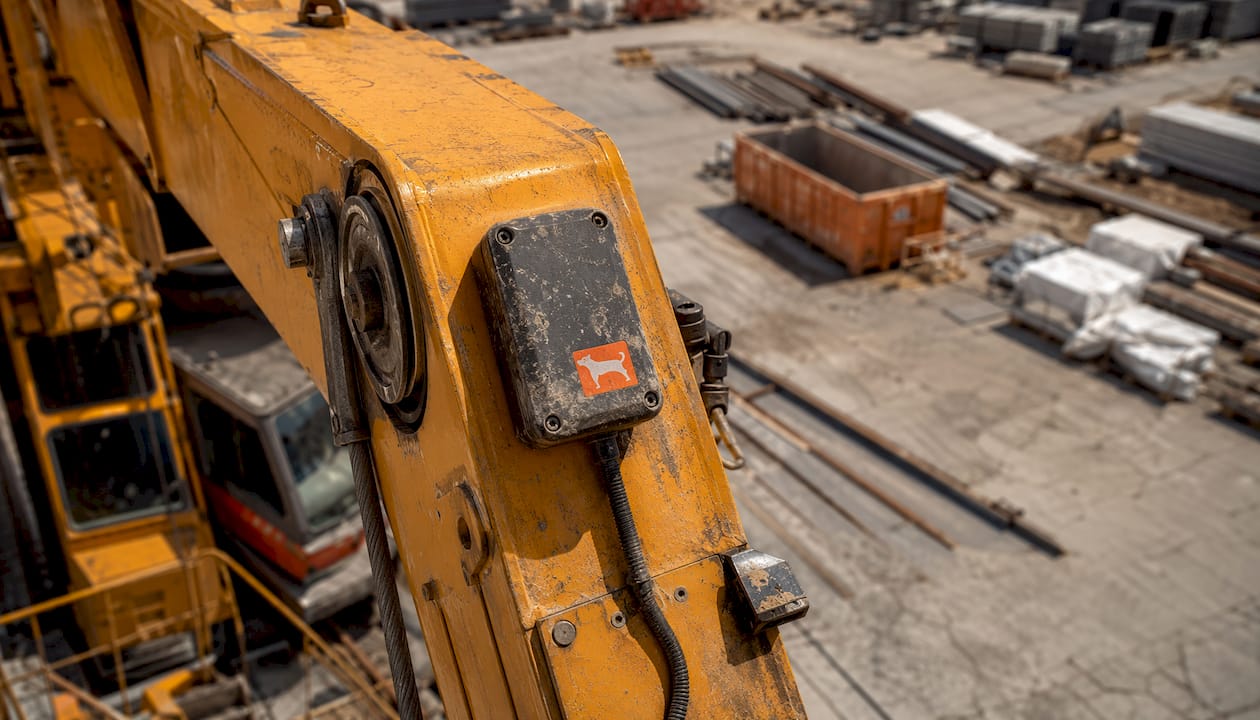
Modern GPS tags do more than report location. Onboard sensors detect movement, tamper events, and physical impacts, triggering immediate alerts when something unexpected happens. A generator that gets loaded onto an unauthorized truck at 2 AM sends an alert before it leaves the site perimeter.
Core components of a GPS tracking setup:
- GPS receiver: Calculates position from satellite signals
- Cellular or NB-IoT modem: Transmits location data to the cloud
- Onboard sensors: Detects motion, tamper events, and impacts
- Cloud platform: Aggregates data, displays maps, and manages alerts
- User interface: Web dashboard or mobile app for fleet managers
| Component | Function | Typical Technology |
|---|---|---|
| GPS receiver | Position calculation | Satellite triangulation |
| Communication module | Data transmission | Cellular, NB-IoT, satellite |
| Motion sensor | Movement detection | Accelerometer |
| Power source | Device operation | Battery or hardwired |
| Cloud software | Data management | Web/mobile platform |
Key features to look for in GPS tags for construction assets
Battery life is the single most consequential spec for unpowered assets like trailers, generators, and attachments. Devices that last over five years on standard AAA batteries with twice-daily updates exist today, and that longevity eliminates the maintenance burden of frequent battery swaps across a large fleet. The trade-off between update frequency and battery life is real: a tag reporting every 30 seconds will drain in weeks, while one reporting twice daily can run for years.
Durability matters just as much. Construction environments expose equipment to mud, rain, vibration, and extreme temperatures. Look for IP68-rated devices, which are fully dust-tight and can withstand continuous water immersion. Anything rated below IP65 is a liability on an active job site.
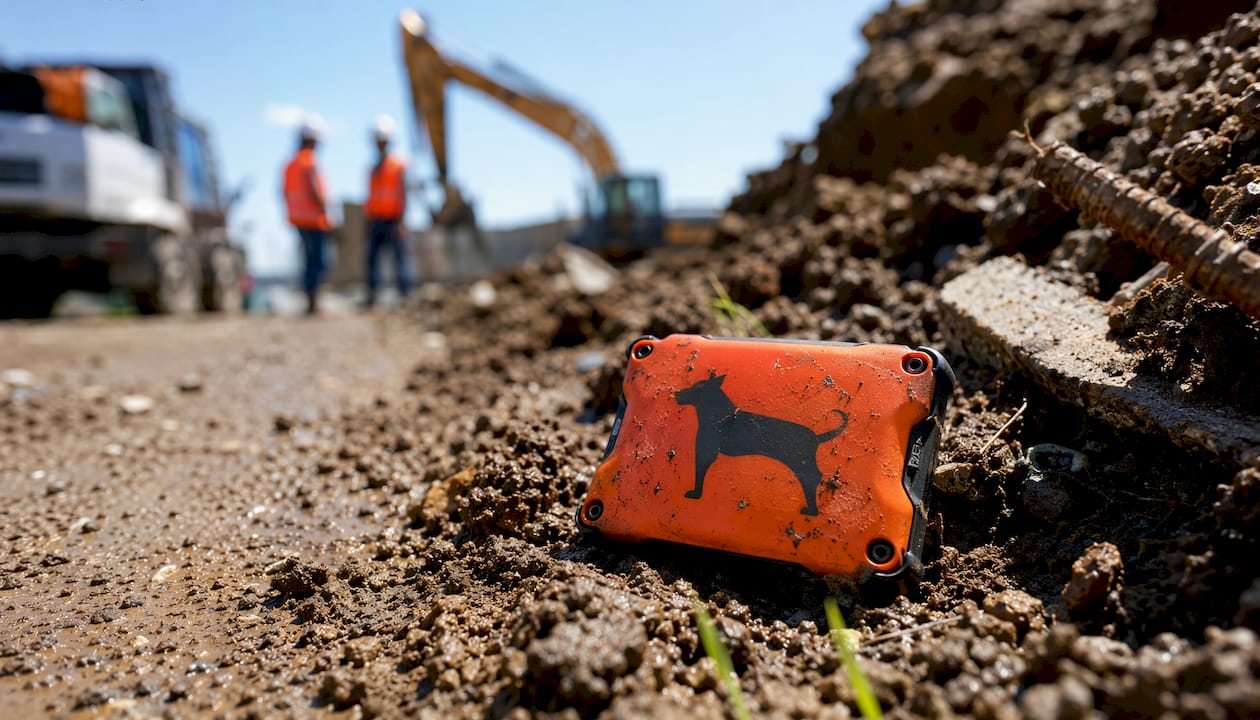
Integration capability determines how much value you actually extract from the data. A tracker that feeds into your existing construction management software, ERP, or fleet platform turns raw location data into operational intelligence. Without integration, you are managing yet another siloed dashboard.
Critical features to evaluate before purchasing:
- Battery life: Months to years depending on update frequency; match to asset type
- IP rating: IP67 or IP68 for outdoor construction environments
- Update frequency: Configurable intervals from seconds to hours
- Geofencing: Automated alerts when assets enter or leave defined zones
- Tamper and impact detection: Sensors that flag unauthorized handling
- Software integration: API or native connections to fleet management platforms
- Installation method: Hardwired, magnetic mount, bolt-on, or adhesive
| Feature | What to look for | Why it matters |
|---|---|---|
| Battery life | 1–5+ years for unpowered assets | Reduces maintenance overhead |
| Durability rating | IP67 or IP68 | Survives construction conditions |
| Update frequency | Configurable intervals | Balances accuracy vs. battery use |
| Geofencing | Customizable zone alerts | Enables theft prevention |
| Sensor suite | Motion, tamper, impact | Comprehensive event detection |
| Software integration | API or native connectors | Turns data into decisions |
Top GPS tracking solutions for construction assets in 2026
The market for construction asset tracking has matured significantly. Here is how the leading platforms compare across the dimensions that matter most to fleet managers.
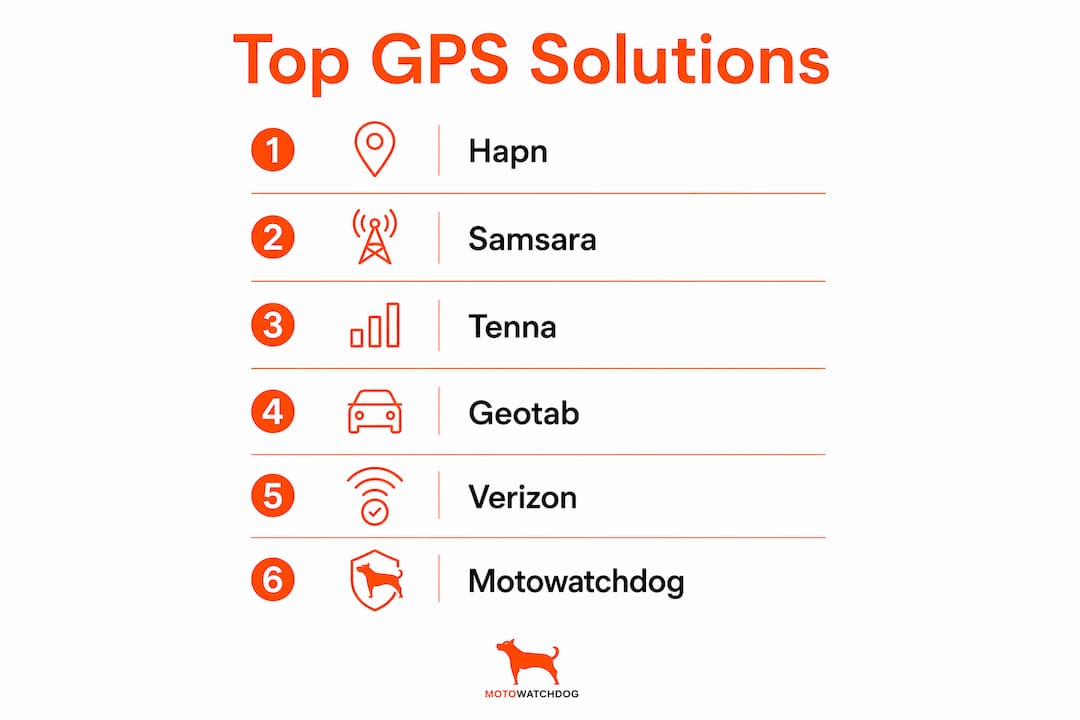
| Provider | Best For | Pricing | Key Features | Contract Terms | Customer Support |
|---|---|---|---|---|---|
| Hapn | Mixed fleet management | Subscription-based | Fleet and asset integration, utilization analytics | Annual contracts | Phone, email, chat |
| Samsara | Large fleets needing analytics | Subscription-based | Extensive reporting, real-time data, driver safety | Annual contracts | phone and chat support |
| Motive | Heavy equipment and unpowered assets | Subscription-based | High battery life devices, flexible deployment | Annual contracts | Phone, email |
| Verizon Connect | Enterprise compliance and safety | Subscription-based | Safety tools, compliance reporting, fleet tracking | Multi-year contracts | Phone, dedicated rep |
| DPL Telematics | Asset security and theft prevention | Subscription-based | Durable hardware, theft alerts, harsh environment design | Annual contracts | Phone, email |
| Tenna | Diverse asset fleets including tools | Subscription-based | Resource management, dispatching, mixed asset support | Annual contracts | Phone, email, chat |
| Geoforce | Industrial and construction sites | Subscription-based | Ruggedized hardware, flexible connectivity | Annual contracts | Phone, email |
| Geotab | Vehicle diagnostics and monitoring | Subscription-based | Data analytics, customization, diagnostics | Annual contracts | Phone, partner network |
| Trackunit | Integrated IoT asset and fleet solutions | Subscription-based | IoT network, real-time condition monitoring | Annual contracts | Phone, email |
| Motowatchdog | Cost-conscious managers, no monthly fees | No subscription | 4G GPS, geofencing, long battery life, simple setup | No contract | Email, online support |
| Motive (formerly KeepTruckin) | Construction firms with mixed fleets | Subscription-based | GPS tracking, ELD compliance, asset monitoring | Annual contracts | Phone, email |
Samsara is the go-to platform for large construction operations that need deep analytics. Its reporting suite covers everything from equipment utilization to driver behavior, and the real-time data pipeline supports complex, multi-site operations. The trade-off is cost: Samsara sits at the premium end of the market and requires annual commitments.
Tenna stands out specifically for contractors managing a genuinely mixed asset inventory, including powered equipment, trailers, and small tools. Its dispatching and resource management features go beyond simple location tracking, making it closer to a full construction asset management platform than a pure GPS solution.
Geotab earns its place for fleets where vehicle diagnostics matter as much as location. Its open platform and customization options attract operations that want to build tailored workflows on top of raw telematics data. The partner ecosystem is extensive, which helps with software integration.
Geoforce and DPL Telematics both prioritize hardware durability for harsh environments. Geoforce offers flexible connectivity options including satellite, which matters on remote sites where cellular coverage is unreliable. DPL Telematics leans heavily into theft prevention features, with alert configurations designed specifically around unauthorized equipment movement.
Verizon Connect suits enterprises where regulatory compliance and safety documentation are non-negotiable. The platform’s safety tools and compliance reporting are among the most developed in the category, though the multi-year contracts and enterprise pricing reflect that positioning.
Trackunit brings an IoT-first approach, with real-time condition monitoring that goes beyond location to include machine health data. For enterprises managing large fleets of construction equipment with complex maintenance requirements, that depth of data is genuinely useful.
Motowatchdog occupies a distinct position: subscription-free 4G GPS tracking with no ongoing monthly fees. For cost-conscious fleet managers who need reliable location monitoring without committing to annual subscription contracts, that model removes a real financial barrier. Over 1,000 businesses rely on Motowatchdog’s accuracy, and the platform includes geofencing alerts, long battery life, and straightforward installation. It fits contractors who want dependable tracking without the overhead of enterprise pricing.
GPS vs. Bluetooth tracking: Which technology fits your job site?
The choice between GPS and Bluetooth Low Energy (BLE) tracking comes down to one question: where do your assets actually spend their time? GPS tracking provides wide-area, outdoor visibility for mobile and high-value assets operating across cities or regions, communicating directly via satellite and cellular networks with minimal local infrastructure. BLE, by contrast, excels in confined indoor spaces like warehouses or equipment yards, but requires gateway infrastructure to relay data and loses effectiveness the moment an asset moves beyond gateway range.
For most construction job sites, GPS wins by default. Equipment moves constantly between sites, operates outdoors, and often ends up in remote locations where cellular coverage is the only reliable communication path. BLE works well for tracking tools within a single facility or a contained yard, but it cannot follow a trailer across three counties.
Hybrid GPS-BLE devices solve the edge case where assets move between indoor facilities and outdoor sites. These devices switch between GPS and BLE depending on signal conditions, maintaining continuous visibility regardless of environment. For contractors who operate both a central equipment yard and dispersed remote sites, hybrid trackers eliminate the blind spots that either technology alone would create.
Technology comparison at a glance:
- GPS: Wide-area outdoor coverage, direct satellite and cellular communication, ideal for mobile high-value assets, less effective indoors
- BLE: Short-range indoor tracking, low power consumption, requires gateway infrastructure, limited scalability across remote areas
- Hybrid GPS-BLE: Continuous coverage indoors and outdoors, best for assets transitioning between environments, higher device cost
How to install GPS tags on construction assets
Installation complexity varies by device type and asset. Battery-powered tags are the simplest: pull the activation strip, secure the device to the asset using screws, zip ties, or adhesive, and register it in your tracking platform. The Hilti Geo tag AI T400 follows exactly this process, taking only seconds to register once physically attached. Placement matters: position the tag with a clear view of the sky to improve GPS signal acquisition and location accuracy.
Hardwired installations on powered equipment connect the tracker to the asset’s electrical system, enabling continuous power and higher update frequencies. This approach suits excavators, loaders, and other machinery where battery replacement is impractical. A fleet hardwiring guide covers the wiring configurations fleet managers need to know before deploying at scale.
For heavy equipment transport, proper tracker placement also supports logistics coordination. Understanding how assets move between sites, including during heavy equipment transport, helps managers plan pickup routes and verify delivery at the destination.
General installation steps for battery-powered GPS tags:
- Activate the device per manufacturer instructions
- Choose a mounting location with sky visibility and physical protection
- Secure using screws, zip ties, or industrial adhesive
- Register the device in your asset management platform
- Verify the first location update and confirm accuracy
- Configure geofence zones and alert thresholds
Data security and privacy considerations for GPS tracking
GPS tracking data is operationally sensitive. Location histories, utilization patterns, and equipment inventories represent competitive intelligence that construction firms need to protect. Choose platforms that encrypt data in transit and at rest, and confirm that the vendor’s data retention policies align with your own compliance requirements.
Employee privacy is a separate concern when GPS tags are deployed on vehicles that workers also use for personal travel. Most U.S. states permit employer GPS tracking on company-owned vehicles, but fleet managers should establish a clear written policy that informs employees of tracking practices. Transparency reduces legal exposure and builds trust with field crews.
Access controls matter at the platform level. Role-based permissions ensure that a site supervisor can view equipment on their site without accessing the full fleet inventory. Audit logs that record who accessed what data and when are a baseline requirement for any enterprise deployment.
Vendor security practices deserve scrutiny before signing a contract. Ask specifically about SOC 2 compliance, data residency, and breach notification procedures. A vendor that cannot answer those questions clearly is a risk, regardless of how good the hardware is.
Real-world examples of GPS tracking improving construction asset management
John Holland, a leading engineering and contracting firm, deployed Digital Matter GPS devices to track spoil and waste disposal across large-scale infrastructure projects. The tracking solution gave the company verifiable documentation of contaminated material movement, satisfying strict regulatory requirements while reducing the administrative burden of manual record-keeping.
VolkerFitzpatrick, one of the UK’s leading engineering and construction companies, partnered with Hyrde IoT to deploy Digital Matter GPS devices on concrete mixers. The deployment optimized mixer utilization and routing, reducing idle time and improving scheduling across active construction sites.
Foresight Intelligence used battery-powered GPS trackers on heavy equipment fleets to improve utilization tracking, preventative maintenance scheduling, and theft prevention in demanding construction environments. The combination of durable hardware and reliable location data gave fleet managers the visibility they needed to move from reactive problem-solving to data-driven decision-making.
These examples share a common thread: the value of GPS tracking compounds over time. The first theft prevention win pays for the hardware. The utilization data that follows changes how managers deploy equipment. The maintenance alerts that come next extend asset life. Each layer of data builds on the last.
Motowatchdog offers a no-subscription path to construction asset visibility
Most of the platforms compared above require annual contracts and monthly fees that add up quickly across a large fleet. Motowatchdog takes a different approach: subscription-free 4G GPS tracking with no ongoing monthly costs, designed for fleet managers who need reliable location monitoring without the financial commitment of enterprise contracts.
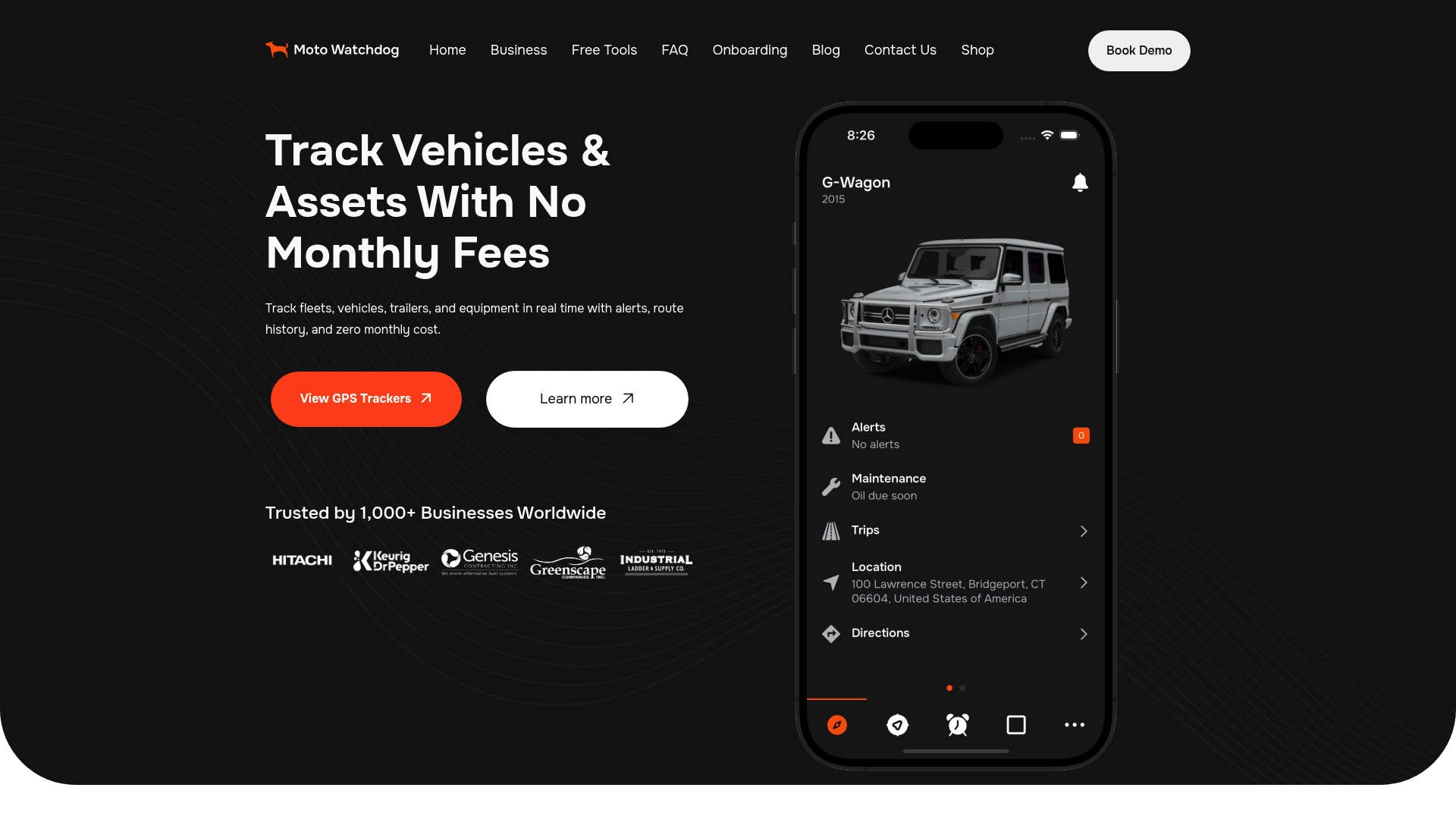
Motowatchdog provides real-time location data, customizable geofencing alerts, and long battery life in a device that installs without specialized tools. Over 1,000 businesses rely on it for accurate, consistent tracking across vehicles and construction assets. For contractors managing smaller fleets or looking to reduce operating costs without sacrificing visibility, Motowatchdog removes the subscription barrier entirely. If the enterprise platforms in this guide are more than your operation needs, Motowatchdog is worth a direct look.
Key Takeaways
GPS tags for construction assets deliver the most value when matched to the right technology, power setup, and platform for your specific fleet size and job site environment.
| Point | Details |
|---|---|
| GPS outperforms BLE outdoors | GPS provides wide-area coverage for mobile assets; BLE suits indoor, contained environments only. |
| Battery life drives device selection | Tags lasting over five years exist for unpowered assets; update frequency directly affects battery longevity. |
| Hybrid trackers cover both environments | GPS-BLE hybrid devices maintain continuous visibility for assets moving between indoor and outdoor locations. |
| Subscription costs add up fast | Enterprise platforms require annual contracts; subscription-free options like Motowatchdog eliminate ongoing fees. |
| Motowatchdog fits cost-conscious fleets | Motowatchdog offers 4G GPS tracking with no monthly subscription, geofencing alerts, and simple installation. |

