
How to start saving money
Lorem ipsum dolor sit amet, consectetur adipiscing elit lobortis arcu enim urna adipiscing praesent velit viverra sit semper lorem eu cursus vel hendrerit elementum morbi curabitur etiam nibh justo, lorem aliquet donec sed sit mi dignissim at ante massa mattis.
- Neque sodales ut etiam sit amet nisl purus non tellus orci ac auctor
- Adipiscing elit ut aliquam purus sit amet viverra suspendisse potent
- Mauris commodo quis imperdiet massa tincidunt nunc pulvinar
- Excepteur sint occaecat cupidatat non proident sunt in culpa qui officia
Why it is important to start saving
Vitae congue eu consequat ac felis placerat vestibulum lectus mauris ultrices cursus sit amet dictum sit amet justo donec enim diam porttitor lacus luctus accumsan tortor posuere praesent tristique magna sit amet purus gravida quis blandit turpis.

How much money should I save?
At risus viverra adipiscing at in tellus integer feugiat nisl pretium fusce id velit ut tortor sagittis orci a scelerisque purus semper eget at lectus urna duis convallis. porta nibh venenatis cras sed felis eget neque laoreet suspendisse interdum consectetur libero id faucibus nisl donec pretium vulputate sapien nec sagittis aliquam nunc lobortis mattis aliquam faucibus purus in.
- Neque sodales ut etiam sit amet nisl purus non tellus orci ac auctor
- Adipiscing elit ut aliquam purus sit amet viverra suspendisse potenti
- Mauris commodo quis imperdiet massa tincidunt nunc pulvinar
- Adipiscing elit ut aliquam purus sit amet viverra suspendisse potenti
What percentege of my income should go to savings?
Nisi quis eleifend quam adipiscing vitae aliquet bibendum enim facilisis gravida neque. Velit euismod in pellentesque massa placerat volutpat lacus laoreet non curabitur gravida odio aenean sed adipiscing diam donec adipiscing tristique risus. amet est placerat in egestas erat imperdiet sed euismod nisi.
“Nisi quis eleifend quam adipiscing vitae aliquet bibendum enim facilisis gravida neque velit euismod in pellentesque”
Do you have any comments? Share them with us on social media
Eget lorem dolor sed viverra ipsum nunc aliquet bibendum felis donec et odio pellentesque diam volutpat commodo sed egestas aliquam sem fringilla ut morbi tincidunt augue interdum velit euismod eu tincidunt tortor aliquam nulla facilisi aenean sed adipiscing diam donec adipiscing ut lectus arcu bibendum at varius vel pharetra nibh venenatis cras sed felis eget.
GPS works in rural areas because satellites do not need cell towers. What changes from a city yard to a remote job site is how the position gets back to your dashboard, and how clearly the tracker sees the sky. If you run a contractor fleet or a heavy equipment rental business, the practical answer is a 4G tracker with no monthly fees, installed where it has a clear view of the sky, with coverage checked at the places your machines actually work. Moto Watchdog trackers start at $124.99 one-off, with lifetime 4G data included and no activation fees.
TL;DR
- GPS positioning comes from satellites and works without cell service. Reporting that position to your phone or dashboard is a separate step.
- Rural cellular coverage is uneven: the FCC found far lower 5G coverage for the rural population than for the national one. Check coverage at your job sites, not just on a national map.
- Sky view, mounting spot and power matter as much as the network. Dense tree canopy, steep terrain and metal enclosures lower fix quality.
- Geofences, trip history and idle reports turn rural location data into decisions about theft, utilization and billing.
- Moto Watchdog trackers need no monthly fee, and one dashboard handles unlimited vehicles and users.
Table of Contents
- Two jobs: finding the position and reporting it
- What rural coverage actually looks like in the U.S.
- How to check coverage for your own sites
- Sky view, terrain and mounting: the part crews control
- Choosing the right Moto Watchdog tracker for remote work
- What you do with location data when the work is remote
- Why no monthly fee matters more in remote operations
- Our perspective
- Match a tracker to your equipment
- FAQ
- Sources
Two jobs: finding the position and reporting it
People search “GPS rural coverage” assuming one thing is being covered. There are two.
The first is positioning. GPS has three segments: satellites that broadcast one-way signals carrying position and time, a control segment on the ground, and the receiver in your tracker, which uses those signals to calculate its own three-dimensional position and the time. No tower, no phone plan, no internet is involved. A receiver in the middle of a ranch can work out where it is just as well as one in a parking lot, as long as it can see enough of the sky.
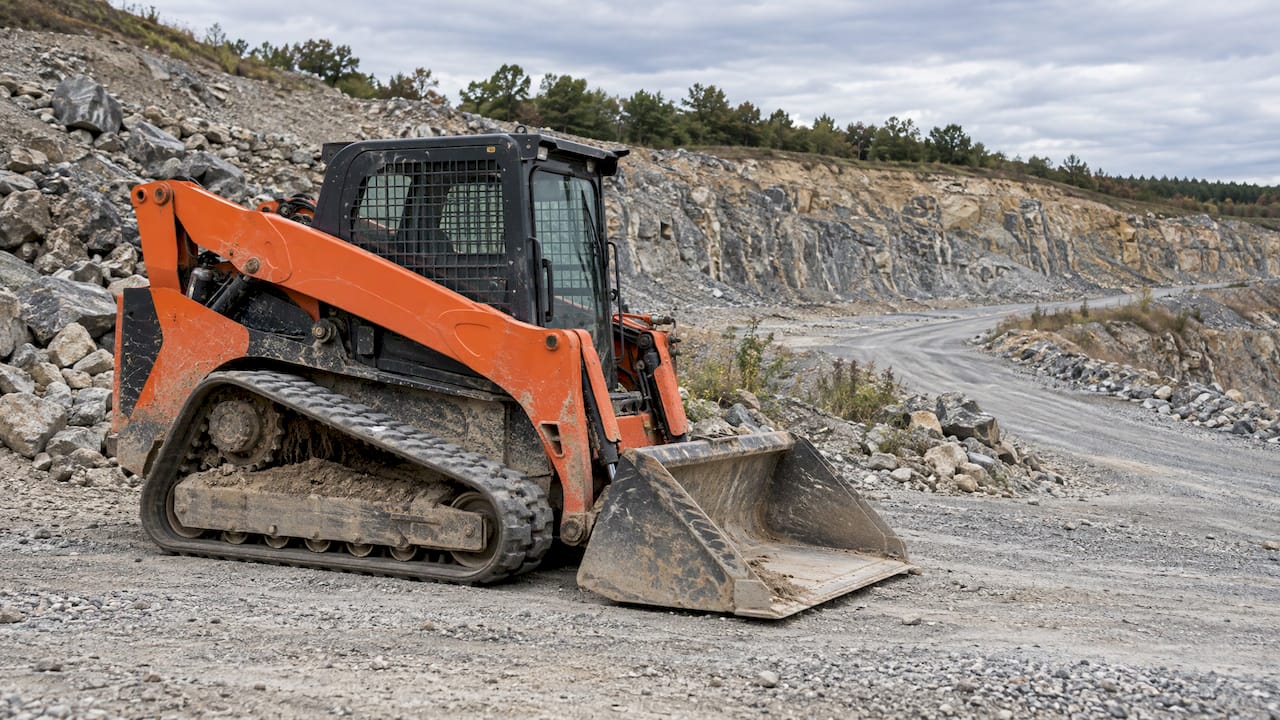
The second is reporting. A tracker that is useful to a fleet manager sends its position out so you can see it live. The U.S. Department of Homeland Security’s technical note on asset tracking separates passive systems, which log data you read later, from active systems that transmit wirelessly so you can monitor present location, direction and speed. Rental companies and contractors need the active kind: you want to know where the skid steer is now, not next week.
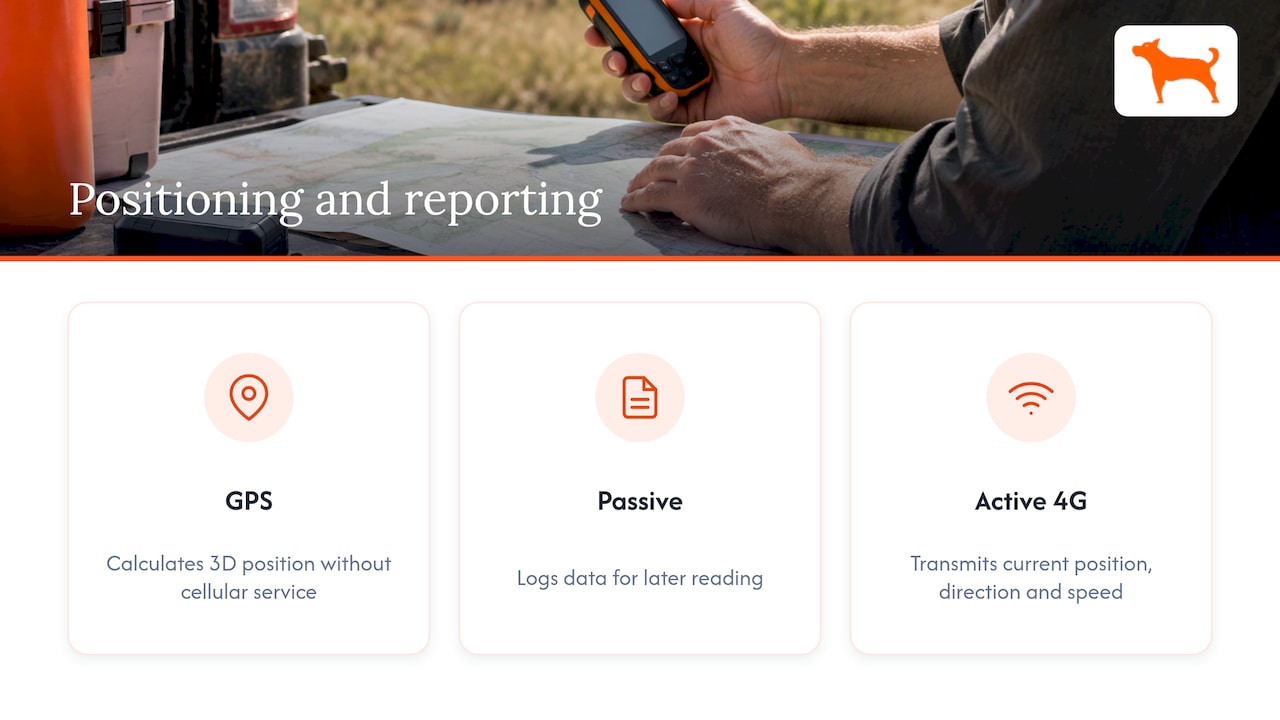
Moto Watchdog trackers are active 4G devices. Position comes from GPS, and reporting travels over 4G data that is included for the life of the device, so there is no data plan to buy or renew.

What rural coverage actually looks like in the U.S.
Cellular networks were built where the people are. The FCC’s 2024 Section 706 Report found that at year-end 2022 about 91% of Americans lived in areas with 5G-NR coverage at 35/3 Mbps, but only about 64% of the rural population did. Those are 5G figures, and a tracker sends tiny packets of data that need far less than 35 Mbps, so the real-world picture for a tracker is better than that headline. The lesson still holds: coverage differs from county to county, and sometimes from one ridge to the next.
The GSMA, the mobile industry’s trade body, makes a similar point in its 2025 asset tracking guide: cellular networks cover 99% of populated areas in developed countries but typically less than 25% of total geographic area. Your equipment, though, is rarely spread evenly over geography. It sits on highway corridors, quarries, farms, pipeline routes, solar sites and yards, which are places where people work and where networks tend to reach. That is why the useful question is not “does 4G cover the country?” but “does it cover my sites and routes?”
How to check coverage for your own sites
A national coverage map is a starting point. Carrier maps show predicted outdoor coverage, and predictions are less precise in rural and hilly terrain. Here is a routine that takes an afternoon and saves a lot of guesswork.
- List the places that matter. Pull the addresses or coordinates of your yards, your regular job sites, the routes between them, and the places equipment tends to be staged or stored overnight.
- Check 4G LTE coverage on the carrier maps for each location, zoomed in to the parcel or road level rather than the county level.
- Ask your crews. The operator who works the same hillside every month knows where phones drop to no bars. Mark those spots.
- Deploy on a small group first. Put trackers on a few machines that cover your most remote locations and read the trip history after a week or two. You will see where reports are continuous and where position points arrive in bursts.
- Re-check seasonally. Networks are expanded and reconfigured over time, so a spot that was weak last year may be better now. Foliage and weather can change what you see on the ground, too.
The more units you roll out, the more useful the data becomes. Moto Watchdog supports unlimited vehicles and users on one dashboard, so adding a machine means adding a marker, not a new account.
Sky view, terrain and mounting: the part crews control
Even with a good network, a tracker can only report an accurate position if its receiver can see satellites. Several factors affect this in rural and off-road work.
Canopy and terrain. A 2018 study of logging operations found that forest stand characteristics, topography and line-of-sight obstructions affected how often signals were missed. The same paper discusses satellite geometry, canopy, solid objects and multipath error (signals bouncing off surfaces before reaching the receiver) as drivers of accuracy. For a fleet, the takeaway is practical: a machine working in a steep-walled cut or under heavy timber will show a rougher position than one on open ground, and that is normal behavior for any GPS receiver.
Obstructed spaces. A 2015 study of low-cost loggers found that completely or partially obstructed locations reduced fix success by up to 80% and increased location error. Barns, steel sheds and deep equipment bays are obstructed spaces. Expect a position to settle once the machine moves back into the open.
Mounting location. The mount is the one variable you control completely. Some guidelines for common equipment:
- Trailers and enclosed bodies: mount where the tracker faces the sky, not inside a steel-sided cargo area.
- Excavators, loaders and dozers: a protected spot on the upper frame, away from large metal masses that sit between the tracker and the sky.
- Pickups and service trucks: the dashboard area works for plug-in units, while a hidden hardwired install suits vehicles you want tracked discreetly.
- Attachments and towed equipment: a battery-powered magnetic unit attaches to a steel surface without wiring.
Choosing the right Moto Watchdog tracker for remote work
Power is the other half of rural reliability. In a yard you can plug things in. On a remote job site, a machine may sit for weeks.
| Tracker | How it mounts and powers | Best fit |
|---|---|---|
| MW-1700 Magnetic GPS Tracker | Magnetic, battery-powered, 1-month battery | Trailers, attachments, generators, rental equipment without a power feed |
| HW-200 Hardwired Tracker | Hardwired to the vehicle, hidden install | Trucks and machines that run daily and should be tracked discreetly |
| OBD Plug-In Tracker | Plugs into the OBD port | Pickups, vans and service vehicles you want set up in minutes |
All three are 4G LTE devices sold with no monthly fees. For rental equipment that leaves the yard on a customer’s truck and may be gone for a season, a long-battery magnetic tracker keeps the asset visible without depending on the machine’s electrical system.
What you do with location data when the work is remote
Rural fleets benefit from tracking more than urban fleets, because nobody is watching the equipment. The features that matter most:
- Geofencing and alerts. Draw a boundary around a yard, a job site or a customer’s permitted area and get a push notification when a machine leaves it. For rental companies, this is the difference between learning about an unauthorized move on Monday morning and learning about it as it happens.
- Trip and mileage reports. Detailed mileage tracking simplifies reporting for business use, including fuel tax records and customer billing for transport.
- Idle time tracking. A loader running at a remote site with nobody in the seat is costing you fuel and engine hours. Idle reports show it.
- Maintenance reminders. Set service intervals by mileage or time so remote equipment does not run past its oil change because nobody saw it in the shop.
- Sharing. Give a customer, dispatcher or foreman access to a unit without handing over the whole account.
- Mobile app management. Check the whole fleet from a phone, wherever you are.
One caution from the research is worth building into how you set up geofences. The 2018 logging study concluded that consumer-grade real-time positioning can improve situational awareness, but that precision-critical, safety-style geofencing is not yet advisable under dense forest conditions. For fleet work, size your geofences to match the terrain: generous boundaries around a heavily wooded site, tighter ones for an open yard.
Why no monthly fee matters more in remote operations
Rural and heavy-equipment fleets tend to have assets that sit idle for stretches: a trailer parked at a lay-down yard, a compactor between rentals, a generator in storage. Under a subscription model, every one of those units keeps billing whether it is working or not. With a one-time purchase, the cost is the device, and the data is included for life.
A quick worked example. A 25-unit equipment fleet fitted with trackers from $124.99 each starts at a one-time hardware cost of $3,124.75 before any other choice of model. There is no activation fee and no recurring charge to add to that figure, so the cost stays fixed as the fleet ages and as units come in and out of rotation. Check the product pages for the exact price of the model you pick.
Our perspective
Over the years, the question we hear most from rural operators is not “does it track?” but “will it still tell me where my machine is when it is two hours from the nearest town?” That is the right question, and it has an honest answer in two parts.
The first part is that the satellites do their job everywhere. The position is always there. The second part is the reporting, and that is why we build around 4G LTE with lifetime data included and global coverage. You pay once for the tracker, and the connection comes with it. Nobody should have to choose between a remote asset and a monthly invoice for a unit that spends half the year sitting in a field.
Our advice is simple. Pick the mounting spot with sky view first. Match the power to the job: battery for the trailer and attachments, hardwired for the daily-use truck, plug-in for the service van. Put a few units on your most remote work first and read their trip history. Then roll out across the fleet on one dashboard with as many users as you need.
Setup is meant to be easy, and sales and support replies come the same day with no sales sequence. If you want help matching a tracker to a piece of equipment, ask us.
Louis
Match a tracker to your equipment
If you manage trailers, attachments or rental machines that spend long stretches away from a power source, the MW-1700 magnetic tracker with a 1-month battery is built for that job: it clamps on magnetically and needs no wiring. For vehicles that run daily, the hardwired HW-200 installs out of sight, and the OBD plug-in model is the quickest way to equip pickups and vans. You can see the whole range, starting at $124.99 with no monthly fees, on the Moto Watchdog trackers page.

For larger fleets and integrations, Moto Watchdog also offers API access for businesses. Pricing is not published, so ask through the business page.
FAQ
Can GPS work without cell service?
Yes. GPS satellites broadcast signals that a receiver uses to calculate its own position, with no cell tower involved. What needs a network is sending that position to your phone or dashboard, which a 4G tracker does over its included data connection.
Will a GPS tracker work in the middle of nowhere?
The receiver works anywhere it has a clear view of the sky. For live reporting, check 4G coverage at your actual sites and routes, and start with a few units at your most remote location. Moto Watchdog trackers include lifetime 4G data and global coverage with no monthly fees.
Why does the position look less accurate under trees or in a steel building?
Canopy, steep terrain and solid objects block or bounce satellite signals. Research on forest operations shows that stand characteristics and topography affect how often signals are missed. Mount the tracker with the best sky view you can and expect position to sharpen when the machine reaches open ground.
What is the best tracker for equipment that sits for weeks?
A battery-powered magnetic unit suits equipment with no power feed. The Moto Watchdog MW-1700 has a 1-month battery and attaches magnetically, so it can ride on trailers, attachments and rental machines without wiring.
How many machines and users can I put on one account?
Moto Watchdog supports unlimited vehicles and users on one dashboard, so you can add equipment as your fleet grows without opening a new account.
Sources
- GPS | GPS.gov
- FCC 24-27, 2024 Section 706 Report
- DHS SAVER Asset Tracking and Inventory Systems TechNote
- GSMA 5G and Satellite Asset Tracking Guide, February 2025
- Real-time positioning in logging: effects of forest stand characteristics, topography, and line-of-sight obstructions
- Performance and accuracy of lightweight and low-cost GPS data loggers

