
How to start saving money
Lorem ipsum dolor sit amet, consectetur adipiscing elit lobortis arcu enim urna adipiscing praesent velit viverra sit semper lorem eu cursus vel hendrerit elementum morbi curabitur etiam nibh justo, lorem aliquet donec sed sit mi dignissim at ante massa mattis.
- Neque sodales ut etiam sit amet nisl purus non tellus orci ac auctor
- Adipiscing elit ut aliquam purus sit amet viverra suspendisse potent
- Mauris commodo quis imperdiet massa tincidunt nunc pulvinar
- Excepteur sint occaecat cupidatat non proident sunt in culpa qui officia
Why it is important to start saving
Vitae congue eu consequat ac felis placerat vestibulum lectus mauris ultrices cursus sit amet dictum sit amet justo donec enim diam porttitor lacus luctus accumsan tortor posuere praesent tristique magna sit amet purus gravida quis blandit turpis.

How much money should I save?
At risus viverra adipiscing at in tellus integer feugiat nisl pretium fusce id velit ut tortor sagittis orci a scelerisque purus semper eget at lectus urna duis convallis. porta nibh venenatis cras sed felis eget neque laoreet suspendisse interdum consectetur libero id faucibus nisl donec pretium vulputate sapien nec sagittis aliquam nunc lobortis mattis aliquam faucibus purus in.
- Neque sodales ut etiam sit amet nisl purus non tellus orci ac auctor
- Adipiscing elit ut aliquam purus sit amet viverra suspendisse potenti
- Mauris commodo quis imperdiet massa tincidunt nunc pulvinar
- Adipiscing elit ut aliquam purus sit amet viverra suspendisse potenti
What percentege of my income should go to savings?
Nisi quis eleifend quam adipiscing vitae aliquet bibendum enim facilisis gravida neque. Velit euismod in pellentesque massa placerat volutpat lacus laoreet non curabitur gravida odio aenean sed adipiscing diam donec adipiscing tristique risus. amet est placerat in egestas erat imperdiet sed euismod nisi.
“Nisi quis eleifend quam adipiscing vitae aliquet bibendum enim facilisis gravida neque velit euismod in pellentesque”
Do you have any comments? Share them with us on social media
Eget lorem dolor sed viverra ipsum nunc aliquet bibendum felis donec et odio pellentesque diam volutpat commodo sed egestas aliquam sem fringilla ut morbi tincidunt augue interdum velit euismod eu tincidunt tortor aliquam nulla facilisi aenean sed adipiscing diam donec adipiscing ut lectus arcu bibendum at varius vel pharetra nibh venenatis cras sed felis eget.
Types of fleet size tracking needs are defined by fleet size category: small (1–25 vehicles), medium (25–100), large (100–500), and very large (500+), each requiring a distinct balance of cost, technology, and integration. Fleet managers who match their tracking solution to their actual fleet size avoid overspending on unused features and prevent gaps in operational visibility. The right fit depends on vehicle count, budget tolerance, regulatory exposure, and how deeply the tracking system must connect with other business tools. This guide breaks down the core tracking requirements by fleet size so you can make a confident, cost-effective decision for 2026.
1. Types of fleet size tracking needs: the core framework
Fleet size is the strongest predictor of software suitability, directly shaping budget requirements and operational complexity. A five-vehicle landscaping company and a 300-truck regional carrier share almost nothing in their tracking requirements, even though both need GPS visibility. The industry standard framework organizes fleet tracking needs into four tiers: small, medium, large, and very large. Each tier carries distinct expectations for technology type, feature depth, and contract structure.
The five functional layers in any fleet management platform are vehicle tracking, route dispatch, driver management, maintenance scheduling, and reporting analytics. Small fleets typically need only the first two. Large fleets need all five, plus compliance modules and ERP connectivity. Knowing which layers your fleet actually uses is the fastest way to avoid paying for software you will never open.

2. Small fleet tracking needs (1–25 vehicles)
Small fleets need simple, affordable, and flexible tracking solutions. The priority is real-time GPS visibility without the financial burden of long-term contracts or enterprise-level complexity. Plug-and-play, month-to-month tracking products best serve fleets under 25 vehicles because fleet composition changes frequently. A vehicle gets sold, a seasonal worker leaves, or a new truck gets added. Rigid annual contracts create unnecessary friction in those situations.
Pricing for this tier runs approximately $18–$35 per vehicle monthly. That range covers the core features a small fleet actually needs:
- Real-time GPS location and history playback
- Basic maintenance reminders and service alerts
- Driver behavior monitoring (speed, hard braking, idling)
- Geofencing alerts for unauthorized vehicle use
- Simple mileage reporting for tax and billing purposes
OBD-II plug-in trackers work well here. They install in seconds, require no wiring, and move easily between vehicles. For fleets that want to eliminate recurring fees entirely, subscription-free GPS options have become a practical alternative in 2026. Cellular GPS devices on 4G networks cover most urban and suburban routes without issue.
The most common mistake at this tier is overbuying. Small-to-medium businesses frequently purchase enterprise platforms they cannot fully use, resulting in wasted costs and added complexity. A five-vehicle HVAC company does not need carbon emissions reporting or multi-site dispatch modules.
Pro Tip: Prioritize contract flexibility above all else at this fleet size. A month-to-month agreement protects you when your vehicle count shifts by even one or two units.
3. Medium fleet tracking needs (25–100 vehicles)
Medium fleets face a different challenge. The operational complexity grows faster than the vehicle count suggests. At 25 vehicles, you likely have multiple drivers, multiple job sites, and a dispatcher who needs more than a map pin. At 100 vehicles, you need structured driver coaching, scheduled maintenance workflows, and data you can actually report on.
Integrated driver coaching, maintenance alerts, and compliance features become standard requirements at this tier. The key tracking needs for medium fleets include:
- Multi-vehicle dashboard with filtering by driver, route, or region
- Driver scorecards and coaching alerts tied to real trip data
- Preventive maintenance scheduling with odometer and engine-hour triggers
- Compliance modules for Hours of Service (HOS) if applicable
- Dash cam integration for incident documentation
- Volume-based pricing that reflects the larger vehicle count
ERP integration becomes relevant here. If your business runs accounting in QuickBooks or operations in a field service platform, your fleet tracking data should flow into those systems automatically. Manual data transfer between disconnected tools costs time and introduces errors. GPS data integration with existing business systems is one of the clearest signs a platform is built for this tier.
Cellular GPS trackers remain the core technology, but medium fleets often add supplemental sensors: temperature monitors for refrigerated cargo, door sensors for cargo security, and fuel level sensors for cost control. Hardwired trackers become more common at this size because vehicles are less likely to change hands frequently. A hardwired GPS tracker provides a more stable connection and is harder for drivers to accidentally disconnect.
The selection challenge at this tier is scalability. Choose a platform that handles 100 vehicles today but can grow to 150 without requiring a full system migration. Switching fleet software mid-growth is expensive and disruptive.
4. Large and enterprise fleet tracking needs (100+ vehicles)
Large fleets operate at a level where tracking is no longer just an operational tool. It becomes a compliance requirement, a safety program, and a financial reporting input. Fleets over 100 vehicles must meet DOT and FMCSA regulations, which mandate Electronic Logging Devices (ELDs) for commercial drivers and impose strict Hours of Service rules. Tracking software at this tier must support those requirements natively.
Enterprise fleets prioritize multi-site visibility, regulatory compliance, advanced analytics, and ERP integrations with platforms like NetSuite, SAP, and Microsoft Dynamics. The tracking needs at this scale include:
- Multi-site and multi-business-unit dashboards with role-based access
- Full ELD compliance with automated HOS logging
- Fuel monitoring and fuel card integration
- Carbon emissions reporting (Scope 3) for sustainability compliance
- Safety analytics with collision detection and risk scoring
- API-first architecture for custom integrations
- Data governance policies for audit trails and retention
Pro Tip: Before selecting an enterprise platform, audit your existing systems for data overlap. Consolidating three partially used tools into one integrated platform almost always costs less than adding a fourth.
Fleet management at this scale is shifting toward strategic operations that include carbon emissions reporting and regulatory compliance as central to fleet health. That shift means the tracking platform is no longer just a logistics tool. It feeds sustainability reports, insurance underwriting, and board-level operational reviews.
Very large fleets (500+ vehicles) add another layer: data governance. When you have 600 vehicles generating location pings every 30 seconds, data volume becomes a management problem. API-first platforms that allow custom data pipelines and warehouse integrations handle this better than closed, proprietary systems.
5. Feature comparison across fleet size categories
The right moment to move from a small-fleet solution to a medium-fleet platform is when manual reporting takes more than two hours per week or when driver accountability becomes a recurring problem. The right moment to move from medium to enterprise is when compliance reporting requires dedicated staff time or when multi-site visibility breaks down.
| Fleet size | Core need | Technology fit | Contract type |
|---|---|---|---|
| 1–25 vehicles | GPS visibility, basic alerts | OBD-II, cellular GPS | Month-to-month |
| 25–100 vehicles | Integration, driver coaching | Cellular GPS, dash cams, sensors | Annual with volume pricing |
| 100–500 vehicles | Compliance, analytics, ERP | Hardwired, ELD, multi-sensor | Multi-year enterprise |
| 500+ vehicles | Data governance, API pipelines | API-first, hybrid satellite | Custom enterprise contracts |
Urban fleets operating in dense cellular coverage areas can rely on standard 4G cellular GPS without issue. Rural fleets or those operating in remote territories face a different reality. Rural or low-coverage operations require satellite backup or hybrid tracking technologies to maintain continuous visibility. This is a technology selection factor that applies across all fleet sizes, not just large ones.
Budget considerations also shift by tier. Small fleets should treat tracking as a per-vehicle line item and compare monthly costs directly. Medium fleets should evaluate total cost of ownership, including integration setup and training. Enterprise fleets should model the cost of non-compliance and downtime against the platform investment.
Pro Tip: Track your vehicle count monthly, not annually. Fleet size trends over six months tell you whether you are approaching a tier threshold and need to evaluate your current platform’s limits.
Key takeaways
Fleet size is the single most reliable guide for matching tracking technology to operational need. Buying above your tier wastes budget; buying below it creates visibility gaps that cost more to fix later.
| Point | Details |
|---|---|
| Small fleet priority | Choose month-to-month, plug-and-play GPS priced at $18–$35 per vehicle monthly. |
| Medium fleet priority | Require ERP integration, driver coaching, and scalable contract terms. |
| Large fleet compliance | DOT/FMCSA compliance and multi-site visibility are non-negotiable at 100+ vehicles. |
| Rural technology gap | Satellite backup or hybrid tracking is required for fleets outside strong cellular coverage. |
| Fleet count accuracy | Accurate vehicle counts prevent data gaps that distort safety profiles and management decisions. |
Why fleet managers get this wrong more often than they should
I have watched fleet managers at every size make the same mistake: they buy for the fleet they want, not the fleet they have. A 20-vehicle delivery operation signs a three-year enterprise contract because the demo looked impressive. Eighteen months later, they are paying for compliance modules, carbon reporting dashboards, and multi-site dispatch tools that sit completely unused.
The uncomfortable truth is that fleet-count accuracy is itself a problem across the industry. Many fleets misreport vehicle count on federal forms, creating a gap between registered and active vehicles that distorts safety profiles and insurance premiums. If you do not know your exact active vehicle count, you cannot accurately assess your tracking tier.
My strongest recommendation for 2026 is to pilot before you commit. Most platforms offer a 30-day trial. Run it on a subset of your fleet, measure what data you actually use, and then decide. The features that look essential in a sales presentation often go untouched in daily operations. Integration quality matters far more than feature count for fleets above 25 vehicles. A platform that connects cleanly to your payroll and dispatch tools delivers more value than one with 40 features and no API.
— Louis
Motowatchdog: flexible GPS tracking without the subscription burden
Fleet managers who need reliable GPS tracking without locking into long-term contracts have a direct option in Motowatchdog. Over 1,000 businesses rely on Motowatchdog for real-time vehicle monitoring, and the platform is built specifically for fleets that need cost transparency and deployment flexibility.
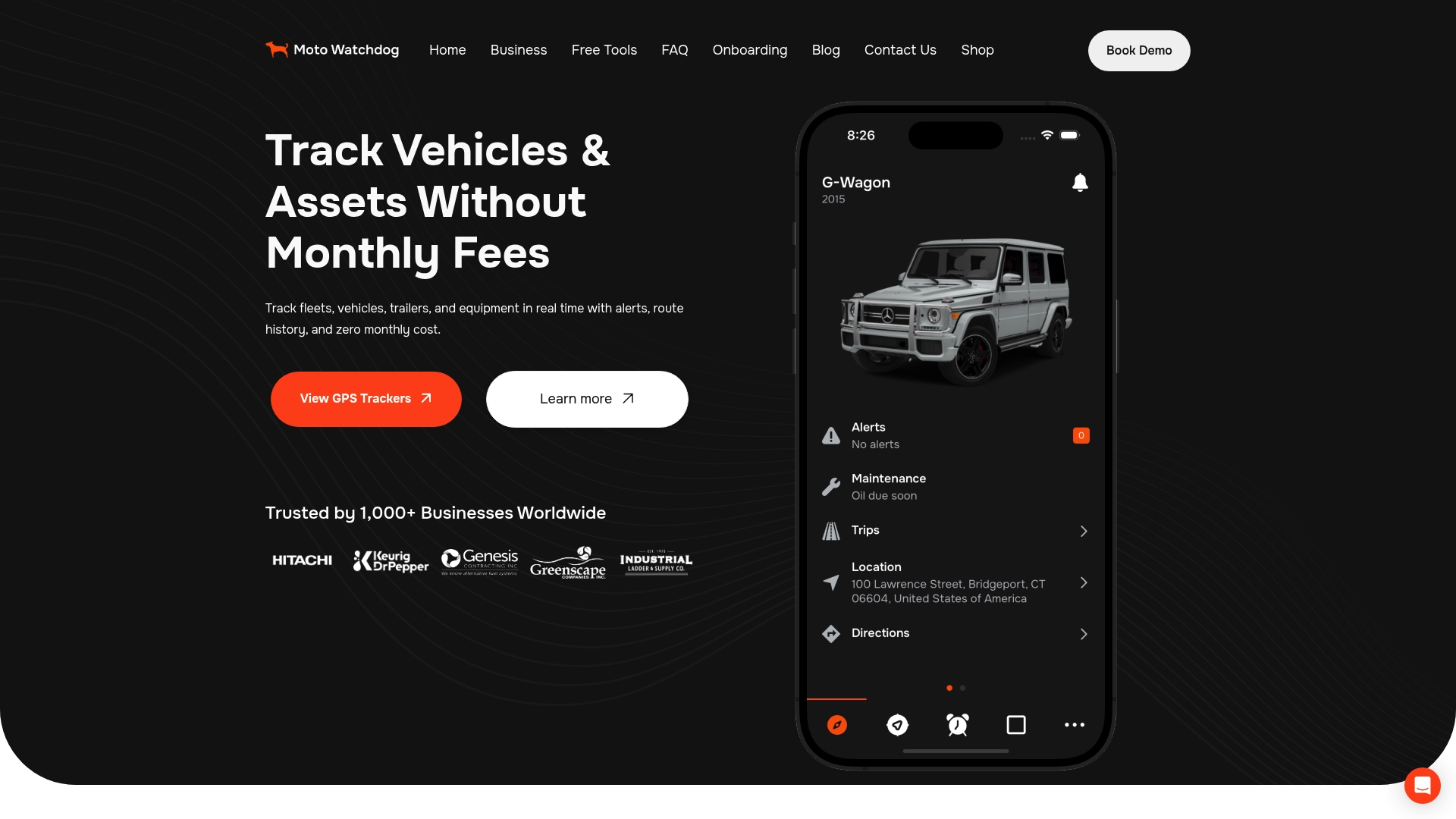
Motowatchdog offers subscription-free fleet tracking on a 4G cellular network, with plug-and-play installation that works from day one. Geofencing alerts, mileage reporting, and real-time location data come standard, with no recurring monthly fees eating into your margins. For small and growing fleets that want the core features without the enterprise price tag, Motowatchdog delivers exactly what the tracking needs of a 1–25 vehicle operation actually require. Learn more at motowatchdog.com.
FAQ
What are the main types of fleet size tracking needs?
Fleet tracking needs fall into four categories based on fleet size: small (1–25 vehicles), medium (25–100), large (100–500), and very large (500+). Each tier requires different technology, feature depth, and contract structures.
How much does GPS tracking cost for a small fleet?
Small fleet tracking solutions are priced at approximately $18–$35 per vehicle monthly. Month-to-month contracts are the best fit for fleets under 25 vehicles due to frequent changes in vehicle composition.
When should a fleet upgrade from a small to a medium tracking solution?
Upgrade when manual reporting exceeds two hours per week or when driver accountability requires structured coaching tools. At that point, a platform with driver scorecards, maintenance scheduling, and ERP integration delivers measurable returns.
Do large fleets need satellite GPS tracking?
Fleets operating in rural or low-cellular coverage areas require satellite backup or hybrid tracking technology regardless of fleet size. Urban large fleets can typically rely on 4G cellular GPS with strong network coverage.
Why does fleet count accuracy matter for tracking?
Inaccurate vehicle counts create gaps between registered and active vehicles, which distorts safety profiles and can affect insurance premiums. Accurate fleet size reporting is the foundation of any reliable tracking program.