
How to start saving money
Lorem ipsum dolor sit amet, consectetur adipiscing elit lobortis arcu enim urna adipiscing praesent velit viverra sit semper lorem eu cursus vel hendrerit elementum morbi curabitur etiam nibh justo, lorem aliquet donec sed sit mi dignissim at ante massa mattis.
- Neque sodales ut etiam sit amet nisl purus non tellus orci ac auctor
- Adipiscing elit ut aliquam purus sit amet viverra suspendisse potent
- Mauris commodo quis imperdiet massa tincidunt nunc pulvinar
- Excepteur sint occaecat cupidatat non proident sunt in culpa qui officia
Why it is important to start saving
Vitae congue eu consequat ac felis placerat vestibulum lectus mauris ultrices cursus sit amet dictum sit amet justo donec enim diam porttitor lacus luctus accumsan tortor posuere praesent tristique magna sit amet purus gravida quis blandit turpis.

How much money should I save?
At risus viverra adipiscing at in tellus integer feugiat nisl pretium fusce id velit ut tortor sagittis orci a scelerisque purus semper eget at lectus urna duis convallis. porta nibh venenatis cras sed felis eget neque laoreet suspendisse interdum consectetur libero id faucibus nisl donec pretium vulputate sapien nec sagittis aliquam nunc lobortis mattis aliquam faucibus purus in.
- Neque sodales ut etiam sit amet nisl purus non tellus orci ac auctor
- Adipiscing elit ut aliquam purus sit amet viverra suspendisse potenti
- Mauris commodo quis imperdiet massa tincidunt nunc pulvinar
- Adipiscing elit ut aliquam purus sit amet viverra suspendisse potenti
What percentege of my income should go to savings?
Nisi quis eleifend quam adipiscing vitae aliquet bibendum enim facilisis gravida neque. Velit euismod in pellentesque massa placerat volutpat lacus laoreet non curabitur gravida odio aenean sed adipiscing diam donec adipiscing tristique risus. amet est placerat in egestas erat imperdiet sed euismod nisi.
“Nisi quis eleifend quam adipiscing vitae aliquet bibendum enim facilisis gravida neque velit euismod in pellentesque”
Do you have any comments? Share them with us on social media
Eget lorem dolor sed viverra ipsum nunc aliquet bibendum felis donec et odio pellentesque diam volutpat commodo sed egestas aliquam sem fringilla ut morbi tincidunt augue interdum velit euismod eu tincidunt tortor aliquam nulla facilisi aenean sed adipiscing diam donec adipiscing ut lectus arcu bibendum at varius vel pharetra nibh venenatis cras sed felis eget.
Fleet GPS data privacy setup is the process of implementing coordinated legal and technical controls to protect driver location and behavior data within fleet operations. The industry term for this discipline is telematics privacy compliance, and fleet managers who treat it as a one-time IT task rather than an ongoing program face real legal exposure. Regulations including EU GDPR, UK GDPR, and Irish Data Protection Commission guidance all classify precise vehicle location data as personal data, triggering specific obligations around lawful basis, transparency, and driver rights. Getting the setup right protects your business from regulatory penalties and builds the driver trust that keeps your fleet running smoothly.
What legal requirements shape fleet GPS data privacy setup?
GPS location and driver behavior data qualify as personal data under GDPR when they can be linked to an identifiable driver. That classification triggers a full set of processing obligations, not just a checkbox on your IT deployment form.
Fleet operators typically rely on legitimate interests as their lawful basis for tracking. That approach is valid, but it requires a documented Legitimate Interests Assessment, commonly called an LIA. The LIA must weigh your business need against the privacy impact on drivers and be communicated to affected employees before tracking begins.
Key legal requirements include:
- Privacy notices delivered to all drivers before tracking starts, covering what data is collected, why, who can access it, how long it is kept, and what rights drivers hold.
- Data retention limits. Most fleet operators retain GPS and telematics data for 90 days to 12 months. Indefinite retention of granular location data is not defensible under GDPR.
- Data Protection Impact Assessments (DPIAs) for any systematic or continuous tracking program. Irish Data Protection Commission guidance classifies precise, continuous tracking as high-risk, requiring a DPIA before deployment.
- Restrictions on off-hours tracking. Tracking must not extend to breaks, commutes, or personal time without strong justification.
- Privacy mode for any vehicle used for both business and personal purposes. This is mandatory under Irish guidance, not optional.
- Subject access rights. Employees have the right to access their GPS data, request corrections, and understand how it is used.
Pro Tip: Draft your LIA before you purchase any tracking hardware. The assessment shapes which device features you actually need, which prevents costly reconfiguration later.
What technical prerequisites does a secure GPS privacy setup require?
The legal framework tells you what you must do. The technical setup determines whether you can actually do it. These two layers must be designed together, not sequentially.
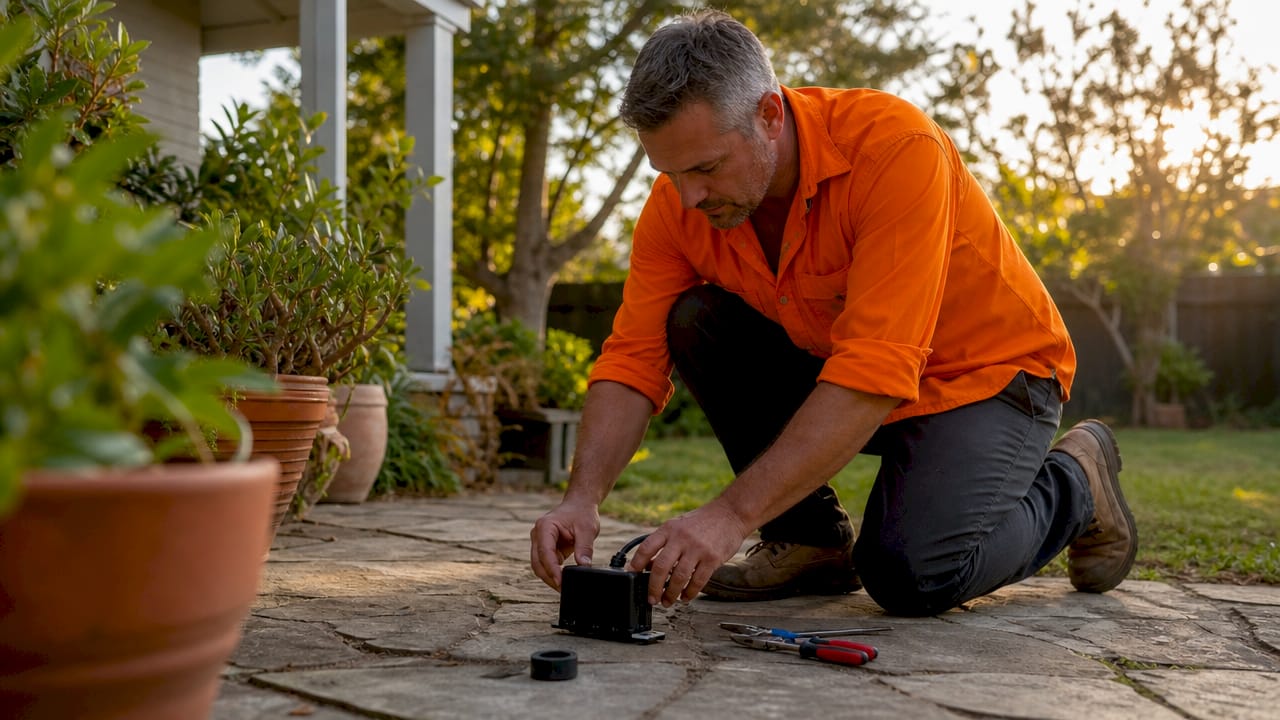
GPS tracking devices must support configurable privacy modes that genuinely suspend location capture during personal use. A privacy mode that only masks data on a dashboard but still logs coordinates in the background does not meet the legal standard. Privacy mode must be a design requirement, not a marketing feature.
| Technical requirement | Why it matters |
|---|---|
| Configurable privacy mode | Suspends tracking during personal use to meet GDPR obligations |
| Data encryption in transit and at rest | Protects location data from unauthorized access and breaches |
| Role-based access controls | Limits who can view driver data to authorized personnel only |
| Automated data deletion | Enforces retention schedules without relying on manual processes |
| Event-based vs. continuous logging | Reduces data volume and privacy risk by capturing only relevant events |
| Secure network protocols | Prevents interception of GPS data during transmission |
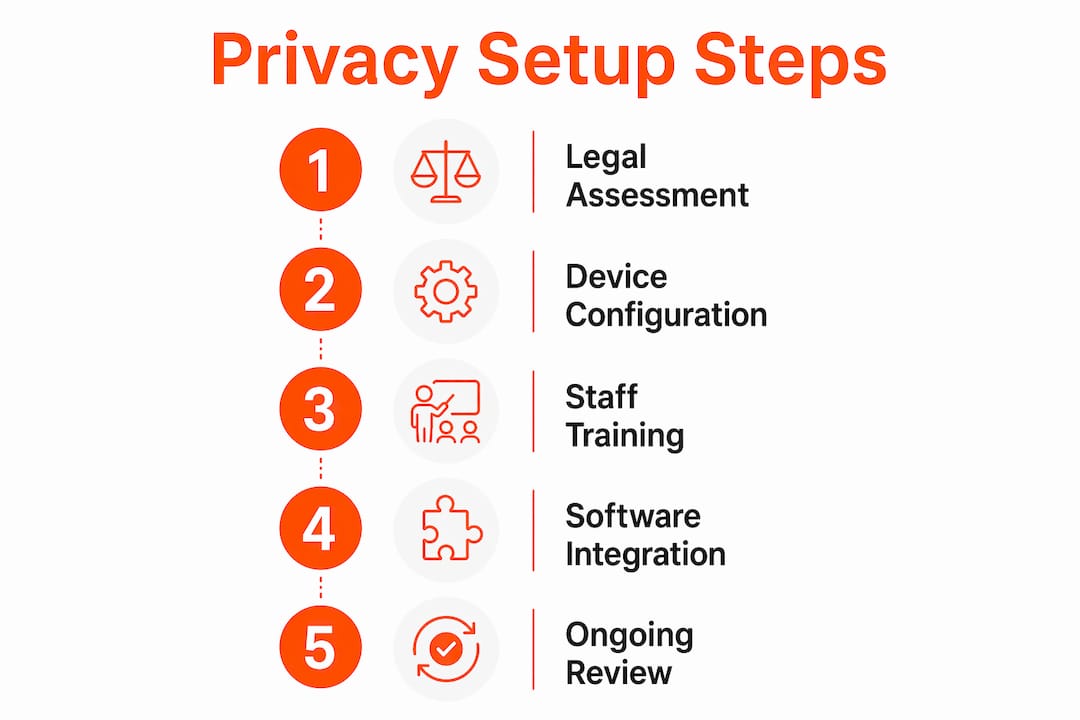
Beyond device capabilities, operational readiness matters just as much. Staff training, clear internal policies, and a communication plan for drivers are prerequisites, not afterthoughts. Effective communication with drivers reduces the perception of surveillance and increases cooperation with the program.
Fleet management software integration also shapes your privacy posture. The platform you use to view and export tracking data must enforce the same access controls and retention rules as the device itself. Reviewing GPS data integration security before selecting a platform prevents gaps between device-level controls and software-level exposure.
How to set up fleet GPS data privacy step by step
A compliant telematics deployment follows a defined sequence. Skipping steps creates documentation gaps that regulators and employment tribunals notice quickly.
-
Conduct a Legitimate Interests Assessment. Map your business need for tracking, identify the privacy impact on drivers, and document why tracking is proportionate. This document becomes your legal foundation.
-
Prepare and distribute privacy notices. Write clear notices covering data collected, purpose, retention period, access rights, and how drivers can submit subject access requests. Distribute these before any device is installed.
-
Configure devices and software with privacy controls. Set privacy mode to activate automatically outside working hours. Configure event-based logging where continuous tracking is not operationally required. Limiting tracking to working hours reduces privacy risk and satisfies regulatory guidance directly.
-
Complete a DPIA if tracking is systematic. If your fleet tracks drivers continuously or monitors behavior metrics like harsh braking and speeding, a DPIA is required. Document the risks identified and the controls applied to mitigate them.
-
Establish data retention schedules and automated deletion. Set your retention window, typically 90 days to 12 months depending on operational need, and configure automated deletion. Manual deletion processes fail under audit.
-
Train dispatchers, managers, and supervisors. Every person who can access tracking data must understand what they are permitted to view, how to handle subject access requests, and what constitutes a data breach requiring notification.
-
Monitor compliance and review periodically. Privacy law changes. Your fleet composition changes. Schedule a formal review at least annually to verify that your setup still matches your legal obligations.
Pro Tip: Keep all LIA, DPIA, and privacy notice documents in a single compliance folder with version dates. Regulators ask for these documents first, and having them organized saves significant time during any investigation.
What common mistakes occur in fleet GPS privacy setup?
The most damaging mistake fleet managers make is treating a telematics rollout as an IT installation rather than a privacy program. That framing leads to every other mistake on this list.
Common pitfalls to avoid:
- Collecting more data than necessary. Continuous logging of every vehicle movement when event-based tracking would meet the same operational need violates the data minimization principle under GDPR.
- Tracking outside working hours without justification. Regulators treat this as a serious violation. The burden of proof falls on the employer, not the driver.
- Missing or incomplete documentation. No LIA, no DPIA, or a privacy notice that omits retention periods or driver rights creates direct legal exposure.
- No privacy mode for dual-use vehicles. If a driver takes a company vehicle home, tracking during that personal time without a functioning privacy mode is unlawful under Irish guidance.
- Indefinite data retention. Keeping granular location data beyond your stated retention period is indefensible under GDPR and creates unnecessary breach risk.
- Ignoring subject access requests. Drivers have a legal right to their data. A missing process for handling these requests is a compliance failure, not an administrative gap.
“Poor communication about tracking practices is the single fastest way to destroy driver trust and invite formal complaints. Transparency is not a soft benefit. It is a legal obligation.”
The workforce dimension of privacy setup is underestimated by most fleet managers. Drivers who understand why tracking exists, what data is collected, and how it is protected cooperate with the program. Drivers who feel surveilled without explanation file complaints and disengage.
Which tools support effective fleet GPS data privacy compliance?
The GPS tracking tool category has matured significantly, but not all platforms are built with privacy compliance as a core design principle. Selecting the right category of solution shapes how much configuration work your team faces.
Privacy-focused telematics platforms include configurable privacy modes, role-based access controls, and automated retention management as standard features. These platforms reduce the manual compliance burden compared to general-purpose tracking tools that require custom configuration for every privacy requirement.
Self-hosted GPS tracking solutions offer a different tradeoff. Self-hosting keeps fleet data within your own environment, reducing reliance on third-party cloud vendors and limiting external access risk. This approach suits larger fleets with IT resources to manage infrastructure, but it increases internal responsibility for security patching and backup.
Key features to evaluate in any platform:
- Privacy mode that genuinely suspends data capture, not just display
- Encryption for data in transit and at rest
- Configurable tracking intervals and event-based logging options
- Automated data deletion aligned to your retention policy
- Audit logs showing who accessed driver data and when
- Driver-facing consent management tools
For smaller fleets, subscription-free GPS trackers with built-in privacy mode support offer a cost-effective path to compliance without enterprise-level complexity. The key is verifying that privacy features are functional by design, not listed as optional add-ons. Reviewing workplace digitalization trends also helps fleet managers understand how privacy-by-design is becoming a baseline expectation across fleet technology categories.
Technical safeguards like encryption and access controls are non-negotiable regardless of platform category. These controls protect GPS tracking data against unauthorized access and support the trust relationship with drivers that makes the entire program sustainable.
Key Takeaways
A compliant fleet GPS data privacy setup requires documented legal assessments, technical privacy controls, and ongoing driver communication working together as a single program.
| Point | Details |
|---|---|
| Legal basis must be documented | Complete a Legitimate Interests Assessment before deploying any GPS tracking device. |
| Privacy mode is mandatory | Configure devices to suspend tracking during personal use, not just mask it on the dashboard. |
| Retention limits protect compliance | Set automated deletion for GPS data within 90 days to 12 months based on operational need. |
| DPIAs apply to systematic tracking | Any continuous or behavior-monitoring program requires a completed Data Protection Impact Assessment. |
| Communication builds driver trust | Distribute clear privacy notices before installation and train all staff who access tracking data. |
Why privacy setup is a program, not a project
Fleet managers often ask me when their GPS privacy setup will be “finished.” My honest answer is that it never is, and that framing is the wrong one to start with.
Privacy regulations change. The Irish Data Protection Commission updated its guidance on employer tracking in 2026, and similar updates are happening across EU member states and the UK. A setup that was compliant in 2024 may have gaps today. Fleets that treat privacy as a completed project stop monitoring for those gaps.
The more interesting insight I have picked up from working with fleet operations is that the fleets with the strongest privacy programs are also the ones with the lowest driver turnover. That correlation is not accidental. Drivers who trust that their employer handles their location data responsibly are more likely to stay and perform. Privacy setup is not just a legal obligation. It is a workforce retention tool.
The mistake I see most often is over-collection. Fleet managers configure continuous logging because the device supports it, not because the operation requires it. Regulators treat continuous tracking as higher risk than event-based tracking, and the operational benefit rarely justifies the exposure. Configuring tracking intervals carefully, as the deep knowledge on this topic confirms, is one of the highest-value decisions in the entire setup process.
My recommendation is to schedule a formal privacy review every six months for the first two years after deployment. After that, annual reviews are sufficient unless your fleet composition or applicable regulations change significantly. Build that review into your operational calendar the same way you schedule vehicle maintenance.
— Louis
Motowatchdog’s subscription-free GPS tracking for privacy-conscious fleets
Fleet managers who want compliant GPS tracking without recurring subscription costs have a direct option worth evaluating.
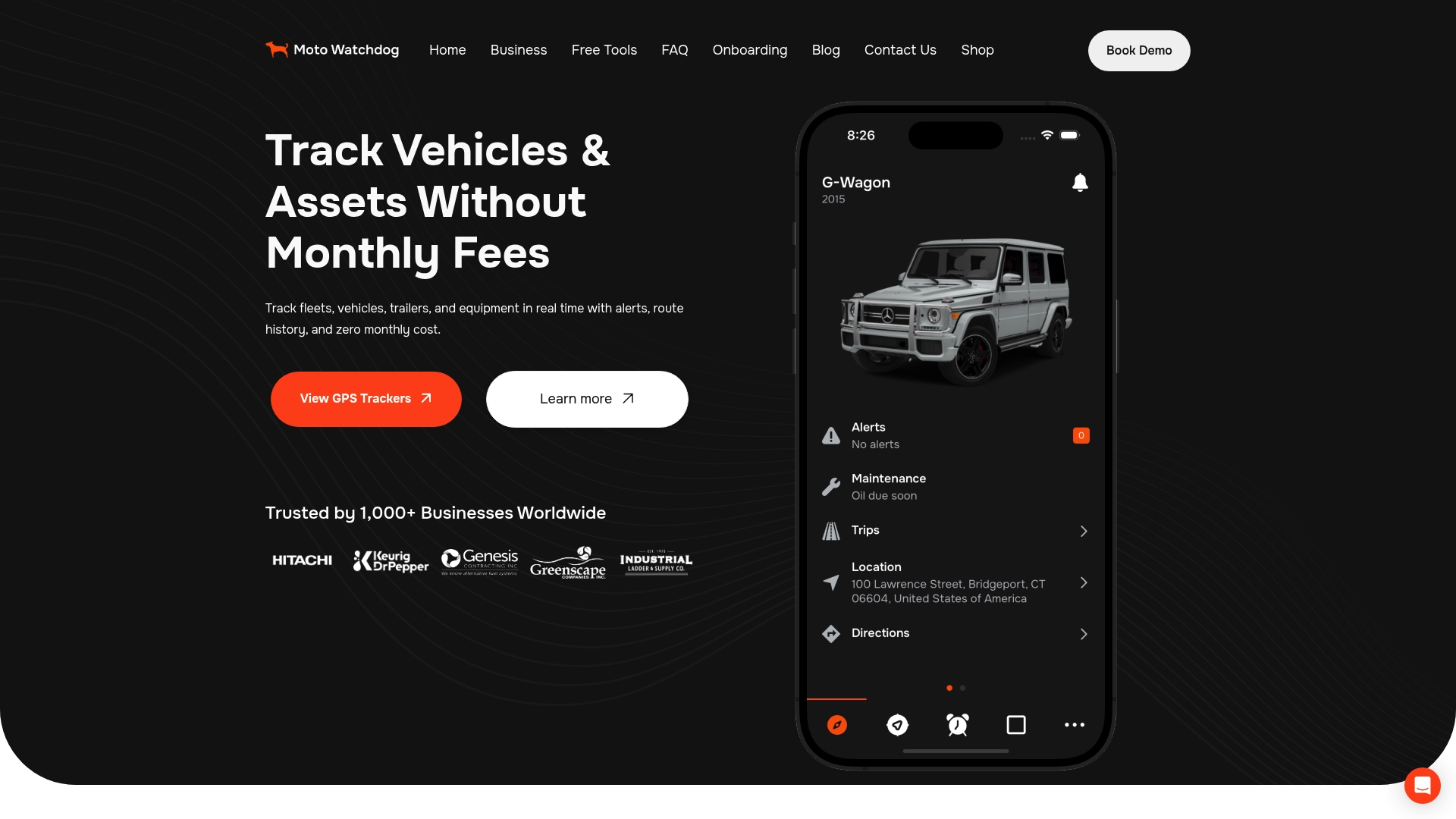
Motowatchdog offers subscription-free 4G GPS trackers built for businesses that need real-time vehicle monitoring without ongoing fees. The setup process is straightforward, which matters when you are also configuring privacy notices, LIAs, and retention policies at the same time. Over 1,000 businesses rely on Motowatchdog for accurate tracking, geofencing alerts, and mileage reporting. For fleet managers building a privacy-compliant telematics program from the ground up, starting with hardware that supports privacy mode and easy configuration reduces the total compliance workload from day one. Visit Motowatchdog to review device specifications and find the right fit for your fleet size and privacy requirements.
FAQ
What is fleet GPS data privacy setup?
Fleet GPS data privacy setup is the process of implementing legal and technical controls to protect driver location and behavior data collected through vehicle tracking systems. It covers lawful basis documentation, privacy notices, device configuration, and data retention policies.
Is GPS tracking of employees legal under GDPR?
GPS tracking of employees is legal under GDPR when the fleet operator documents a lawful basis, typically through a Legitimate Interests Assessment, and provides clear privacy notices to drivers before tracking begins. Tracking must be limited to working hours and proportionate to the business need.
What is privacy mode in fleet GPS tracking?
Privacy mode is a device or software setting that suspends location data capture when a vehicle is used for personal purposes. Irish Data Protection Commission guidance makes privacy mode mandatory for any vehicle used for both business and personal travel.
How long can fleet operators keep GPS tracking data?
Most fleet operators retain GPS and telematics data for 90 days to 12 months. Indefinite retention of granular location data is not defensible under GDPR and creates unnecessary legal and security risk.
When is a DPIA required for fleet GPS tracking?
A Data Protection Impact Assessment is required when fleet tracking is systematic, continuous, or monitors driver behavior metrics like speed or braking patterns. The DPIA must document identified risks and the controls applied to reduce them before deployment begins.