How to start saving money
Lorem ipsum dolor sit amet, consectetur adipiscing elit lobortis arcu enim urna adipiscing praesent velit viverra sit semper lorem eu cursus vel hendrerit elementum morbi curabitur etiam nibh justo, lorem aliquet donec sed sit mi dignissim at ante massa mattis.
- Neque sodales ut etiam sit amet nisl purus non tellus orci ac auctor
- Adipiscing elit ut aliquam purus sit amet viverra suspendisse potent
- Mauris commodo quis imperdiet massa tincidunt nunc pulvinar
- Excepteur sint occaecat cupidatat non proident sunt in culpa qui officia
Why it is important to start saving
Vitae congue eu consequat ac felis placerat vestibulum lectus mauris ultrices cursus sit amet dictum sit amet justo donec enim diam porttitor lacus luctus accumsan tortor posuere praesent tristique magna sit amet purus gravida quis blandit turpis.

How much money should I save?
At risus viverra adipiscing at in tellus integer feugiat nisl pretium fusce id velit ut tortor sagittis orci a scelerisque purus semper eget at lectus urna duis convallis. porta nibh venenatis cras sed felis eget neque laoreet suspendisse interdum consectetur libero id faucibus nisl donec pretium vulputate sapien nec sagittis aliquam nunc lobortis mattis aliquam faucibus purus in.
- Neque sodales ut etiam sit amet nisl purus non tellus orci ac auctor
- Adipiscing elit ut aliquam purus sit amet viverra suspendisse potenti
- Mauris commodo quis imperdiet massa tincidunt nunc pulvinar
- Adipiscing elit ut aliquam purus sit amet viverra suspendisse potenti
What percentege of my income should go to savings?
Nisi quis eleifend quam adipiscing vitae aliquet bibendum enim facilisis gravida neque. Velit euismod in pellentesque massa placerat volutpat lacus laoreet non curabitur gravida odio aenean sed adipiscing diam donec adipiscing tristique risus. amet est placerat in egestas erat imperdiet sed euismod nisi.
“Nisi quis eleifend quam adipiscing vitae aliquet bibendum enim facilisis gravida neque velit euismod in pellentesque”
Do you have any comments? Share them with us on social media
Eget lorem dolor sed viverra ipsum nunc aliquet bibendum felis donec et odio pellentesque diam volutpat commodo sed egestas aliquam sem fringilla ut morbi tincidunt augue interdum velit euismod eu tincidunt tortor aliquam nulla facilisi aenean sed adipiscing diam donec adipiscing ut lectus arcu bibendum at varius vel pharetra nibh venenatis cras sed felis eget.
A well-organized repair order keeps every service visit transparent and traceable. A vehicle repair order template gives repair shops and service teams a structured way to document customer details, vehicle information, performed services, used parts, and total costs—all in one standardized form.
It replaces handwritten notes with a reliable process that helps track labor, manage inventory, and create accurate invoices.
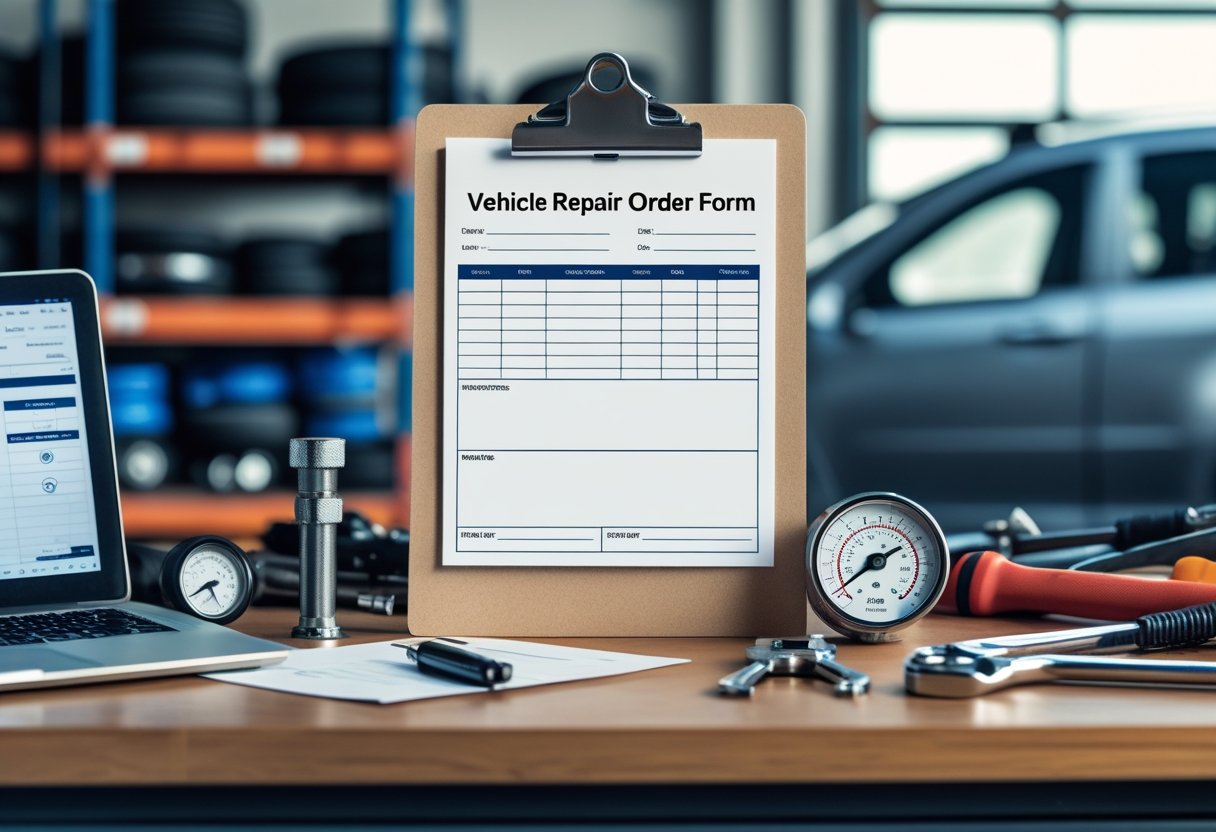
Using a professional template also supports clear communication with customers. It ensures compliance with standard industry practices.
Whether a team handles quick oil changes or major repairs, a proper repair order template helps maintain records for service tracking and accountability.
This article explains the purpose of a vehicle repair order template and breaks down its essential sections. It also discusses which types of services and repairs are commonly listed and what to consider when selecting the right template for consistent shop operations.
What Is a Vehicle Repair Order Template?
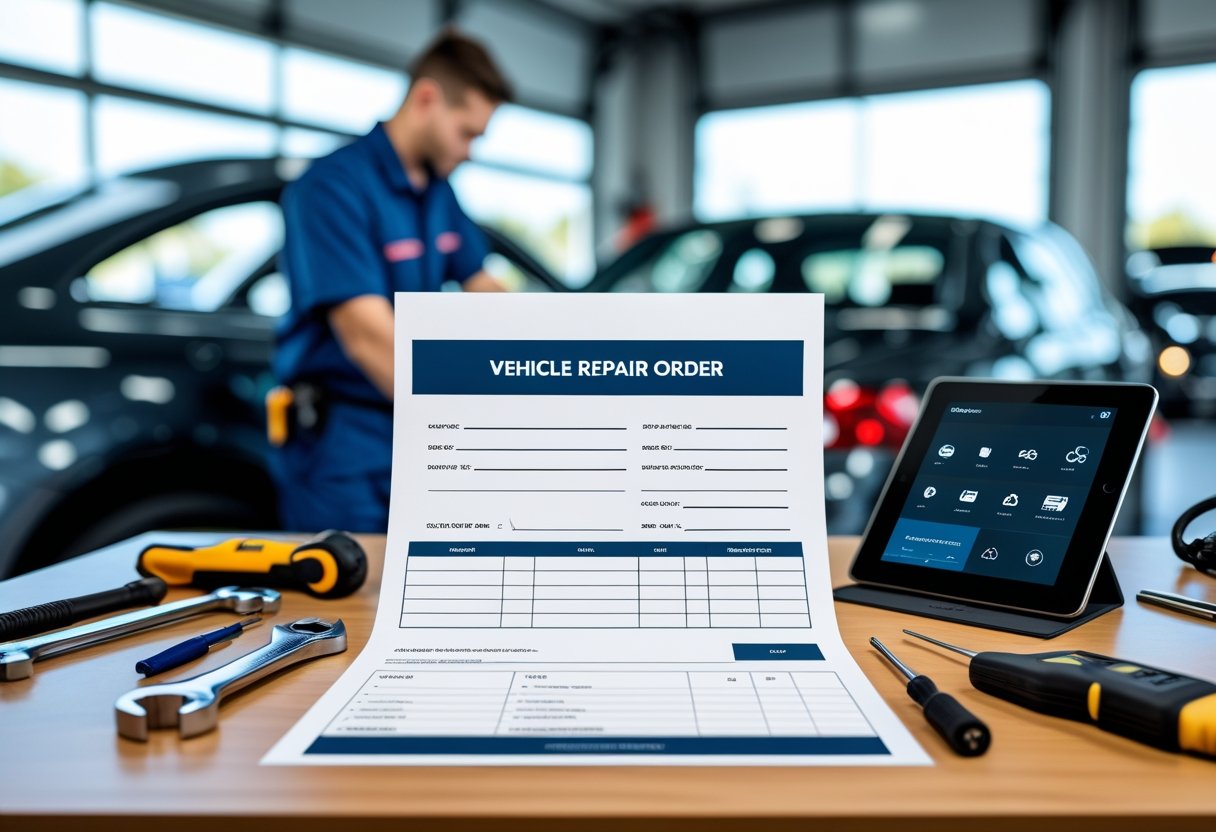
A vehicle repair order template standardizes how auto service businesses record repair details, track parts, manage customer information, and authorize services. It improves accuracy and promotes clear communication between customers, technicians, and administrative staff.
Purpose and Importance
A vehicle repair order template provides a structured format to document vehicle servicing from intake to payment. It captures information such as the VIN, mileage, service descriptions, estimated costs, and labor details.
By centralizing these elements, auto shops reduce misunderstandings and improve accountability. This form supports both workflow efficiency and record-keeping.
When completed thoroughly, it becomes a permanent record of work performed, including diagnostics, parts used, and technician notes. Many workshops use repair order forms to track maintenance history and to verify warranty claims.
For customers, signed repair orders provide transparency in services and spending. For businesses, they serve as official authorization to begin work.
Proper documentation also simplifies audits, insurance claims, and future repairs by ensuring every job leaves a consistent paper or digital trail.
Types of Repair Order Templates
Repair order templates vary depending on the type of vehicle service operation. Common versions include auto repair order, fleet maintenance, and body shop repair order forms.
Each type may contain specialized sections. For example, body shops often include damage assessment charts or photo attachments, while fleet service forms focus on recurring maintenance schedules.
A basic automotive repair order form typically includes fields for:
- Customer details
- Vehicle information (VIN, license, mileage)
- Service requests
- Parts and materials
- Labor time and rates
- Technician and customer signatures
Modern templates come in both printable and digital fillable formats. Electronic versions allow shops to store data securely, integrate with accounting or inventory systems, and automatically generate invoices.
Customization options let businesses adapt templates to specific services or regional regulations.
Legal and Compliance Considerations
Repair order forms also hold legal value. They act as a service contract between the customer and the shop, defining the scope of work and estimated costs.
Authorized signatures confirm consent to begin repairs and acknowledgment of terms. Without this documentation, shops risk disputes over charges or repair quality.
Regulations in many regions require written auto repair orders before performing work that exceeds a certain cost. Templates help ensure compliance by including mandatory sections such as itemized costs, parts identification, and disclaimers on warranties or liability.
Maintaining accurate and complete repair order templates also supports consumer protection laws and data privacy requirements. By securely storing copies—digital or paper—shops demonstrate transparency and traceability if customer issues arise later.
Essential Components of a Vehicle Repair Order Template

A clear and complete vehicle repair order records each job detail for accurate billing and service tracking. It defines accountability and ensures both the repair team and customer understand the work being performed.
Company and Service Center Details
Every vehicle repair order begins with company and service center details. This section identifies the business responsible for the repair and provides documentation for future reference.
It typically includes the company name, address, phone number, email, and business registration or license number. Many templates also reserve space for the service advisor’s name and signature.
Including the service center’s operating hours and contact points supports efficient follow-up if a problem arises. Some forms also display a company logo or letterhead, reinforcing brand recognition and professionalism.
Presenting these elements consistently across all documents helps create a clear paper trail. It also supports compliance with consumer protection regulations.
FieldExampleCompany NameApex Auto ServiceAddress214 Brookside Dr, Dallas, TX 75201Phone(214) 555‑4398Service AdvisorR. Douglas
Customer Information
The customer section provides records for billing and communication. A reliable template gathers the customer’s name, contact number, billing address, and preferred communication method.
If the vehicle belongs to a business fleet, the company contact and account number may also be noted. Technicians often use this section to confirm who approved the work and how updates will be delivered.
Capturing signatures from both the customer and service advisor at the start and completion of the job demonstrates consent and acknowledgment of services performed. Accurately recorded customer details reduce confusion in scheduling, follow-ups, and warranty claims.
Vehicle Details
Recording accurate vehicle details allows technicians to order the correct parts and maintain a consistent service history. The template usually lists the make, model, year, and color, along with the Vehicle Identification Number (VIN), registration number, and odometer reading.
These identifiers help confirm that the repair order matches the right car. Additional fields may log engine type, transmission, and license plate number when needed for complex mechanical work.
A detailed record of dashboard warnings, condition photos, and previous service notes supports diagnostics. Correctly documented vehicle data streamlines internal workflows and reduces administrative errors.
Documenting Repairs, Services, and Parts
Accurate documentation forms the backbone of a reliable vehicle repair order. It ensures that every task, part, and hour of labor is traceable and billed correctly.
Keeping detailed information allows service departments to manage accountability. It also maintains transparent communication with customers.
Work Description and Instructions
Each work order should begin with a clear and structured description of the repair service to be performed. This includes identifying the main complaint or request from the vehicle owner, such as “engine noise diagnosis” or “brake inspection.”
Technicians should also note any diagnostic findings that influence the chosen repair process. Instructions must define specific repair steps or checks rather than broad statements.
For example, writing “Replace serpentine belt and test drive for noise” provides actionable direction. Using standardized language across repair orders helps all staff understand the scope without confusion.
Service centers often keep a record of both completed work and pending recommendations. Including a service status field—such as approved work or awaiting customer confirmation—helps streamline workflow and reduces delays during multi-stage repairs.
Parts and Quantities
Listing parts and quantities used in each repair service improves tracking and cost control. A well-organized parts table might include these fields:
Part NumberDescriptionQuantityUnit PriceTotal90915-YZZD3Oil Filter1$12.00$12.0004152-YZZA1Filter Kit, Engine1$18.00$18.00
Providing the part number ensures correct sourcing and avoids mix-ups when ordering replacements. Recording both ordered and installed quantities helps maintain inventory accuracy.
In more comprehensive repair orders, parts replaced under warranty or customer-supplied items can be labeled separately. This helps the service provider track warranty claims and warranties tied to manufacturer-supplied components.
Labor and Technician Details
Technician documentation confirms who performed each portion of the repair process and how much time it required. Each labor line item should list the task description, billed labor hours, and the assigned technician’s name or ID number.
A typical entry might appear as:
- Brake pad replacement – 1.5 hours – Technician ID: 204
- Cooling system flush – 2.0 hours – Technician ID: 311
Recording labor this way supports accurate payroll calculation and productivity monitoring. It also provides evidence for customers and managers if questions arise about the time spent or quality of work performed.
Including a sign-off field for technician and supervisor approval reinforces accountability. This step confirms the repair service meets internal standards and is ready for final billing or vehicle release.
Cost Calculation and Breakdown
An accurate vehicle repair order depends on precise accounting of every charge related to the job. Mechanics and service managers must identify all cost elements—parts, labor, taxes, and fees—to produce an estimate that reflects the real total amount due and avoids customer disputes later.
Parts and Materials Costs
Parts often make up a significant portion of the total repair amount. The template should list each component with details such as part name, part number, quantity, unit price, and total parts cost.
Technicians record both OEM and aftermarket parts, ensuring transparency in quality and pricing. Shops frequently use inventory or supplier databases to populate these values automatically.
This helps maintain consistency and reduces manual errors. Markup percentages, if applied, must be visible or explained within the estimate.
ItemQuantityUnit PriceTotalBrake Pads1 set$75$75Rotor2$60$120Total Parts Cost$195
Accurate documentation supports warranty claims and streamlines billing. Each listed item also helps customers understand what materials are necessary and how they contribute to the overall cost.
Labor Costs
Labor charges represent the technician’s time spent diagnosing, repairing, and verifying the vehicle. A repair order template includes labor description, labor hours, rate per hour, and total labor cost.
By specifying these details, service managers can tie costs directly to actual work performed. Many shops use flat-rate manuals or standardized times for specific services.
These references ensure fairness and predictability in estimates. Differentiating between regular maintenance, diagnostic time, and specialized repairs is important for cost accuracy.
TaskHoursRateTotalBrake Replacement1.5$90/hr$135Rotor Installation1.0$90/hr$90Total Labor Cost$225
Combining transparent labor data with approved rates reduces disputes and keeps both technicians and customers on the same page.
Taxes and Additional Charges
Auto repair charges often include sales taxes, disposal fees, and shop supplies. These amounts vary by region and should appear as separate line items within the repair order.
Tax is usually calculated on the subtotal of total parts and total labor. Additional charges may cover environmental costs, hazardous waste disposal, or consumables like rags and lubricants.
Although these are minor compared to parts or labor, omitting them can reduce profit margins or misrepresent the true service cost. A clear breakdown might look like this:
TypeAmountSales Tax (7%)$29.40Disposal Fee$10Shop Supplies$5Other Charges Total$44.40
Specifying these fees reinforces transparency and complies with local business and tax requirements.
Total Cost Calculations
The final section of the repair order summarizes all cost categories into the total cost or total amount due. The formula is straightforward:
Total Cost = Total Parts + Total Labor + Tax + Other Charges
Below is an example of how it might appear on a completed estimate:
CategoryAmountTotal Parts$195Total Labor$225Tax$29.40Other Charges$15Total Cost$464.40
The repair order template should automatically calculate the final total to minimize human error. This ensures consistency across invoices and provides customers with a clear understanding of each portion of the total payment.
Common Repair and Maintenance Services Included
Automotive service records often categorize work into maintenance, repair, and overhaul tasks. Each type involves specific procedures meant to extend vehicle life and maintain consistent performance.
Routine Maintenance Services
Routine maintenance services keep vehicles in reliable working condition and prevent costly repairs later. Core items include oil changes, fluid checks, brake inspections, and tire rotations.
These services follow manufacturer schedules and are typically noted within a vehicle repair order template for tracking and accountability. A tune-up may involve replacing spark plugs, cleaning filters, and inspecting belts and hoses.
Service centers record each action, mileage, and completion date to maintain a history of vehicle maintenance. Shops often list these scheduled tasks in a table format:
Service TypeFrequency (approx.)PurposeOil changeEvery 3,000–7,500 miLubricates engine componentsTune-upEvery 30,000–100,000 miImproves combustion efficiencyBrake inspectionEvery 6 monthsEnsures stopping performanceTire rotationEvery 6,000–8,000 miPromotes even wear
Regular attention to these tasks helps minimize breakdowns and supports warranty compliance.
General Repair Categories
General vehicle repair covers mechanical, electrical, and structural systems. These repairs address issues found during inspections or after performance problems arise.
Common categories include engine repairs, brake system replacements, exhaust system fixes, and electrical troubleshooting such as alternator or battery replacement. A vehicle service order form clearly lists parts, labor times, and repair notes.
Technicians use it to verify customer requests and document the work performed. Organized documentation helps maintain transparency and supports communication between the technician, service manager, and vehicle owner.
Repairs often vary in urgency. Minor jobs, such as replacing worn belts or filters, may be completed within hours.
Larger tasks, including suspension or transmission repairs, require precise diagnosis and several days of coordinated work.
Major and Minor Overhauls
An overhaul involves a complete evaluation of worn or failed components. A minor overhaul might include refurbishing cylinder heads, replacing gaskets, and cleaning the fuel system to restore efficiency.
These tasks extend engine life without a full teardown. A major overhaul often requires removing and rebuilding the engine, replacing pistons and bearings, and recalibrating moving parts to factory standards.
Service records detail each replaced item to ensure traceability. Maintenance shops rely on clear documentation to separate routine jobs from major rebuilds.
Accurate recording within a vehicle repair template ensures that both minor and major overhaul data contribute to a precise maintenance history.
Choosing and Using the Right Vehicle Repair Order Template
Selecting the right vehicle repair order template helps a shop document services consistently and manage costs. The most useful templates support both paper and digital workflows, allow for customization, and store data securely for quick access.
Printable and Digital Options
Repair shops can choose between a printable auto repair order form or a repair order form PDF that can be filled out online. A printed version works well for shops that prefer physical signatures, handwritten notes, or limited computer use.
These forms are typically designed for easy duplication and archiving. Digital formats, like an auto repair work order template or repair order online form, offer better integration with shop management software.
They allow automatic cost calculations and faster customer updates. A digital vehicle repair order form also reduces paper storage needs and makes record retrieval easier.
For many shops, the best solution combines both approaches. Staff can print forms when needed and store a signed printable auto repair work order template in a digital folder for recordkeeping.
The key is choosing a format that matches the shop’s workflow and staffing resources.
Customizing Templates for Your Business
A repair order form template should reflect the specific services, parts, and labor structure of a business. Customization ensures that every job—from a basic oil change to a complex engine rebuild—can be documented with the required details.
Most digital templates allow editable fields for vehicle make, model, mileage, and diagnostic codes. Adding a shop logo, contact information, and standard disclaimers on warranties or payment terms keeps forms consistent with business branding.
Shops using printable auto repair forms can prefill standard labor rates or service lists to save time. Whether the shop uses a repair order form PDF or an Excel-based tool, the goal is clarity and uniform data entry.
Consistent formatting minimizes billing errors and helps build customer trust.
Storing and Sharing Repair Orders
Efficient record storage helps with accurate accounting and warranty tracking. It also supports compliance with tax or insurance requirements.
Many shops keep both a digital archive and a physical copy of important auto repair work orders. This ensures records are available when needed.
Online storage systems let managers search by customer name or vehicle identification number. A repair order online system can sync with invoicing and scheduling platforms.
This reduces manual recordkeeping.
When sharing a work order form, security and privacy are important. Use password-protected PDFs or secure email platforms when sending documents.
Organized, labeled folders—sorted by date or job type—make retrieving past jobs easy. This helps with reviewing records quickly.