How to start saving money
Lorem ipsum dolor sit amet, consectetur adipiscing elit lobortis arcu enim urna adipiscing praesent velit viverra sit semper lorem eu cursus vel hendrerit elementum morbi curabitur etiam nibh justo, lorem aliquet donec sed sit mi dignissim at ante massa mattis.
- Neque sodales ut etiam sit amet nisl purus non tellus orci ac auctor
- Adipiscing elit ut aliquam purus sit amet viverra suspendisse potent
- Mauris commodo quis imperdiet massa tincidunt nunc pulvinar
- Excepteur sint occaecat cupidatat non proident sunt in culpa qui officia
Why it is important to start saving
Vitae congue eu consequat ac felis placerat vestibulum lectus mauris ultrices cursus sit amet dictum sit amet justo donec enim diam porttitor lacus luctus accumsan tortor posuere praesent tristique magna sit amet purus gravida quis blandit turpis.

How much money should I save?
At risus viverra adipiscing at in tellus integer feugiat nisl pretium fusce id velit ut tortor sagittis orci a scelerisque purus semper eget at lectus urna duis convallis. porta nibh venenatis cras sed felis eget neque laoreet suspendisse interdum consectetur libero id faucibus nisl donec pretium vulputate sapien nec sagittis aliquam nunc lobortis mattis aliquam faucibus purus in.
- Neque sodales ut etiam sit amet nisl purus non tellus orci ac auctor
- Adipiscing elit ut aliquam purus sit amet viverra suspendisse potenti
- Mauris commodo quis imperdiet massa tincidunt nunc pulvinar
- Adipiscing elit ut aliquam purus sit amet viverra suspendisse potenti
What percentege of my income should go to savings?
Nisi quis eleifend quam adipiscing vitae aliquet bibendum enim facilisis gravida neque. Velit euismod in pellentesque massa placerat volutpat lacus laoreet non curabitur gravida odio aenean sed adipiscing diam donec adipiscing tristique risus. amet est placerat in egestas erat imperdiet sed euismod nisi.
“Nisi quis eleifend quam adipiscing vitae aliquet bibendum enim facilisis gravida neque velit euismod in pellentesque”
Do you have any comments? Share them with us on social media
Eget lorem dolor sed viverra ipsum nunc aliquet bibendum felis donec et odio pellentesque diam volutpat commodo sed egestas aliquam sem fringilla ut morbi tincidunt augue interdum velit euismod eu tincidunt tortor aliquam nulla facilisi aenean sed adipiscing diam donec adipiscing ut lectus arcu bibendum at varius vel pharetra nibh venenatis cras sed felis eget.
Equipment preventive maintenance (PM) keeps operations stable, safe, and efficient. It follows a planned maintenance schedule to address issues before they cause downtime.
Equipment PM ensures machines stay reliable, extend their service life, and operate at peak performance.

By using a structured maintenance strategy, teams can balance resources and reduce emergency repairs. Preventive maintenance also helps control operational costs and supports compliance with safety standards.
An effective equipment PM program relies on accurate scheduling and organized workflows. Proper use of maintenance software builds the foundation for ongoing improvement.
What Is Equipment PM?

Equipment PM focuses on maintaining reliability and efficiency through regular inspections, servicing, and timely repairs. It reduces unexpected breakdowns and supports production continuity by replacing reactive maintenance with preventive actions.
Definition and Core Principles
Equipment Preventive Maintenance (PM) involves scheduled maintenance tasks to prevent failures before they occur. These tasks include cleaning, lubrication, part replacement, calibration, safety checks, and performance testing.
The goal is to keep equipment functioning as intended and minimize unplanned downtime. PM uses predictable triggers such as operating hours, calendar dates, or usage metrics to schedule maintenance.
This approach is different from reactive maintenance, where repairs happen only after a failure. Reactive methods often disrupt production and increase costs.
Core principles of PM include proactivity, standardization, and data-driven planning. Teams use historical data, equipment manuals, and monitoring tools to set service intervals.
By managing work orders, spare parts, and inspection records in a system like SAP PM, organizations maintain asset integrity and extend equipment lifespan.
Key Objectives of Equipment PM
The main goals of equipment PM are reliability, safety, and cost control. Regular maintenance helps identify wear early, allowing timely interventions that prevent bigger problems.
This proactive method maintains operating efficiency and ensures process stability. PM programs aim to reduce downtime and extend asset life.
They also help align maintenance resources with operational priorities. For example, scheduled checks on machinery help balance production targets with maintenance needs.
PM supports regulatory compliance and quality assurance. Well-maintained equipment produces consistent output and reduces variability.
By monitoring key performance indicators—such as mean time between failures (MTBF)—companies can assess the effectiveness of their preventive maintenance plans.
Evolution of Maintenance Approaches
Maintenance strategies have moved from reactive to preventive, and now toward predictive models. Early practices focused on fixing equipment only after it failed, known as breakdown or corrective maintenance.
This approach often led to unplanned costs and safety risks. The introduction of preventive maintenance programs in the mid-20th century shifted focus to routine, scheduled servicing.
This change reduced dependence on emergency repairs. Automation and digital tools later improved maintenance tracking through systems like SAP PM and Computerized Maintenance Management Systems (CMMS).
Modern organizations use condition-based and predictive maintenance with sensors and analytics to intervene at the best time. These technologies improve accuracy and resource allocation.
Types of Preventive Maintenance Strategies
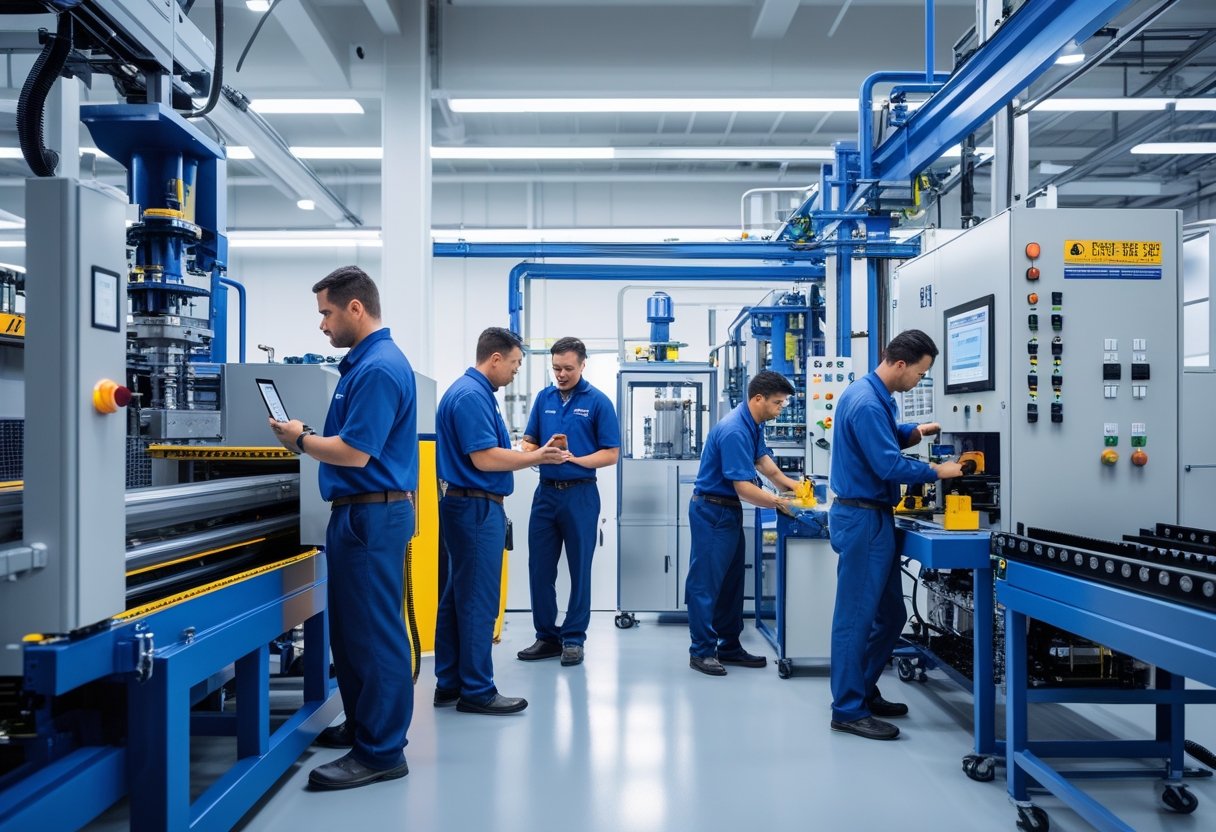
Effective preventive maintenance strategies reduce unplanned downtime and extend equipment life. The right approach depends on operational goals, equipment importance, and data available for scheduling.
Time-Based Maintenance
Time-Based Maintenance (TBM) follows a fixed schedule, such as weekly, monthly, or annually. Tasks happen regardless of equipment condition to prevent predictable wear.
This method is often used for parts with known life cycles, such as filters or belts. TBM simplifies planning because technicians can prepare work orders and parts ahead of time.
However, it can lead to unnecessary work if schedules are too conservative. An effective TBM program uses accurate failure data and manufacturer recommendations.
Businesses often review TBM intervals to match actual equipment performance. Adjusting intervals based on data improves efficiency and resource use.
Usage-Based Maintenance
Usage-Based Maintenance (UBM) schedules maintenance activities based on equipment usage, not calendar time. Triggers include operating hours, production cycles, or mileage.
UBM is useful for equipment with variable workloads, like vehicles or machines with irregular use. Maintenance might occur after every 1,000 operating hours instead of every few months.
This approach matches maintenance with actual wear, reducing unnecessary downtime. UBM requires accurate usage monitoring with sensors or digital tracking systems.
Automated alerts or computerized maintenance management systems (CMMS) help ensure maintenance happens when needed.
Condition-Based Maintenance
Condition-Based Maintenance (CBM) uses real-time data to decide when maintenance is needed. It detects early signs of wear or performance decline.
Common monitoring methods include vibration analysis, temperature checks, oil analysis, and acoustic monitoring. CBM triggers maintenance only when indicators show increased failure risk.
This reduces unnecessary work and helps avoid major breakdowns. CBM needs investment in sensors and analysis tools, but it increases reliability once in place.
Proper data interpretation and staff training are important for accurate maintenance decisions.
Predictive Maintenance
Predictive Maintenance (PdM) uses data analytics and condition-monitoring tools to predict when maintenance should happen. It improves on CBM by forecasting failures before they are obvious.
PdM collects equipment data from sensors, IoT systems, and maintenance records. Analytical models find patterns that show when failure is likely.
This allows maintenance teams to plan precisely and minimize production interruptions. While setup costs are higher, PdM can save money in high-value operations.
Successful PdM needs sensors, software analytics, and skilled staff to analyze data and improve models over time.
Creating an Effective Equipment PM Program
A strong equipment preventive maintenance (PM) program relies on accurate asset data, prioritized tasks, and consistent scheduling. The focus is on identifying the most critical assets and defining clear maintenance activities.
Asset Identification and Criticality Analysis
Start by creating a complete asset inventory. Include details like manufacturer, model, serial number, location, and operating conditions.
Keeping this database up to date helps teams plan and allocate resources. After listing all assets, a criticality analysis identifies which equipment needs the most attention.
This process ranks assets by their impact on safety, production, and cost. Teams use a scoring system to weigh factors like failure likelihood and downtime consequences.
CriterionDescriptionTypical Rating ScaleSafety ImpactEffect on employee or process safety1–5Production LossPotential for lost output1–5Repair CostExpected cost of repair or replacement1–5
Focusing on high-criticality items first helps prevent failures that could disrupt operations or cause safety issues.
Establishing Maintenance Activities
After identifying critical assets, define maintenance activities for each one. Activities include inspections, lubrication, calibration, or parts replacement based on equipment needs and manufacturer advice.
Each task should state what to do, how to do it, and what tools or materials are required. Maintenance planning often uses failure modes analysis to address common breakdown causes.
For example, if a motor often fails due to bearing wear, regular lubrication and vibration checks become standard tasks. Documenting tasks in a structured format helps teams track completion and adjust as needed.
Using a Computerized Maintenance Management System (CMMS) improves tracking and ensures work orders are completed correctly.
Assigning Maintenance Intervals and Schedules
Set appropriate maintenance intervals based on real conditions. Intervals can be time-based (monthly inspections) or usage-based (every 500 operating hours).
Choosing between time-based and condition-based schedules depends on asset type and performance data. A clear preventive maintenance schedule lists task frequency and responsible personnel.
Schedules work best when shared across departments. Teams should review schedules regularly using performance indicators like mean time between failures (MTBF).
Adjusting intervals based on results helps avoid both over- and under-maintenance.
Developing Preventive Maintenance Checklists
A preventive maintenance checklist standardizes task execution. Checklists should list each step, safety precaution, measurement point, and acceptance criteria.
Keeping checklists concise and complete helps technicians follow procedures confidently. Digital checklists within a CMMS or mobile app improve accuracy by recording real-time data.
Teams can capture readings, observations, and photos for better tracking. Updating checklists based on feedback keeps them relevant.
Well-designed checklists support compliance and help measure the effectiveness of the preventive maintenance program.
Implementing Maintenance Scheduling and Workflow
Effective preventive maintenance depends on organized scheduling, clear responsibilities, and accurate records. Consistent procedures help teams plan work efficiently and reduce unplanned downtime.
Work Orders and Maintenance Workflow
A structured maintenance workflow starts with clear work orders. Each order should specify the asset, task type, required materials, estimated labor time, and safety instructions.
This information standardizes execution and helps the team follow consistent steps. Digital work order management systems simplify task assignment and let supervisors track progress in real time.
Automated scheduling tools can generate new work orders based on usage data or time intervals. Integrating IoT sensors enables predictive triggers, so technicians can address issues before failures occur.
An organized workflow usually follows these steps:
- Work request submission
- Review and approval
- Task scheduling and resource allocation
- Field execution and verification
- Completion logging and closure
Keeping each stage clear reduces confusion and improves accountability.
Resource Allocation and Maintenance Team Roles
Efficient scheduling means assigning the right resources at the right time. Maintenance planners should match technician skills, shift coverage, and spare part availability when scheduling work.
Aligning the maintenance team structure with asset criticality supports optimal resource use. Clear roles make task execution smoother.
Typical roles include:
RoleKey ResponsibilitiesPlanner/SchedulerCreate and prioritize work orders, align staffingTechnicianExecute maintenance tasks, report findingsSupervisorApprove work, monitor progress, ensure safetyInventory CoordinatorManage tools and spare parts
Balancing workloads helps minimize backlogs and prevent delays. Teams that use shared calendars or maintenance software keep schedules realistic and adaptable to changes like production demands or emergency repairs.
Maintenance Tracking and Documentation
Accurate maintenance tracking supports data-driven planning and compliance. Every maintenance activity should be recorded in a maintenance log, noting the date, equipment ID, labor hours, parts used, and completion status.
Consistent documentation reveals performance trends. Managers can spot recurring failures and adjust schedules as needed.
Digital logs make records searchable and simplify reporting for audits or inspections. Setting documentation standards ensures uniform recordkeeping across teams.
Standard fields and clear terminology reduce errors. This supports long-term asset reliability analysis.
Systems that generate reports automatically save time. They help organizations make better decisions about maintenance frequency, equipment replacement, and budgeting.
Leveraging Technology and Maintenance Software
Organizations now use connected maintenance systems and analytics to improve equipment reliability and asset visibility. Centralized maintenance tracking, automated scheduling, and real-time monitoring help reduce downtime and extend asset life.
Computerized Maintenance Management System (CMMS)
A Computerized Maintenance Management System (CMMS) unifies planning, scheduling, and tracking maintenance activities. It replaces paperwork with digital records, giving teams access to asset histories, work orders, and spare parts data.
Modern CMMS software enforces preventive maintenance schedules with automated alerts and mobile access. Some systems connect to IoT sensors that report equipment conditions, helping staff make timely decisions.
Key CMMS functions include:
FeaturePurposeWork Order ManagementAssign and monitor maintenance jobsAsset RegistryRecord equipment details and service historyInventory TrackingManage spare parts and usageReporting ToolsMeasure downtime, cost, and performance
Regular software updates improve CMMS reliability and security. Updates also keep systems compatible with newer analytics tools.
Enterprise Asset Management (EAM) Solutions
Enterprise Asset Management (EAM) solutions cover full asset life cycle management, not just maintenance. They integrate financials, procurement, and compliance tracking, helping organizations align asset care with business goals.
EAM platforms often include maintenance software modules linked to enterprise systems like ERP. This allows finance and operations teams to share data, improving cost control and capital planning.
Key EAM features include:
- Asset health dashboards for performance visualization
- Lifecycle cost tracking to guide replacement decisions
- Regulatory compliance tools for audit readiness
EAM systems focus on asset management strategy rather than individual maintenance events. They help large or multisite operations standardize processes and monitor asset performance from acquisition to disposal.
Preventive Maintenance Software Selection
Choosing preventive maintenance software depends on an organization’s size, technical readiness, and integration needs. The software should automate recurring tasks like lubrication, inspections, or calibrations while providing clear performance metrics.
When comparing systems, teams should look at:
Evaluation FactorConsiderationsEase of UseSimple interface, quick training requirementsIntegrationCompatibility with existing CMMS or ERPAnalyticsDepth of maintenance performance reportingSupportVendor reliability and update frequency
Effective deployment means defining maintenance scheduling rules, monitoring compliance, and refining settings based on asset data. Over time, strong data collection enables a shift from fixed schedules to more condition-based strategies.
Integrating Condition Monitoring and Predictive Analytics
Combining condition monitoring sensors with predictive analytics makes preventive maintenance data-driven. Real-time measurements like vibration, temperature, or pressure help detect faults early and reduce unscheduled downtime.
Predictive maintenance platforms use algorithms to analyze sensor trends and predict failures. Integration with CMMS or EAM systems can automatically generate work orders based on these insights.
Key integration steps:
- Sensor connectivity to collect real-time data
- Data modeling to identify patterns and risk thresholds
- Workflow automation to trigger maintenance actions
This approach helps teams move from reactive repairs to proactive interventions. As analytics improve, organizations gain more accurate forecasts and better asset use.
Maintenance Optimization and Continuous Improvement
Maintenance optimization balances reliability, cost, and compliance to keep equipment running well. Using measurable data, organizations can reduce unnecessary tasks, extend asset life, and maintain safety standards.
Measuring Maintenance Performance and KPIs
Tracking key performance indicators (KPIs) helps maintenance teams measure effectiveness and find improvement areas. Common metrics include mean time between failures (MTBF), mean time to repair (MTTR), and planned maintenance percentage (PMP).
A CMMS can collect data on task completion, work order backlog, and resource use. These insights support data-based decisions.
Comparing trends against industry benchmarks ensures maintenance aligns with reliability goals. Regular KPI reviews highlight patterns like rising repair frequency or slow response times, prompting schedule adjustments.
KPIWhat It MeasuresPurposeMTBFAverage operating time between failuresEvaluates equipment reliabilityMTTRAverage time to restore functionAssesses maintenance efficiencyPMPShare of proactive maintenance workMonitors PM program balance
Reducing Unplanned Downtime and Over-Maintenance
Unplanned downtime disrupts production and raises costs. Finding root causes through failure analysis or condition monitoring helps target preventive actions where they matter most.
Predictive maintenance tools using vibration, temperature, or oil analysis spot early warning signs before breakdowns. This reduces reactive work and keeps schedules stable.
Avoiding over-maintenance is also important. Tasks done too often waste labor and can cause new faults.
Optimized maintenance intervals, based on equipment condition and history, balance reliability with workload control.
Cost Control and Inventory Management
Controlling maintenance costs requires accurate scheduling, streamlined procurement, and efficient spare parts management. Tracking total maintenance cost per asset helps find ways to optimize spending without losing performance.
Inventory management keeps the right balance between availability and capital tied up in stock. Using a structured bill of materials (BOM) with reorder points and usage reports prevents delays and avoids excess inventory.
CMMS tools can link spare parts to maintenance checklists or work orders. This coordination reduces downtime from missing parts and avoids duplicate orders.
Cost visibility across labor, materials, and service contracts enables better budgeting and forecasting.
Regulatory Compliance and Safety
Compliance with safety and maintenance regulations protects people and equipment. Documented safety checks, calibration records, and maintenance procedures show adherence to standards like ISO 55000 or OSHA.
Digital recordkeeping makes audits easier and ensures timely inspections. Automated alerts for overdue tasks prevent lapses that could cause fines or incidents.
A culture of continuous safety improvement includes regular review of incident reports and corrective actions. Consistent procedures across teams improve accountability and ensure equipment reliability and operator safety.
Equipment PM Applications Across Industries
Equipment preventive maintenance (PM) supports asset reliability, safety, and operational continuity in many industries. It reduces unplanned downtime and promotes efficient resource use through structured service schedules, inspection routines, and data-based decision-making.
Manufacturing and Warehouses
Manufacturing plants use equipment PM to keep production lines, robotics, and conveyors running. Regular lubrication, temperature checks, and part replacements prevent minor wear from causing costly failures.
Maintenance intervals often follow usage hours or production cycles, not just fixed dates.
Warehouses rely on PM for material handling systems like forklifts and automated storage units. These systems need mechanical integrity and sensor alignment for smooth product movement.
Many organizations use CMMS to schedule inspections, record asset performance, and monitor spare part inventories.
Modern plants also use predictive maintenance tools that analyze vibration and temperature data to forecast failures. This cuts downtime and helps extend component life.
Automotive and Transportation
In automotive manufacturing and vehicle fleets, preventive maintenance keeps critical systems working. Equipment like hydraulic lifts, robotic arms, and assembly line machines need regular service to maintain accuracy and safety.
Component calibration and fluid analysis help maintain consistent performance.
Fleet operations use PM schedules based on mileage, engine hours, or operating conditions. Regular tasks include oil changes, brake checks, tire monitoring, and electronic system diagnostics.
These actions lower the risk of breakdowns and regulatory issues.
Digital maintenance software helps managers track service history, forecast parts usage, and coordinate repairs across locations. This improves cost control and extends vehicle and equipment lifespan.
Food & Beverage and Packaging
In the food, beverage, and packaging industries, PM preserves hygiene, reduces contamination risk, and maintains output quality. Processing equipment like mixers and sealing machines follow strict cleaning and inspection cycles under food safety rules.
Maintenance teams use sanitation-based PM protocols, including inspection logs, food-grade lubrication, and sensor calibration. Thermometers, conveyors, and labeling systems also need periodic checks.
Packaging plants depend on precision. Even small misalignments can cause waste or labeling errors.
Sensor-based monitoring and automated alerts help technicians spot wear before it affects production.
Healthcare, Government, and Energy Facilities
Hospitals use PM to keep life-support equipment, sterilizers, and HVAC systems working. Scheduled calibration of medical devices protects patient safety and meets health regulations.
PM logs also help with accreditation and inspections.
Government facilities use PM to maintain essential infrastructure like security systems and communication networks. Timely maintenance prevents disruptions and reduces long-term costs.
In the energy sector, PM for turbines, compressors, generators, and pumps prevents major failures. Condition monitoring and infrared inspections catch performance issues early.
PM planning in this sector improves reliability for power generation, refineries, and distribution assets, while maintaining compliance with safety and environmental standards.
Common Challenges and Solutions in Equipment PM
Effective preventive maintenance depends on managing failures before they happen, balancing work with production needs, keeping accurate records, and using feedback to improve the system. Focusing on these areas cuts downtime, improves reliability, and controls maintenance costs.
Addressing Unexpected Failures
Even strong preventive maintenance programs face unexpected failures from hidden defects, wrong intervals, or operator error. Finding recurring failure patterns in historical data helps teams predict issues before they cause downtime.
Technicians use condition monitoring tools like vibration analysis and thermal imaging to spot early warning signs. These methods allow corrective action before breakdowns.
A rising vibration trend, for example, can signal misalignment or worn bearings.
Documenting every equipment failure and root cause analysis in the maintenance system supports future adjustments. Teams can change preventive maintenance tasks or frequency to address high-risk components.
This approach turns reactive maintenance into data-driven improvements that boost reliability.
Balancing Maintenance Schedules and Production
A major challenge is coordinating maintenance schedules with production demands. Overlapping work can reduce throughput, while delayed maintenance increases the risk of costly downtime.
Planning tools in a computerized maintenance management system (CMMS) help balance these needs. Maintenance planners categorize assets by criticality.
They focus first on high-impact machines to make the most of limited maintenance windows. Phased scheduling spreads workloads and resource use evenly throughout the year.
PriorityType of EquipmentScheduling ApproachHighCore production linesFrequent PM cycles with detailed inspectionsMediumSupport systemsScheduled during shift changesLowNon-essential assetsDeferred or grouped PM tasks
Open communication between operations and maintenance teams keeps everyone aligned. Visibility into the production calendar helps avoid disruptions and ensures maintenance fits operational goals.
Handling Documentation and Compliance
Accurate documentation is essential for a compliant maintenance program. Regulatory standards and audits require proof of completed preventive maintenance tasks, calibration records, and safety checks.
Missing or inconsistent records can lead to penalties or delays. A digital maintenance system centralizes all maintenance data and reduces manual errors.
Automated logging captures timestamps, technician notes, and part usage in real time. This transparency supports compliance.
Standardized templates and checklists make recordkeeping easier. Teams can quickly verify that PM activities followed procedures.
A structured documentation process also enables better reporting on cost trends and asset reliability metrics. This helps management allocate resources more effectively.
Continuous Program Improvement
A successful preventive maintenance program changes over time. Reviewing historical data, technician feedback, and asset performance shows where maintenance strategies need adjustment.
Metrics such as mean time between failures (MTBF) and maintenance costs per asset help find improvement opportunities. Organizations that analyze failure patterns can refine PM intervals and focus on components most likely to wear out.
Data from CMMS reports supports these decisions with clear evidence. Regular training helps maintenance staff use updated best practices.
Encouraging collaboration across departments allows teams to share insights from operations, engineering, and maintenance. This approach makes the program more precise and cost-efficient.